Posted on Leave a comment

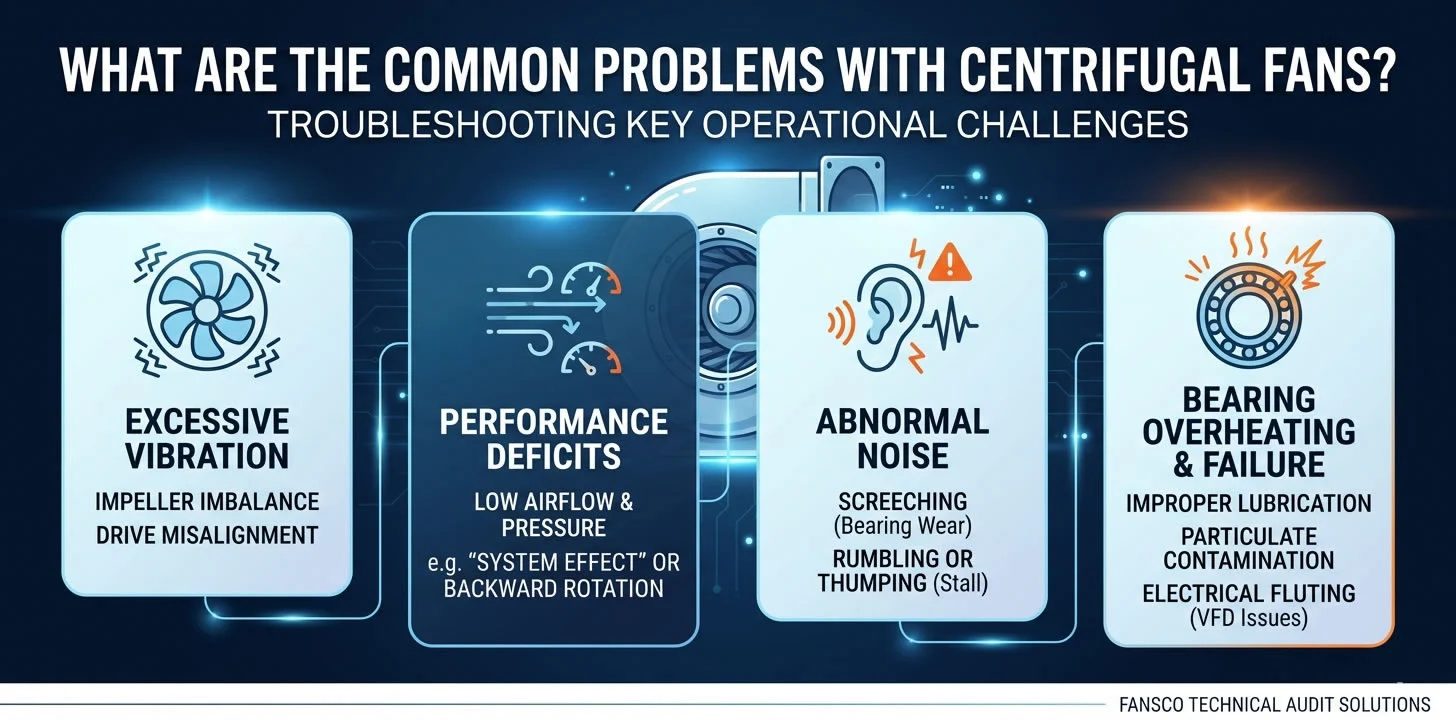
What are the common problems with centrifugal fans?

What are the common problems with centrifugal fans?

Centrifugal fans are engineered for high-pressure performance and industrial longevity, but they are far from “set-and-forget” components. In a complex ventilation system, the blower is often the first component to exhibit symptoms of broader systemic issues. For engineers and facility managers, the challenge is distinguishing between a localized mechanical failure and an aerodynamic system mismatch. Continue reading What are the common problems with centrifugal fans?
Posted on Leave a comment

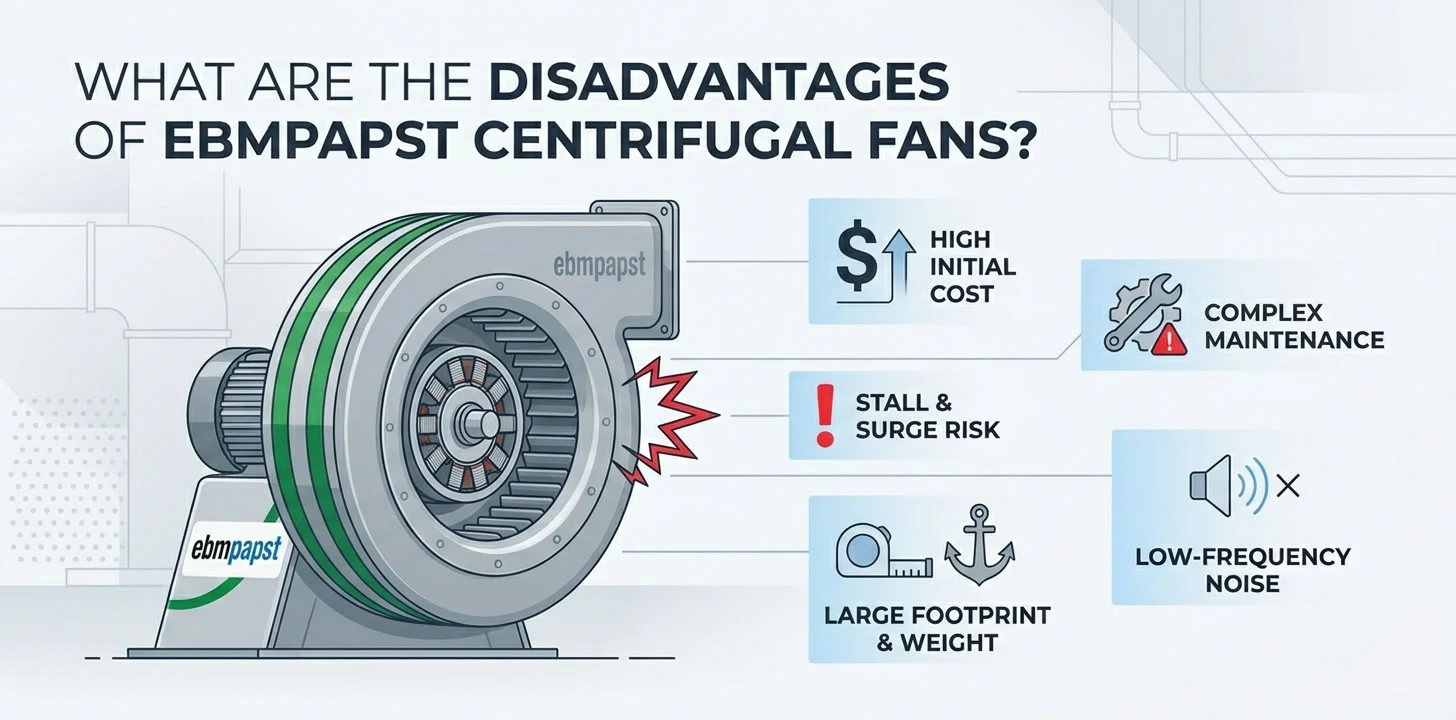
What are the disadvantages of centrifugal fans?

What are the disadvantages of centrifugal fans?

While centrifugal fans (often referred to as blowers) are widely recognized as the workhorses of high-pressure industrial ventilation, they are not a universal solution for every air-moving application. For facility managers, HVAC professionals, and system engineers, understanding the inherent limitations of these units is just as critical as knowing their strengths. Continue reading What are the disadvantages of centrifugal fans?

Posted on Leave a comment

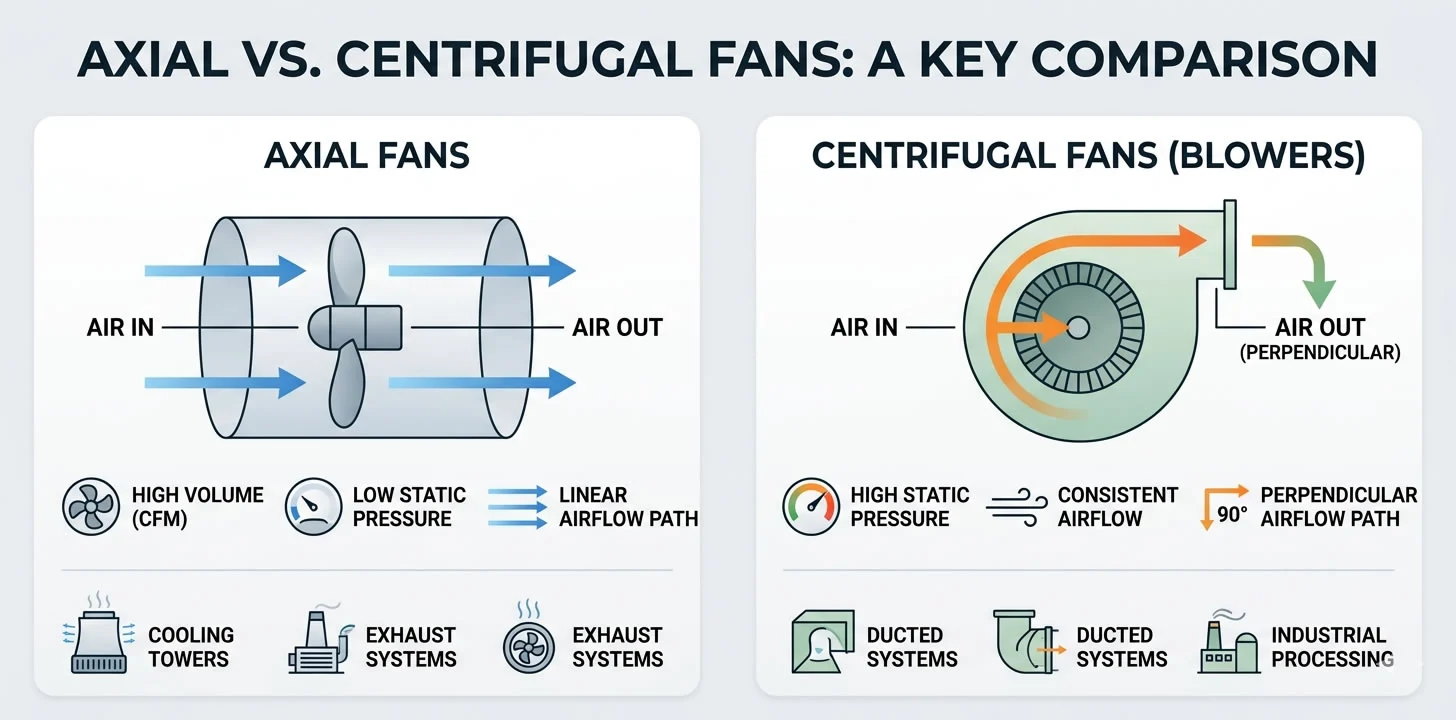
What is the difference between centrifugal and axial fan?

What is the difference between centrifugal and axial fan?

In the realm of industrial ventilation, HVAC design, and process engineering, specifying the correct air-moving equipment is critical to system performance, energy efficiency, and overall reliability. While both centrifugal and axial fans serve the fundamental purpose of moving gases, their aerodynamic principles, performance curves, and optimal use cases differ drastically. Continue reading What is the difference between centrifugal and axial fan?

Posted on Leave a comment

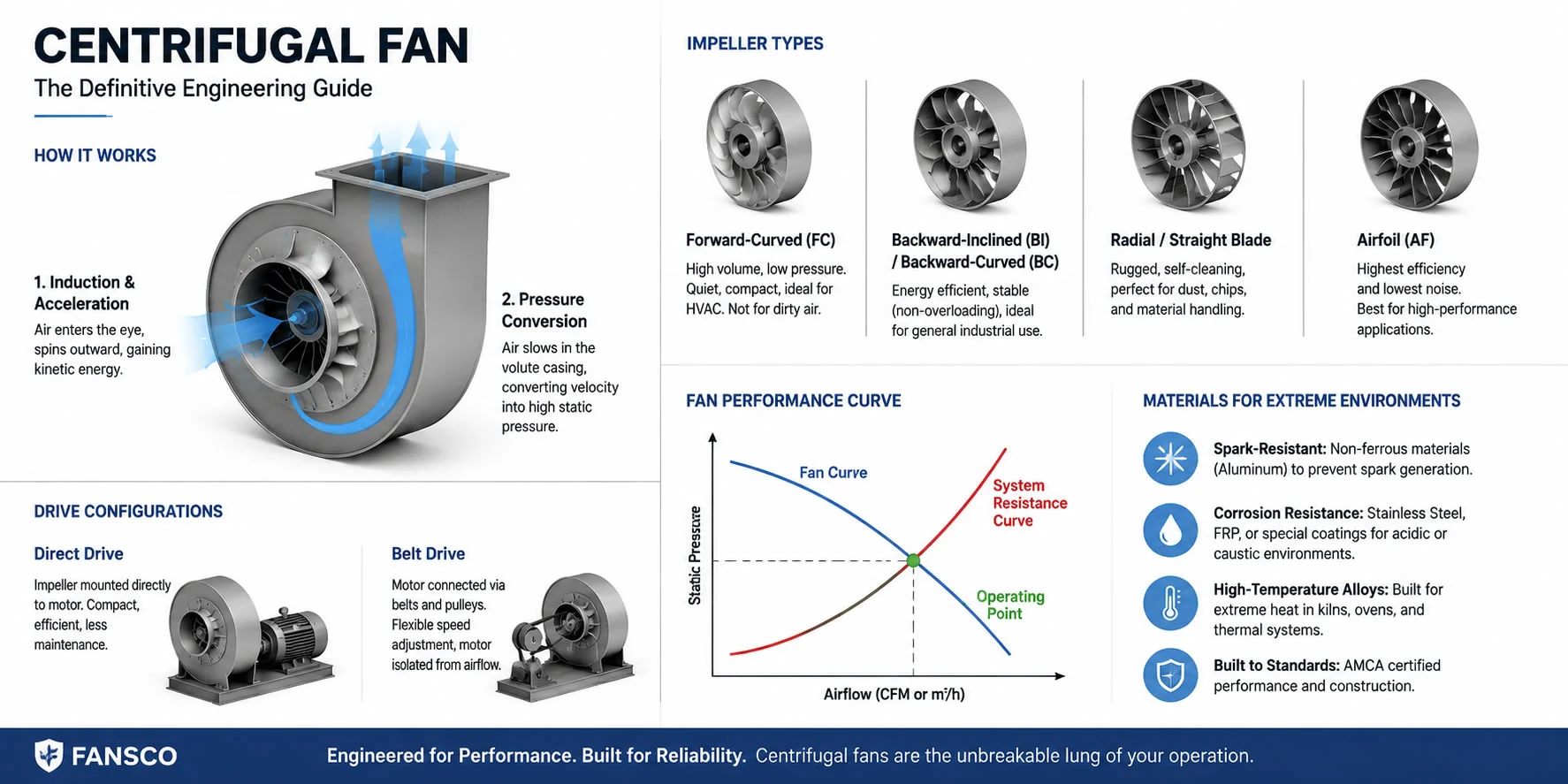
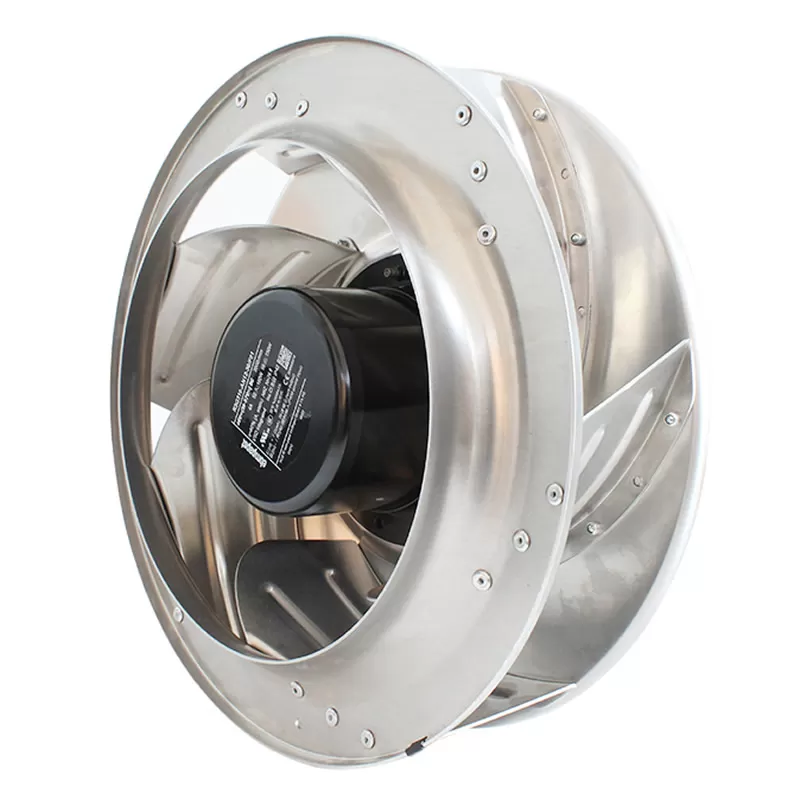
What is a centrifugal fan?

What is a centrifugal fan?

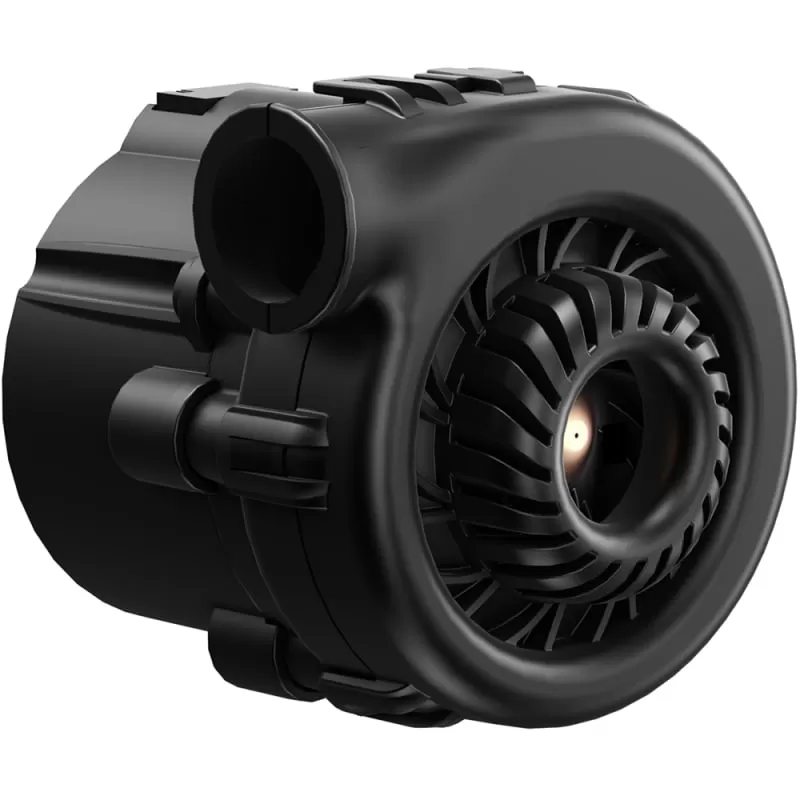
In the realm of industrial ventilation, process engineering, and heavy-duty HVAC, the centrifugal fan—often referred to as a blower or squirrel-cage fan—stands as the foundational equipment for moving air against high resistance. While axial fans are designed to move high volumes of air at low pressure (similar to an airplane propeller), centrifugal fans are engineered to generate the immense static pressure required to push air through complex ductwork, dense filtration systems, and demanding industrial processes. Continue reading What is a centrifugal fan?

Posted on Leave a comment

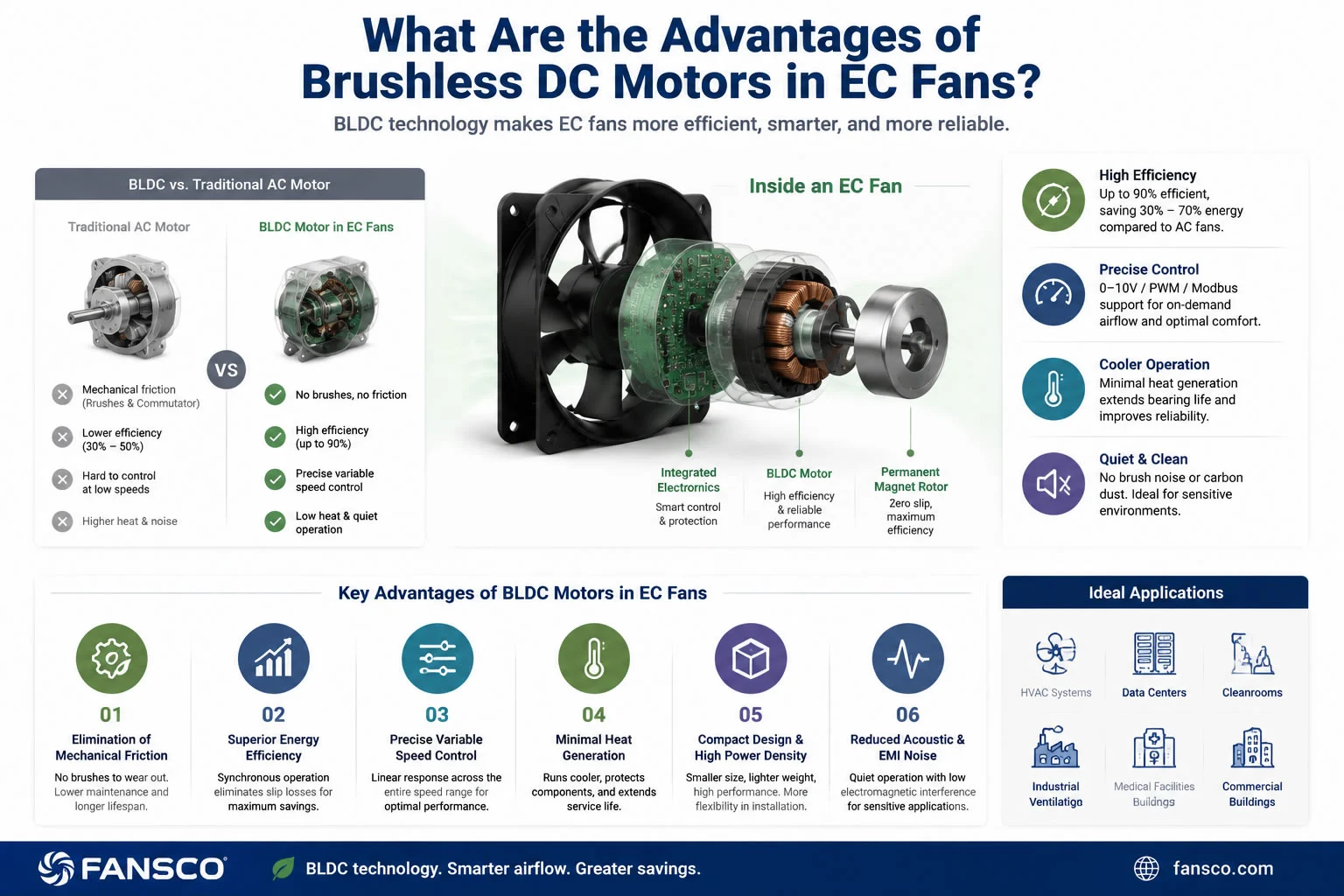
What are the advantages of brushless DC motors in EC fans?

What are the advantages of brushless DC motors in EC fans?

To understand the rapid shift in the ventilation and HVAC industry toward Electronically Commutated (EC) fans, one must first look at the heart of the machine: the Brushless DC (BLDC) motor. While traditional AC motors have dominated for decades due to their simplicity, the integration of BLDC technology into EC fans has redefined the benchmarks for efficiency, control, and reliability. Continue reading What are the advantages of brushless DC motors in EC fans?

Posted on Leave a comment

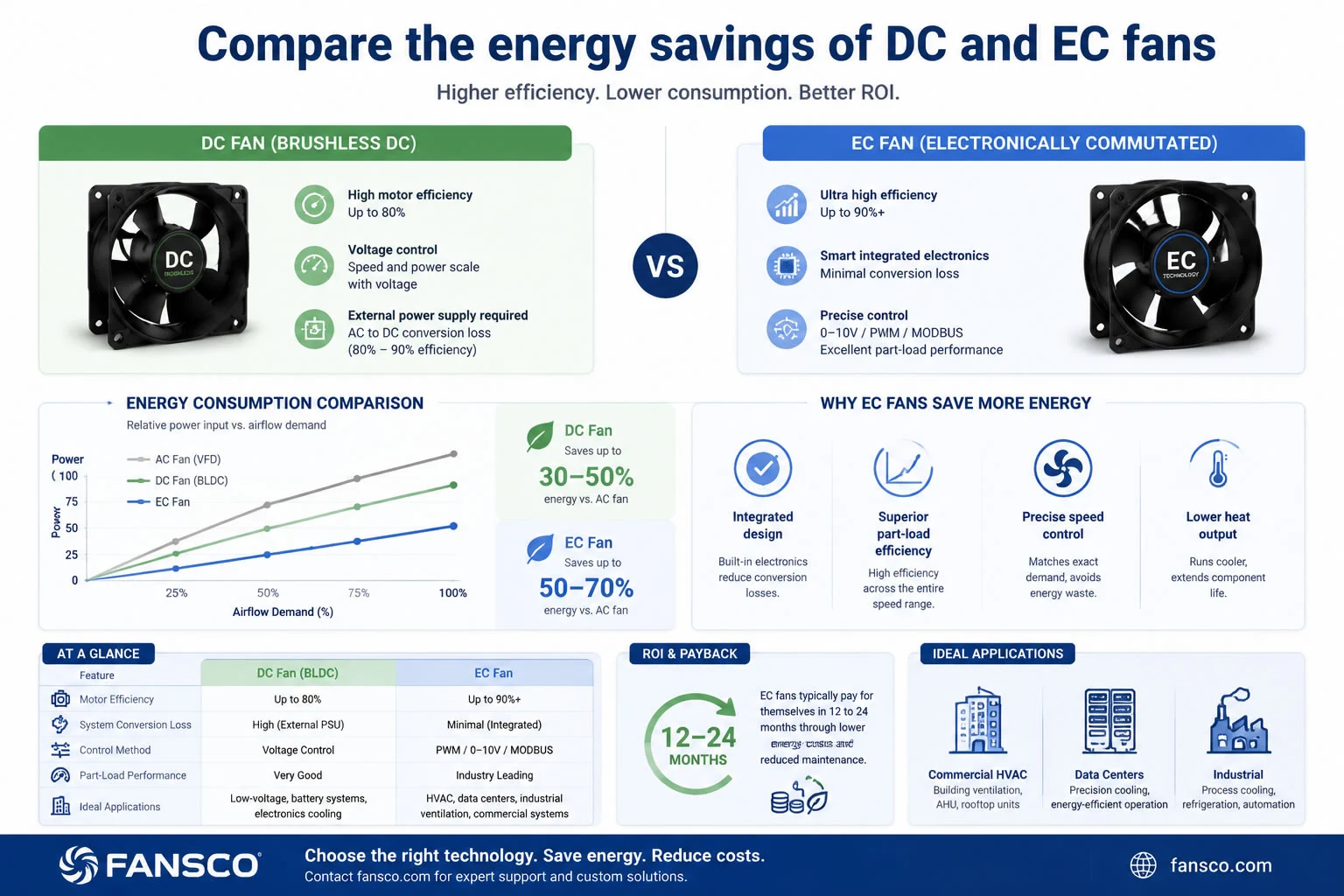
Compare the energy savings of DC and EC fans

Compare the energy savings of DC and EC fans

In the modern industrial landscape, energy efficiency is no longer a “nice-to-have” feature—it is a regulatory and financial mandate. As global energy prices fluctuate and sustainability standards like the ErP Directive become more stringent, engineers are moving away from traditional AC motors. However, the choice between Direct Current (DC) and Electronically Commutated (EC) fans often leads to confusion.

Continue reading Compare the energy savings of DC and EC fans

Posted on Leave a comment

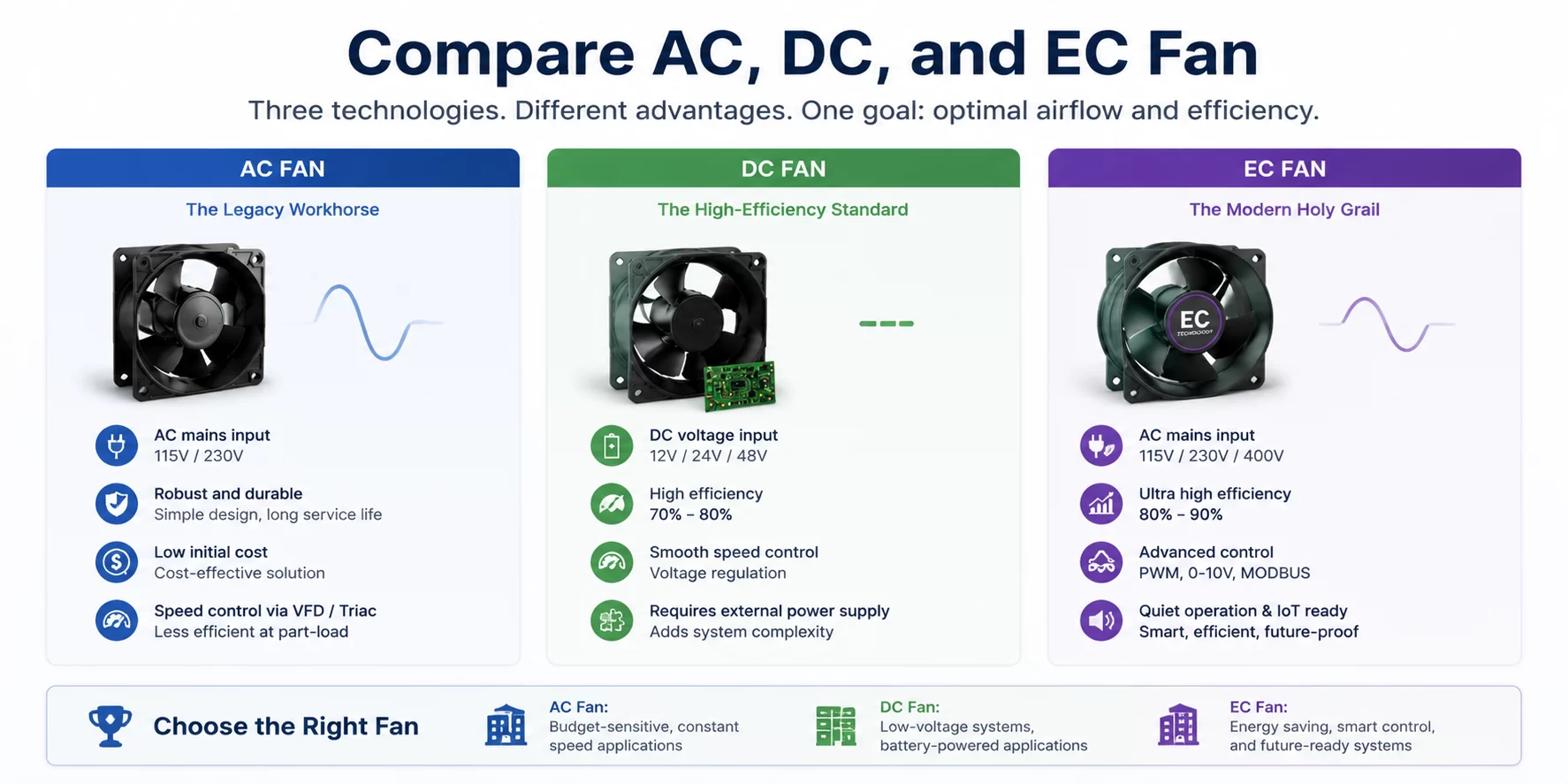
Compare AC, DC, and EC fan

Compare AC, DC, and EC fan

Whether you are designing a complex HVAC system, manufacturing precision electronic enclosures, or upgrading an industrial ventilation network, fan motor selection is a make-or-break decision. Historically, the industry defaulted to standard AC motors. Today, stringent energy regulations and the demand for smarter control systems have aggressively pushed DC and EC technologies into the spotlight. Continue reading Compare AC, DC, and EC fan

Posted on Leave a comment

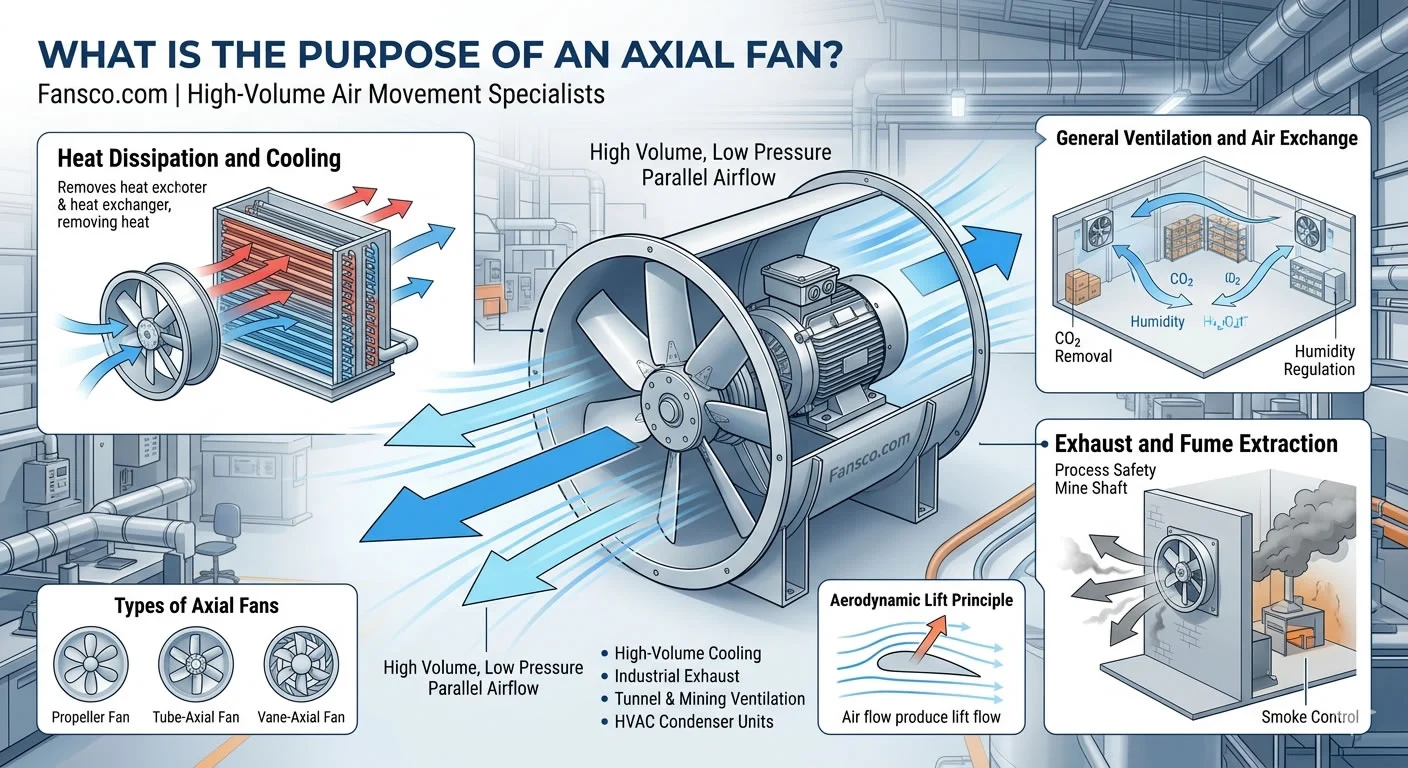
What is the purpose of axial fan?

What is the purpose of axial fan?

In the industrial landscape, selecting the right air-moving equipment is not merely a matter of “moving air”—it is about optimizing energy consumption, managing thermal loads, and ensuring process safety. The axial fan is the cornerstone of these operations. But to truly answer “what is the purpose of an axial fan,” one must look beyond the surface level of cooling and explore the physics of high-flow, low-pressure air dynamics. Continue reading What is the purpose of axial fan?

Posted on Leave a comment

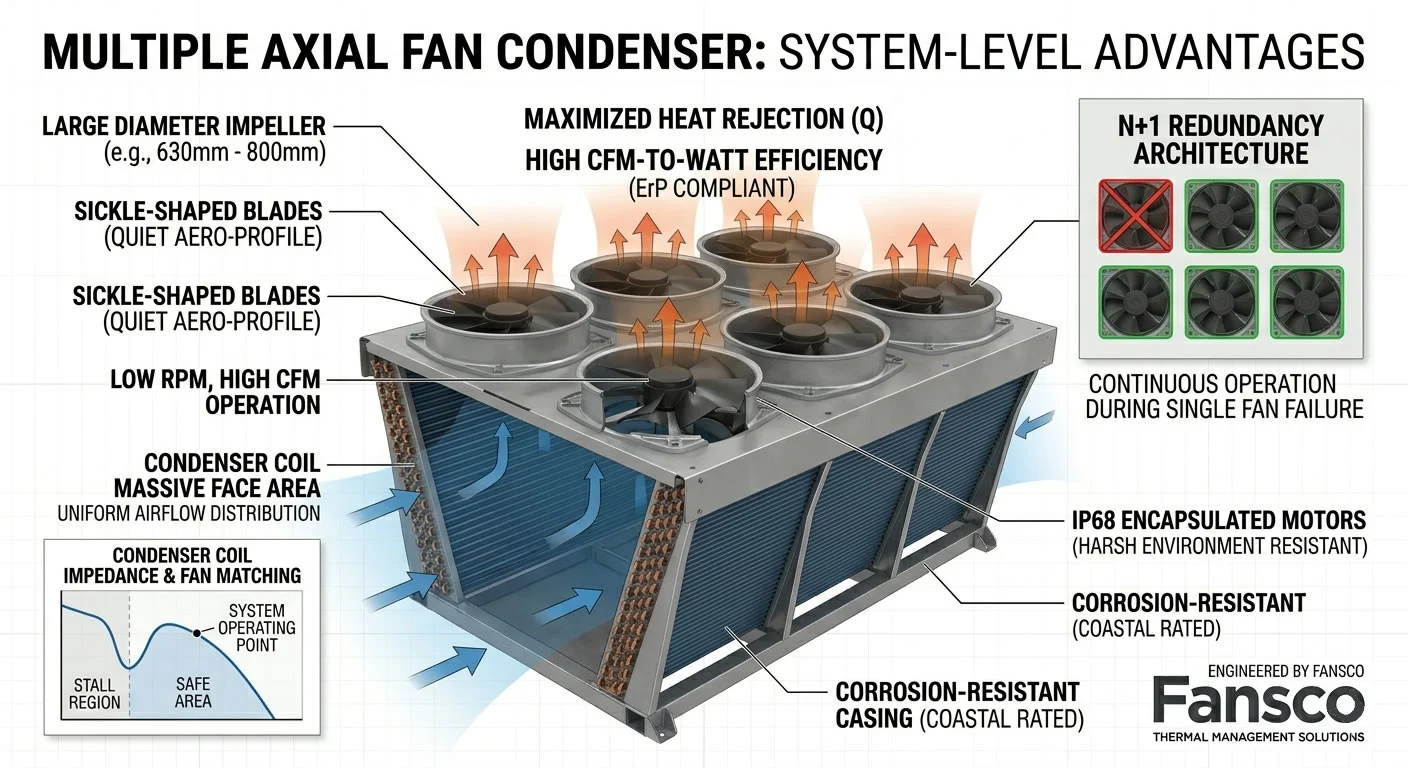
What are the main advantages of axial fan condensers?

What are the main advantages of axial fan condensers?

In commercial refrigeration, chiller plants, and heavy-duty HVAC systems, the compressor gets all the glory. But ask any seasoned thermal engineer, and they will tell you the truth: the condenser dictates the system’s thermal limit. If you cannot reject heat to the ambient environment efficiently, your compressor will overwork, head pressures will spike, and the system will eventually trip on high-pressure safeties. Continue reading What are the main advantages of axial fan condensers?

Posted on Leave a comment

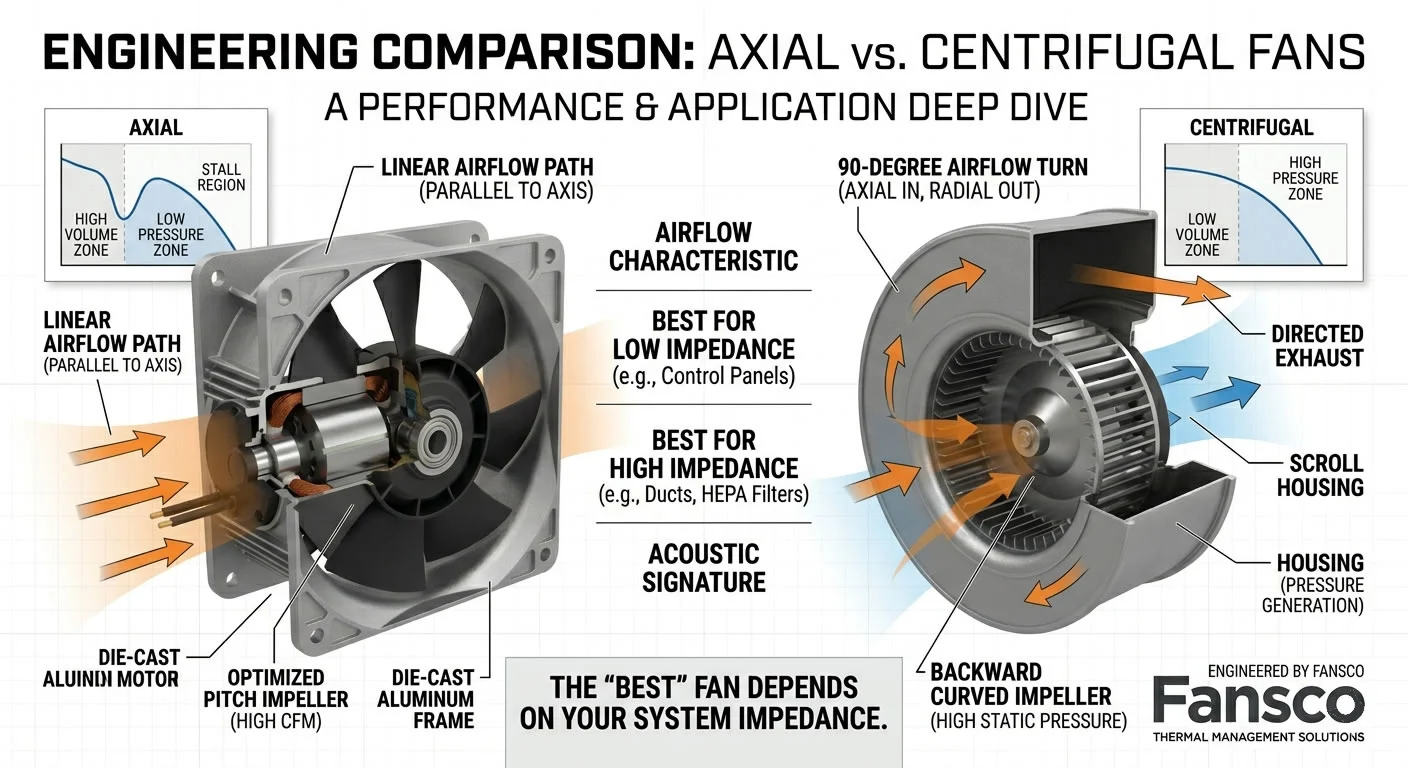
Which is better, an axial or centrifugal fan?

Which is better, an axial or centrifugal fan?

If you ask a thermal engineer, “Which is better, an axial or centrifugal fan?” they will likely answer with a question of their own: “What is your system impedance?”

There is no universally “better” fan. There is only the right fan for your specific thermal environment. Specifying the wrong aerodynamic profile is the number one cause of acoustic nightmares, premature motor failure, and localized thermal throttling in industrial equipment. Continue reading Which is better, an axial or centrifugal fan?