Posted on Leave a comment

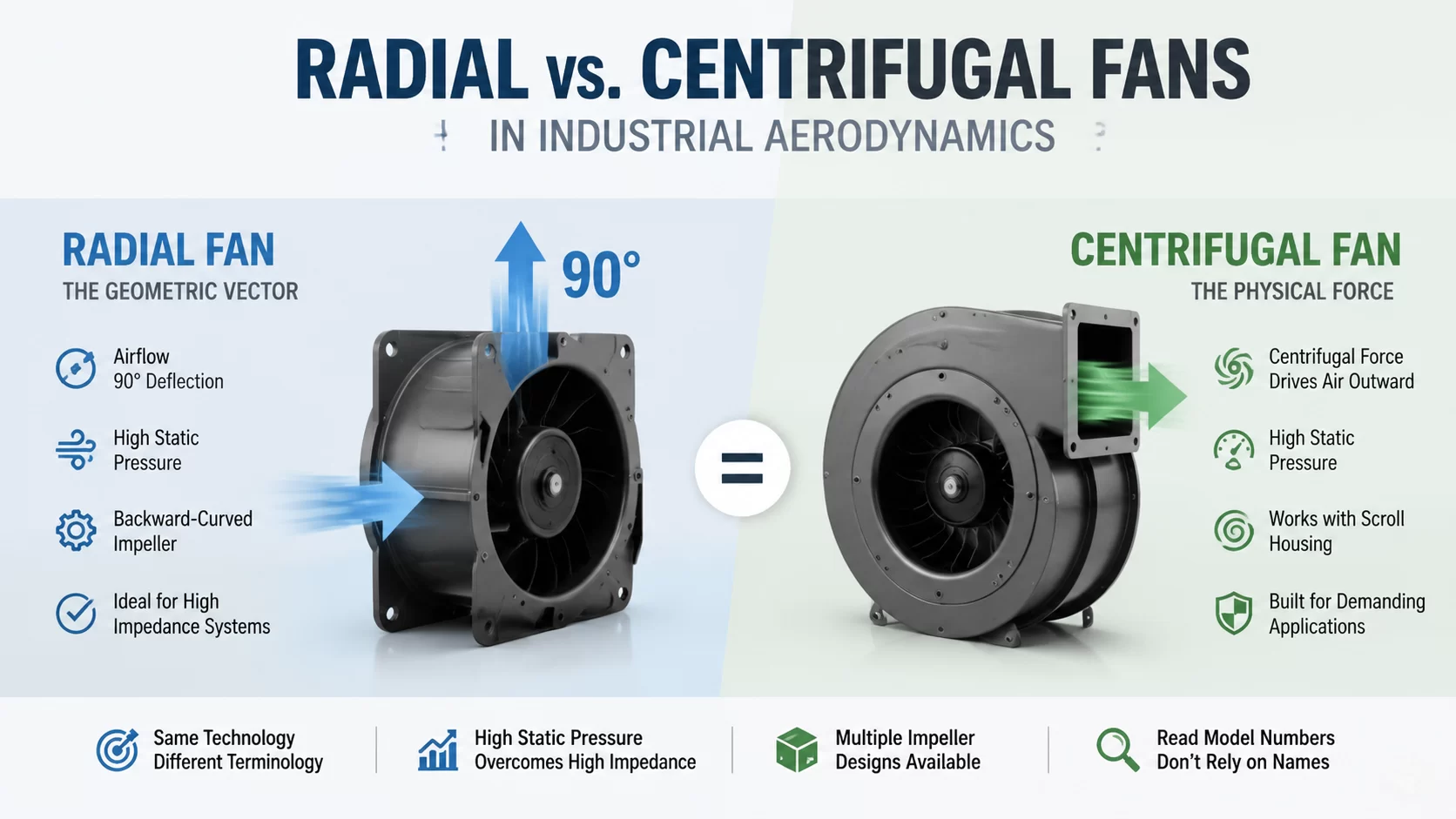
Radial vs. Centrifugal Fans in Industrial Aerodynamics

Radial vs. Centrifugal Fans in Industrial Aerodynamics

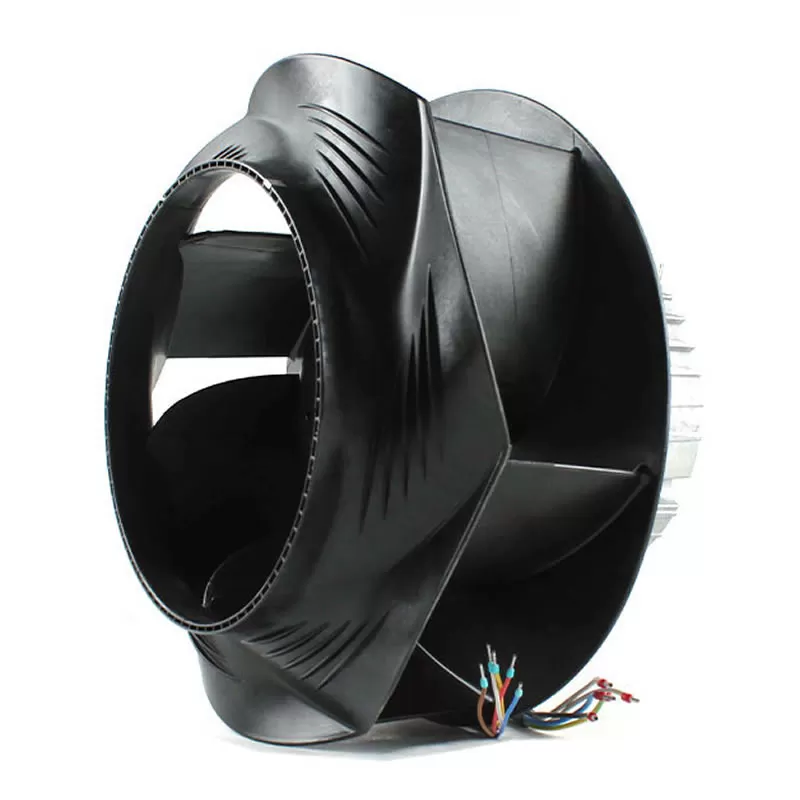
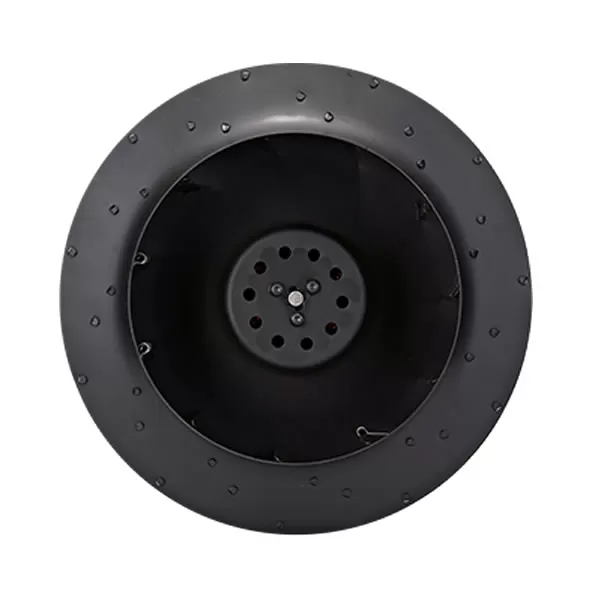
In the global procurement of industrial thermal management systems, engineering teams and buyers consistently encounter a linguistic and technical divergence across manufacturer catalogs: the distinction between Radial Fans and Centrifugal Fans. For B2B professionals tasked with sourcing heavy-duty cooling hardware—ranging from control cabinet filtration to automated server cooling—understanding this nomenclature is critical to avoiding costly mis-specifications and ensuring seamless cross-border supply chain integration. Continue reading Radial vs. Centrifugal Fans in Industrial Aerodynamics

Posted on Leave a comment

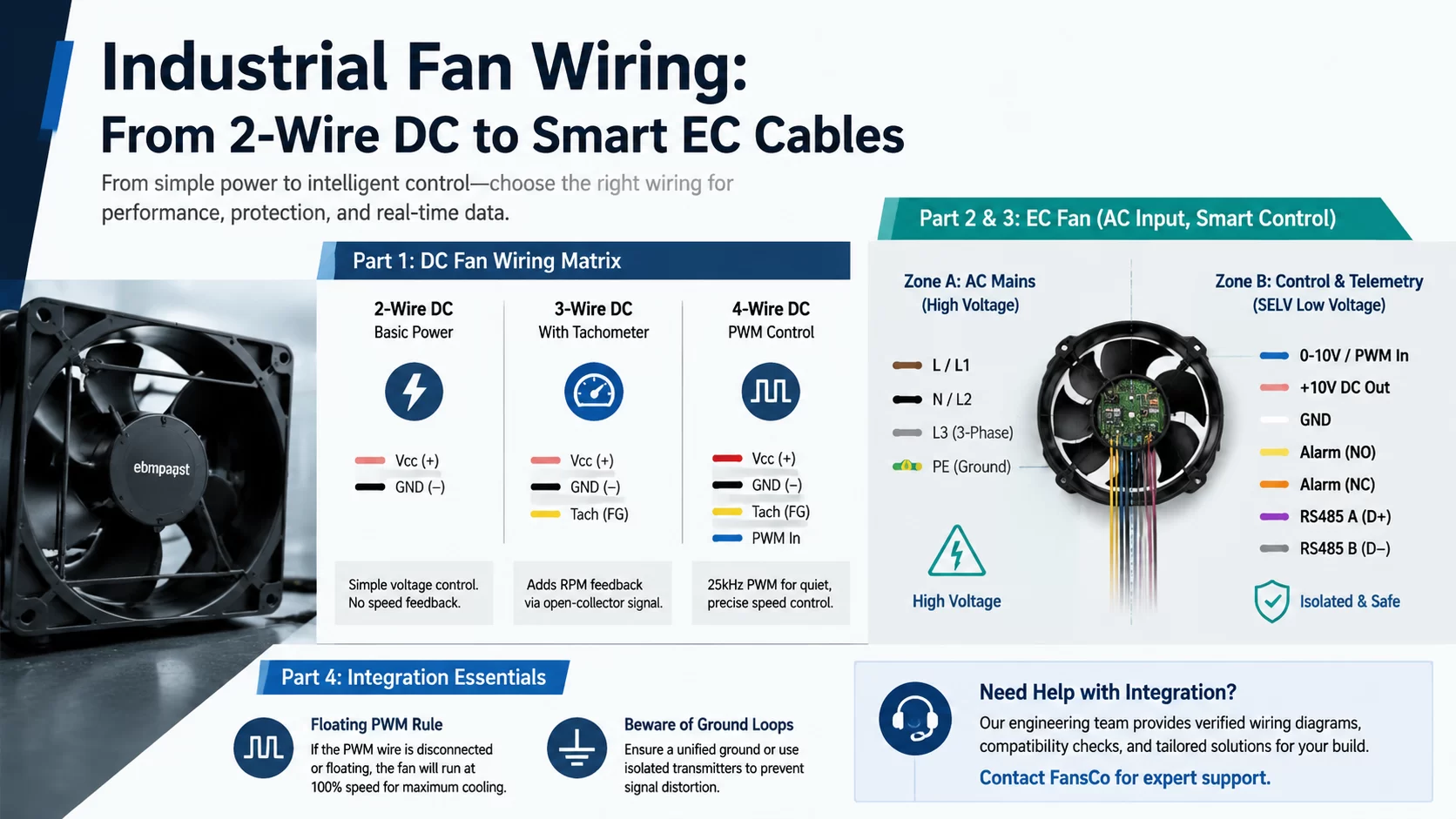
Industrial Fan Wiring: From 2-Wire DC to Smart EC Cables

Industrial Fan Wiring: From 2-Wire DC to Smart EC Cables

In modern industrial thermal management, a cooling fan is no longer just a spinning piece of plastic; it is an intelligent node within a complex digital ecosystem. For electrical engineers and system integrators, understanding how to communicate with these nodes is critical. Sourcing a fan with the correct physical dimensions but the wrong pinout will lead to uncontrolled RPMs, burned motherboards, or a complete blind spot in system telemetry. Continue reading Industrial Fan Wiring: From 2-Wire DC to Smart EC Cables

Posted on Leave a comment

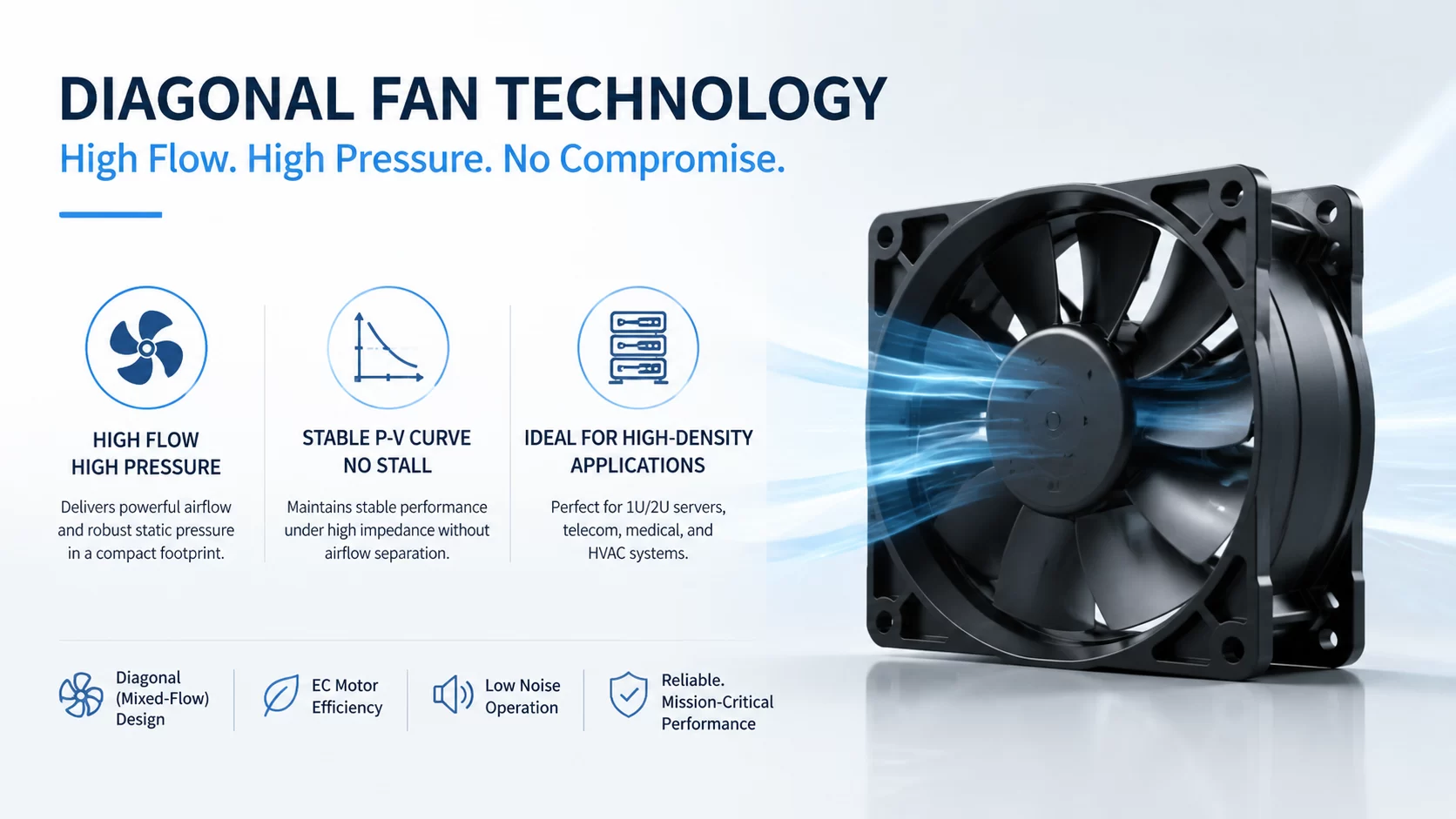
Decoding Diagonal Fans: The Mixed-Flow Advantage

Decoding Diagonal Fans: The Mixed-Flow Advantage

For industrial procurement managers and thermal design engineers, solving complex thermal management challenges often involves navigating a frustrating compromise. Standard axial fans deliver massive volumetric flow but fail catastrophically under high system impedance. Centrifugal blowers overcome extreme backpressure but demand significant physical space and alter the linear airflow path. Continue reading Decoding Diagonal Fans: The Mixed-Flow Advantage

Posted on Leave a comment

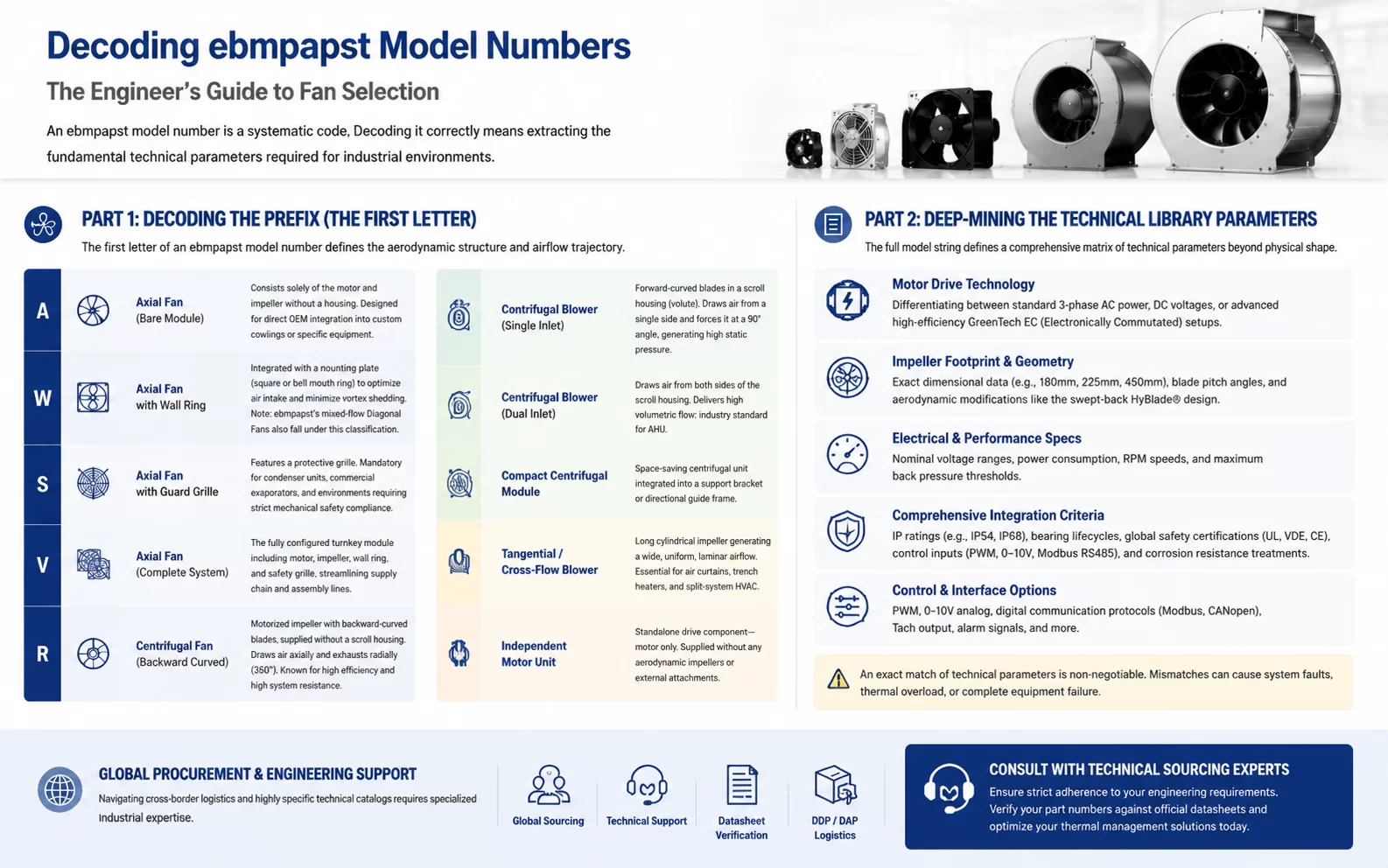
Decoding ebmpapst Model Numbers: Aerodynamic & Technical Specs

Decoding ebmpapst Model Numbers: Aerodynamic & Technical Specs

For industrial procurement managers and thermal design engineers, replacing a specialized cooling component is rarely as simple as matching physical dimensions. Sourcing the wrong fan can lead to immediate system fault codes, thermal overload, or compromised equipment efficiency. Continue reading Decoding ebmpapst Model Numbers: Aerodynamic & Technical Specs

Posted on Leave a comment

What are the common problems with centrifugal fans?

What are the common problems with centrifugal fans?

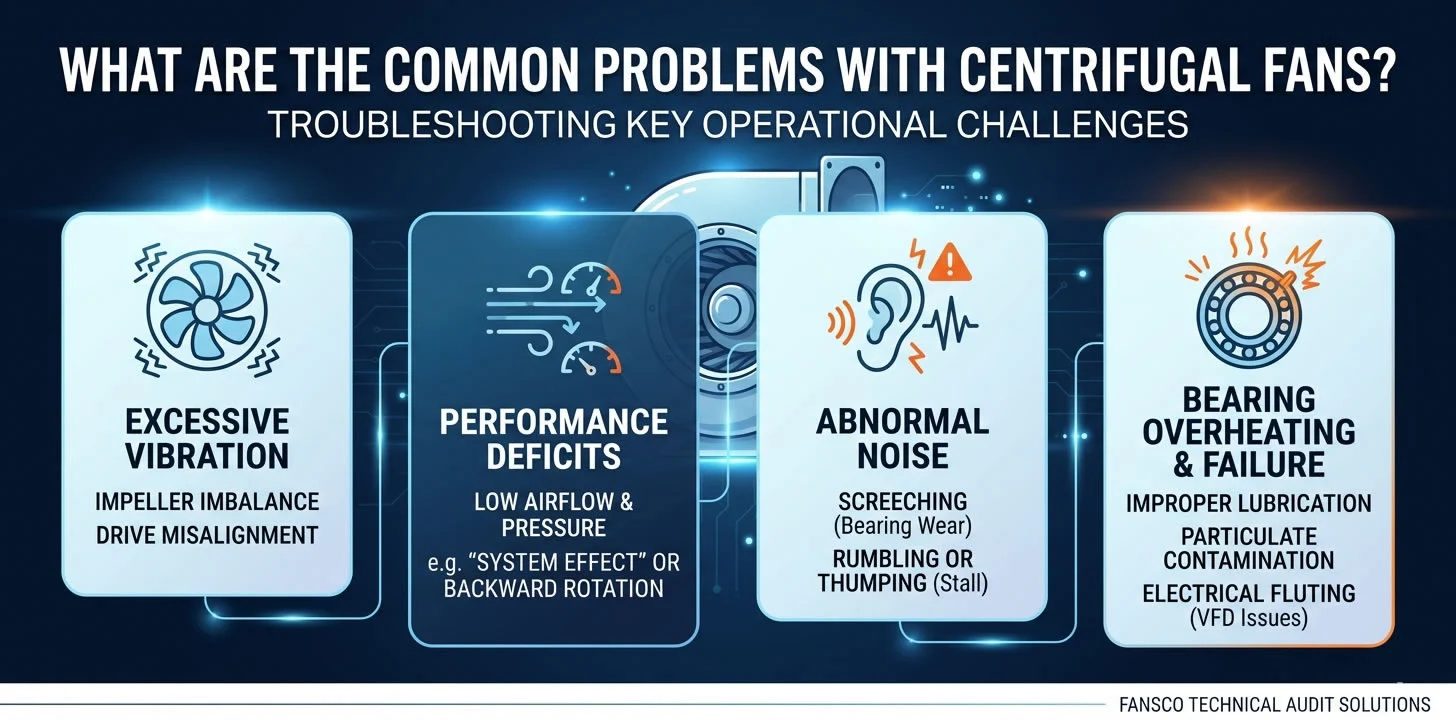
Centrifugal fans are engineered for high-pressure performance and industrial longevity, but they are far from “set-and-forget” components. In a complex ventilation system, the blower is often the first component to exhibit symptoms of broader systemic issues. For engineers and facility managers, the challenge is distinguishing between a localized mechanical failure and an aerodynamic system mismatch. Continue reading What are the common problems with centrifugal fans?

Posted on Leave a comment

What are the disadvantages of centrifugal fans?

What are the disadvantages of centrifugal fans?

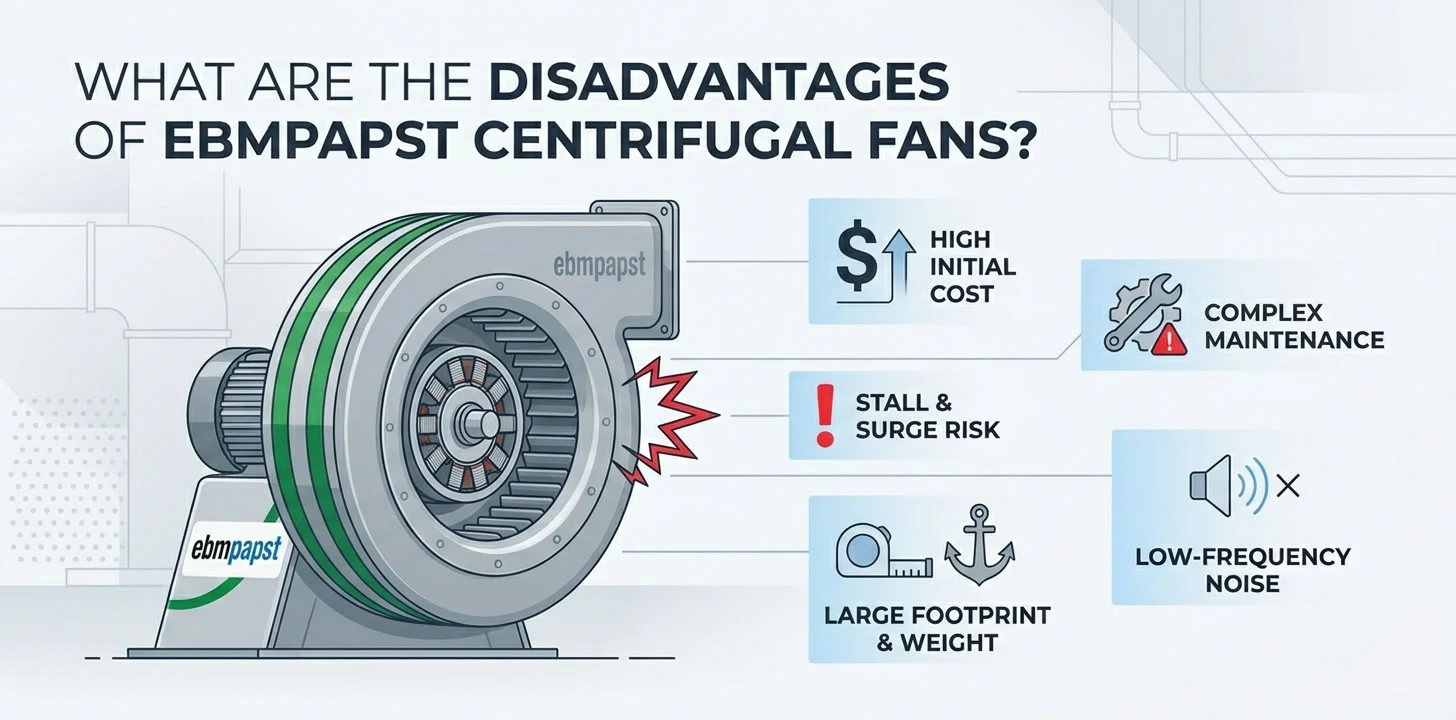
While centrifugal fans (often referred to as blowers) are widely recognized as the workhorses of high-pressure industrial ventilation, they are not a universal solution for every air-moving application. For facility managers, HVAC professionals, and system engineers, understanding the inherent limitations of these units is just as critical as knowing their strengths. Continue reading What are the disadvantages of centrifugal fans?

Posted on Leave a comment

What is the difference between centrifugal and axial fan?

What is the difference between centrifugal and axial fan?

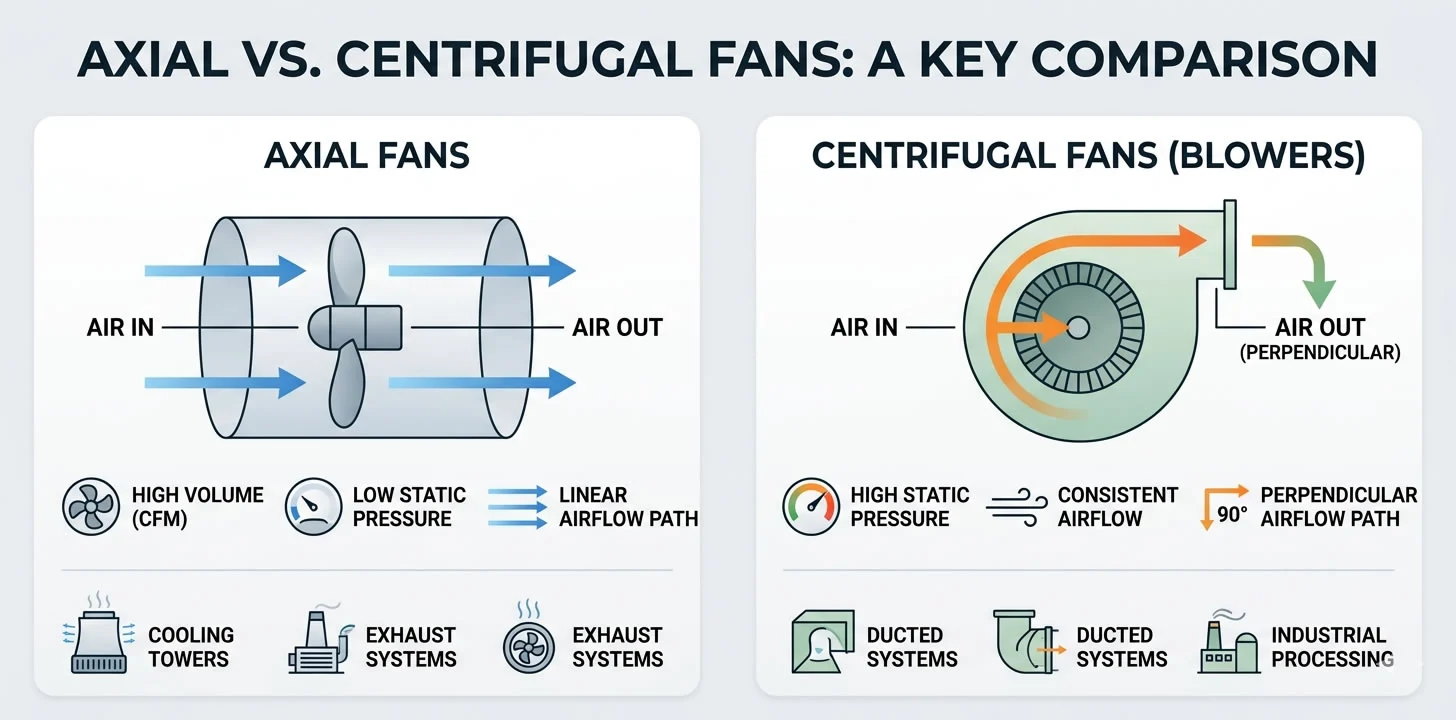
In the realm of industrial ventilation, HVAC design, and process engineering, specifying the correct air-moving equipment is critical to system performance, energy efficiency, and overall reliability. While both centrifugal and axial fans serve the fundamental purpose of moving gases, their aerodynamic principles, performance curves, and optimal use cases differ drastically. Continue reading What is the difference between centrifugal and axial fan?

Posted on Leave a comment

What is a centrifugal fan?

What is a centrifugal fan?

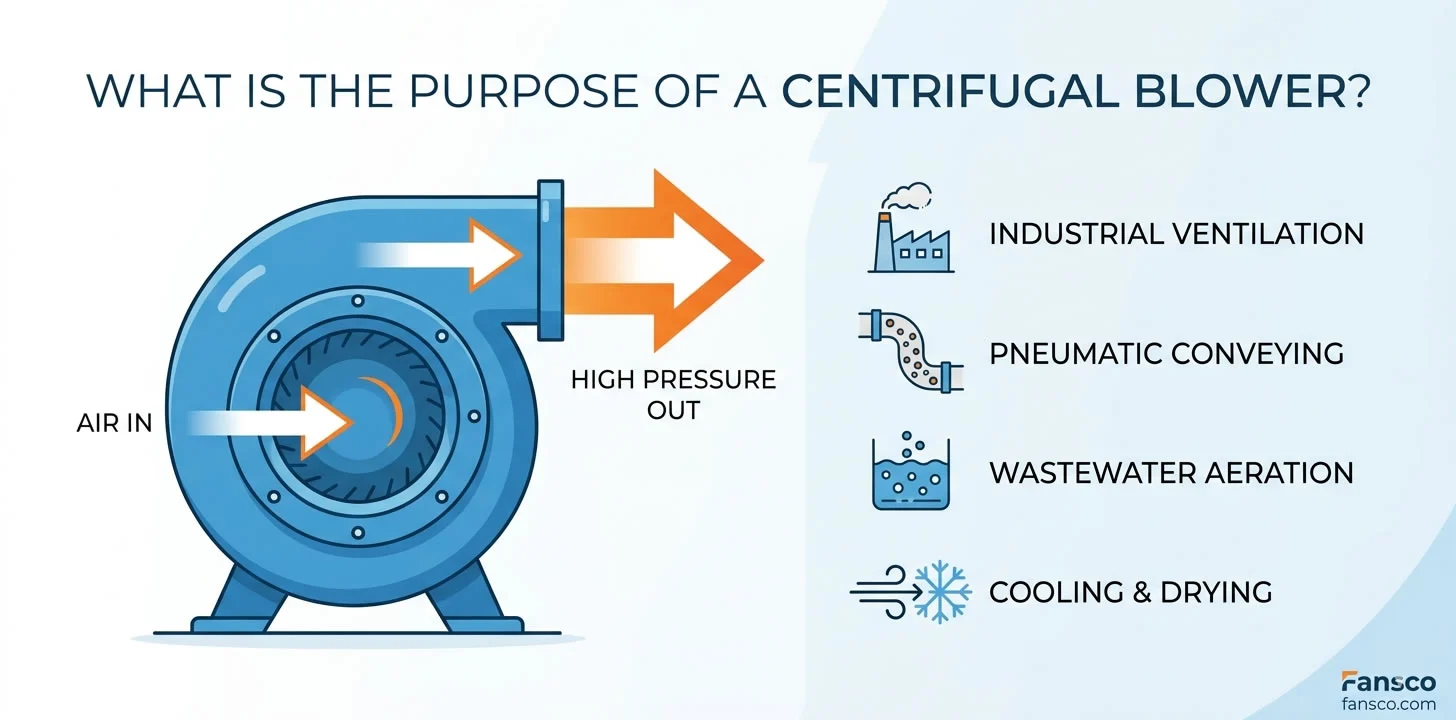
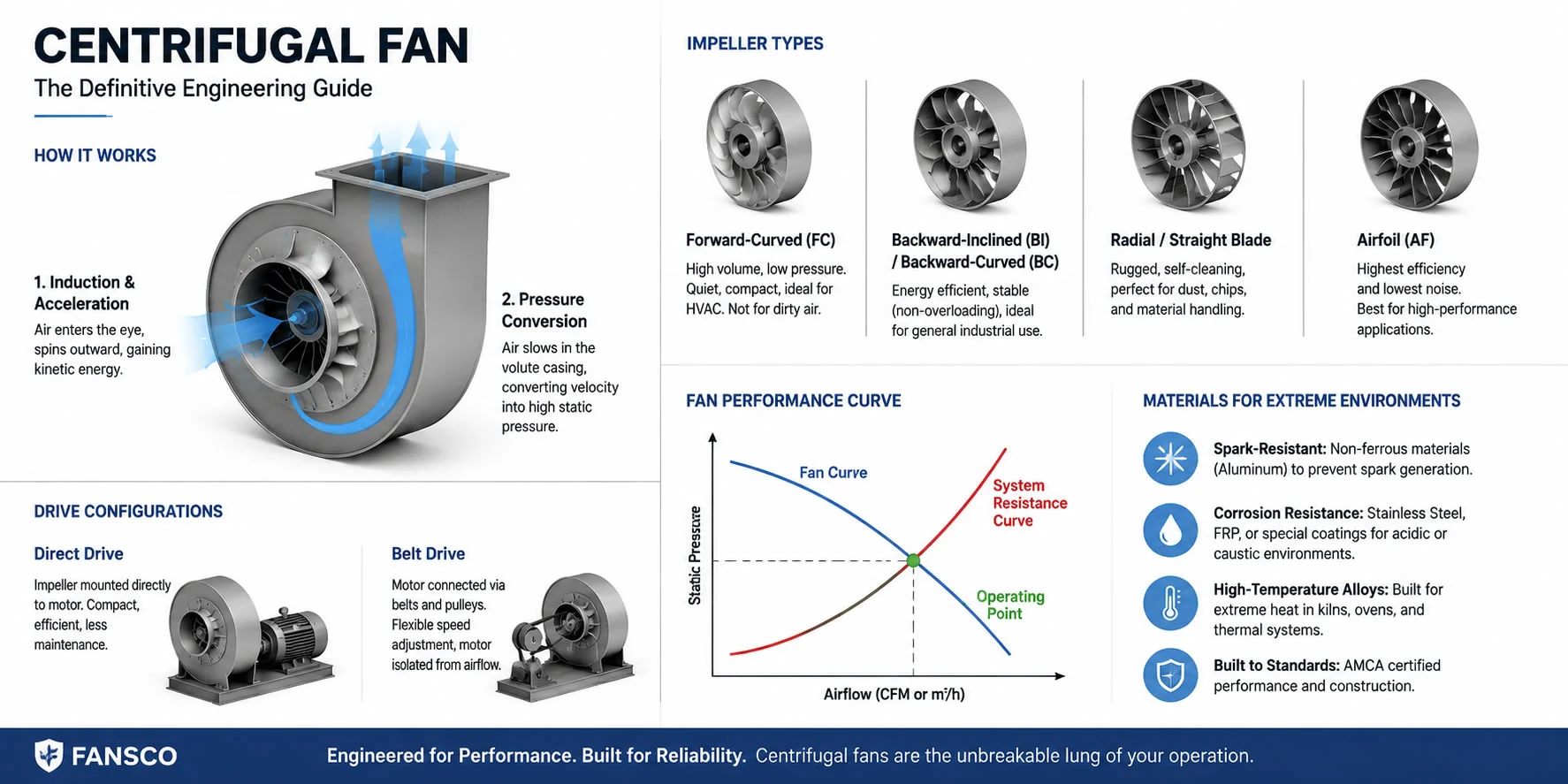
In the realm of industrial ventilation, process engineering, and heavy-duty HVAC, the centrifugal fan—often referred to as a blower or squirrel-cage fan—stands as the foundational equipment for moving air against high resistance. While axial fans are designed to move high volumes of air at low pressure (similar to an airplane propeller), centrifugal fans are engineered to generate the immense static pressure required to push air through complex ductwork, dense filtration systems, and demanding industrial processes. Continue reading What is a centrifugal fan?

Posted on Leave a comment

What are the advantages of brushless DC motors in EC fans?

What are the advantages of brushless DC motors in EC fans?

To understand the rapid shift in the ventilation and HVAC industry toward Electronically Commutated (EC) fans, one must first look at the heart of the machine: the Brushless DC (BLDC) motor. While traditional AC motors have dominated for decades due to their simplicity, the integration of BLDC technology into EC fans has redefined the benchmarks for efficiency, control, and reliability. Continue reading What are the advantages of brushless DC motors in EC fans?