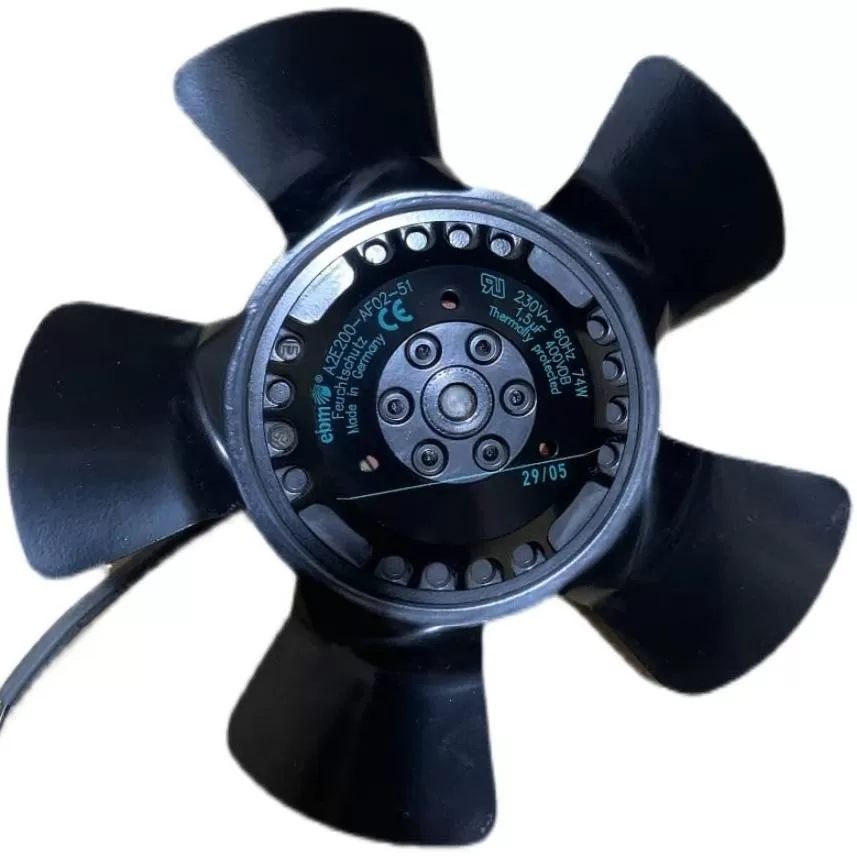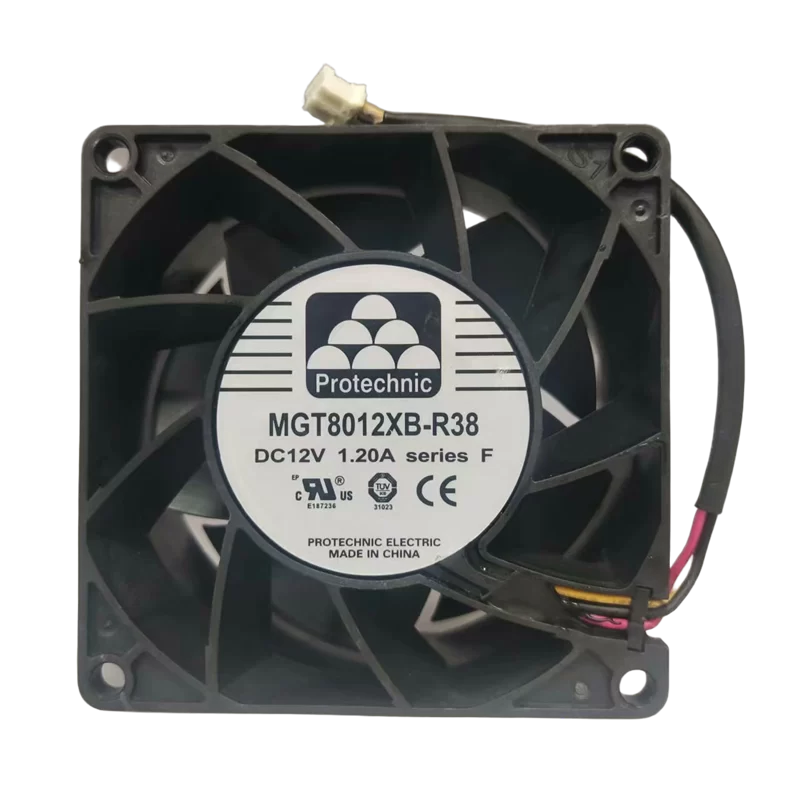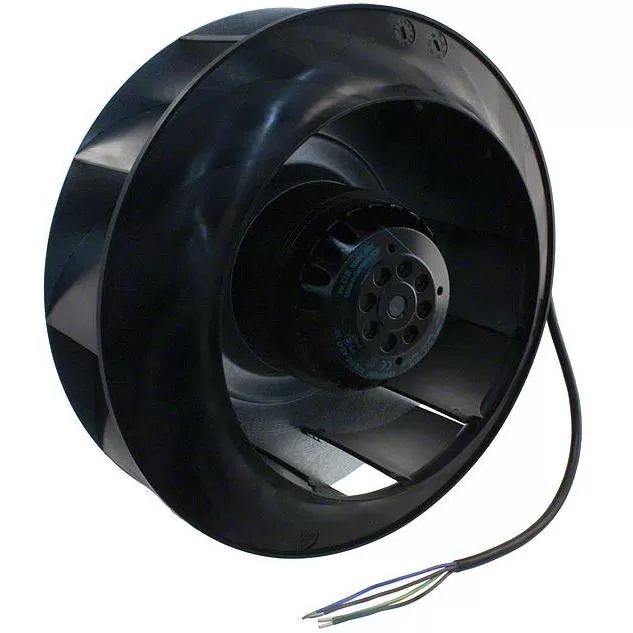
In the global procurement of industrial thermal management systems, engineering teams and buyers consistently encounter a linguistic and technical divergence across manufacturer catalogs: the distinction between Radial Fans and Centrifugal Fans. For B2B professionals tasked with sourcing heavy-duty cooling hardware—ranging from control cabinet filtration to automated server cooling—understanding this nomenclature is critical to avoiding costly mis-specifications and ensuring seamless cross-border supply chain integration.
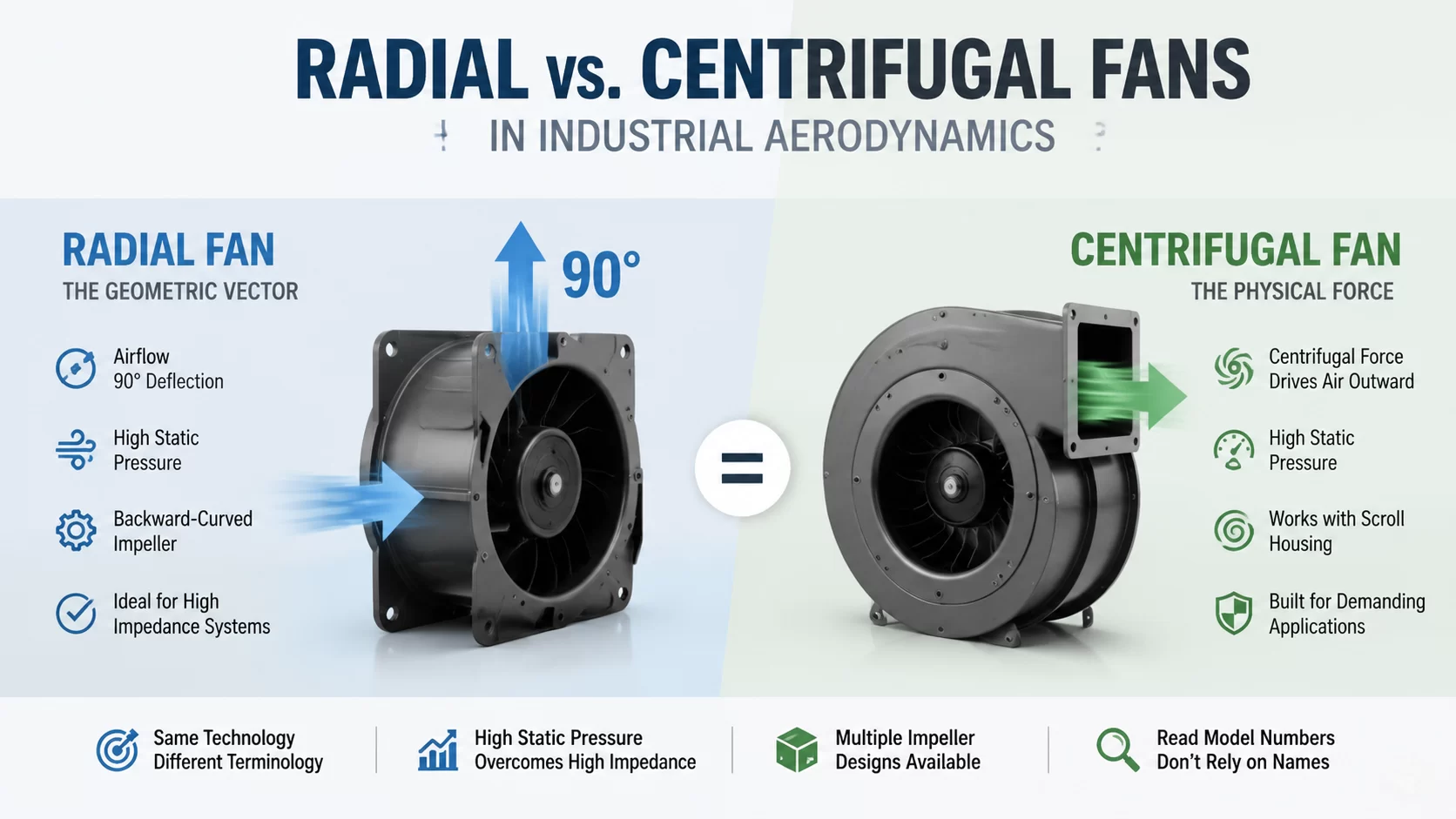
Mechanically and aerodynamically, a radial fan and a centrifugal fan are the exact same device. The discrepancy in terminology does not stem from a difference in hardware, but rather from the intersection of aerodynamic physics, geometric airflow vectors, and the divergent engineering standards between North America, Europe, and Asia. This definitive guide completely decodes the aerodynamic mechanics, technical categorization, and procurement logic required for precision model selection.
1. The Terminology Divide: AMCA Standards vs. DIN Standards
To accurately navigate multi-national datasheets (such as those from ebm-papst, Delta, NMB, or Sanjun), it is essential to understand the structural origins of these engineering terms:
- Centrifugal Fan (The Physical Force): This nomenclature is predominantly utilized in North American and Asian markets, heavily influenced by AMCA (Air Movement and Control Association) and ASHRAE standards. The term describes the driving physical force. As the fan’s impeller rotates, it generates a centrifugal vortex, forcing the air mass outward radially from the motor shaft, converting velocity pressure into usable static pressure.
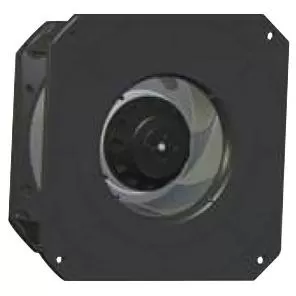
- Radial Fan (The Geometric Vector): Prevalent in European engineering circles and native to the technical lexicons of German manufacturers (guided by DIN and VDE standards). The German term Radialventilator focuses entirely on the direction of the exhaust airflow. Air is drawn into the unit axially (parallel to the rotational axis) and expelled radially (perpendicular, or at a 90-degree angle, to the axis).
2. Aerodynamic Mechanics: Overcoming High System Impedance
Unlike standard axial designs that move massive volumes of air in a straight linear path, radial/centrifugal fans are engineered explicitly to overcome extreme system resistance (high impedance). The 90-degree deflection of air through the internal impeller blades, combined with centrifugal acceleration, drastically increases the kinetic energy of the air stream.
When this high-velocity air is restricted by a precisely engineered scroll housing (volute)—or forced into a highly dense system environment like a tightly packed telecom enclosure or HEPA filtration matrix—this kinetic energy is efficiently converted into exceptionally high static pressure (measured in Pa, mmH2O, or inH2O). This makes them the only viable solution when pushing air through structural bottlenecks.
3. Exhaustive Impeller Categorization: Beyond Basic Strings
Technical item categorization within industrial cooling must not be limited to pre-defined strings or rigid dropdown lists. To maintain extensive data extraction and precise aerodynamic matching, categorization must encompass open-ended criteria. The impeller design dictates the unit’s exact flow-pressure coordinate mapping on the PQ (Pressure-Volume) curve. The primary topologies include:
- Backward-Curved: Blades curve away from the direction of rotation. These impellers offer peak aerodynamic efficiency, a non-overloading power characteristic, and operate seamlessly without a scroll housing (often referred to as plenum fans). They are the industry standard for Fan Filter Units (FFUs), data center HVAC, and heavy-duty intake filtration.
- Backward-Inclined & Aerofoil: An advanced sub-category of backward-curved fans utilizing airfoil blade cross-sections to minimize turbulence, significantly reducing acoustic noise while maintaining massive static pressure output.
- Forward-Curved: Blades curve into the direction of rotation. These deliver significantly higher volumetric airflow at lower rotational speeds, but they strictly require a dedicated scroll housing to function properly. They are highly sensitive to system resistance changes.
- Radial-Bladed : Featuring straight blades radiating directly from the central hub like a paddle wheel. While aerodynamically less efficient, they are structurally robust and possess inherent “self-cleaning” properties, utilized almost exclusively in harsh material handling environments involving heavy particulate matter, wood chips, or metal dust extraction.
- Custom & Hybrid Topologies: Note: The categorization must remain open. The industrial spectrum actively utilizes 3D-profiled mixed-flow blades, diagonal fans, custom acoustic tweaks, and an extensive array of other configurations to meet highly specialized thermal requirements.
4. B2B Sourcing Logic: Decoding the Product Model Number
When searching for international replacements or engineering alternatives across different brands, relying on a generic string sequence (e.g., searching the web for “230V radial fan” or “centrifugal blower 120mm”) will consistently yield incomplete, incompatible, or fundamentally flawed results.
For absolute procurement accuracy, technical sourcing instructions must target the product model number and decode its underlying catalog logic rather than the generic model string sequence.
For example, leading European manufacturers encode the fan’s entire aerodynamic topology directly into the alphanumeric prefix (e.g., an ‘R’ prefix denoting a motorized Radial impeller without a housing, while a ‘G’ prefix denotes a centrifugal blower with a housing). By structurally decoding the product model number, procurement engineers can mine the true technical library parameters—such as precise blade diameter, motor pole count, voltage phasing, EC/AC/DC motor technology, and sensor outputs—guaranteeing a 100% technical match regardless of whether the regional catalog calls it “radial” or “centrifugal.”
5. Application Matrix: Selecting the Right Aerodynamic Profile
Selecting between an axial configuration and a radial/centrifugal configuration is ultimately a strict calculation of your system’s impedance. Use the technical matrix below for baseline system matching:
| Aerodynamic Profile | Airflow Vector | Primary Strength | Target System Impedance | Typical Industrial Applications |
|---|---|---|---|---|
| Axial Fan | Straight / Linear | High Volumetric Flow (CFM/CMH) | Low (Minimal physical resistance) | Condenser cooling, open warehouse ventilation, standard heat exchangers, electronic chassis exhaust. |
| Radial / Centrifugal Fan | 90-Degree Deflection | High Static Pressure (Pa/inH2O) | High (Dense structural bottlenecks) | Control cabinet filtration, heavy-duty AHUs, telecom base stations, long automated ducting networks. |