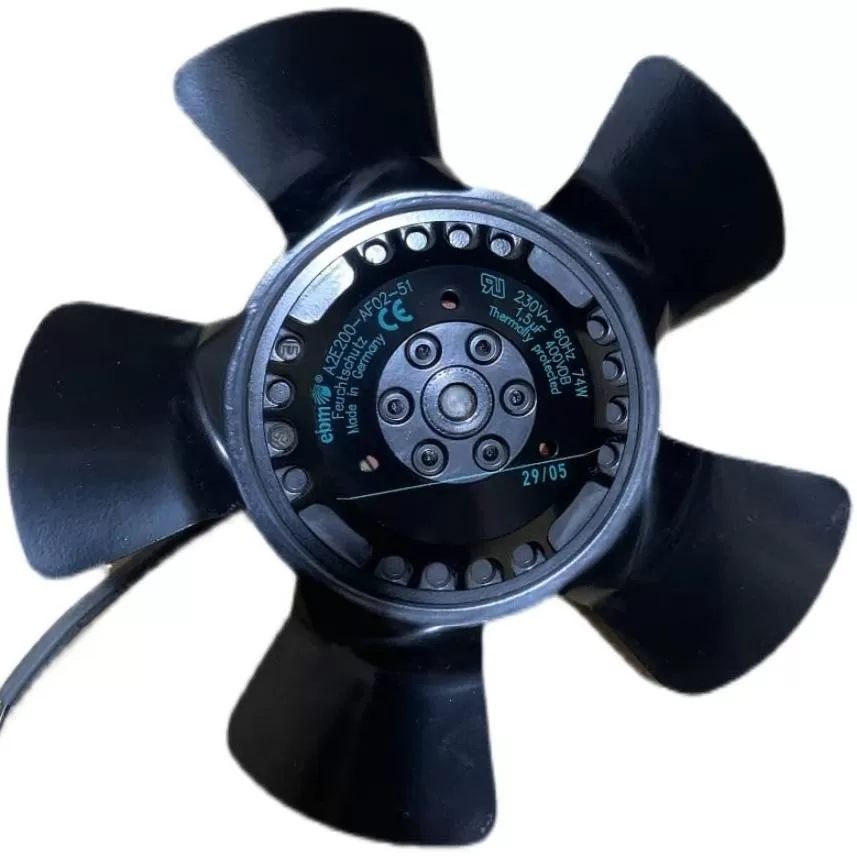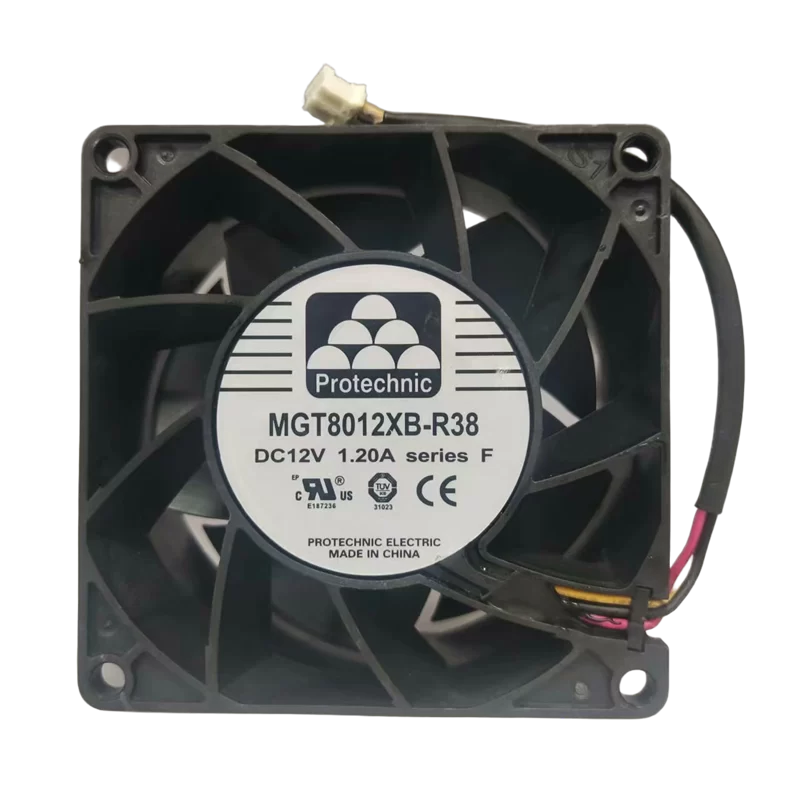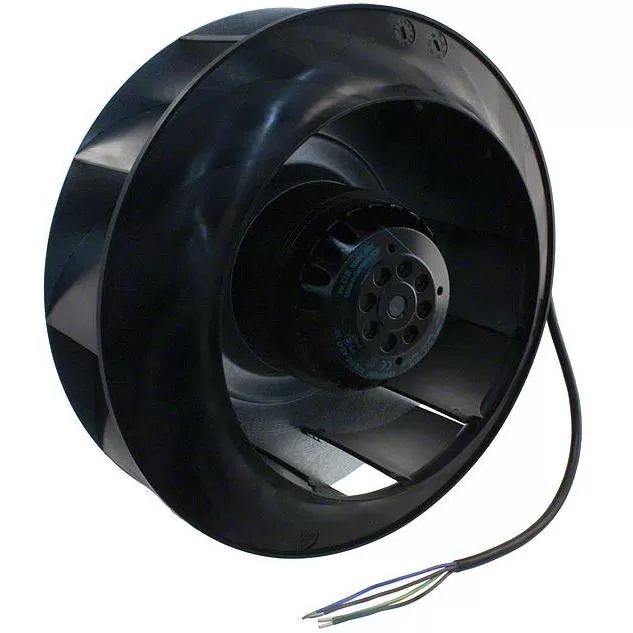
For industrial procurement managers and thermal design engineers, solving complex thermal management challenges often involves navigating a frustrating compromise. Standard axial fans deliver massive volumetric flow but fail catastrophically under high system impedance. Centrifugal blowers overcome extreme backpressure but demand significant physical space and alter the linear airflow path.
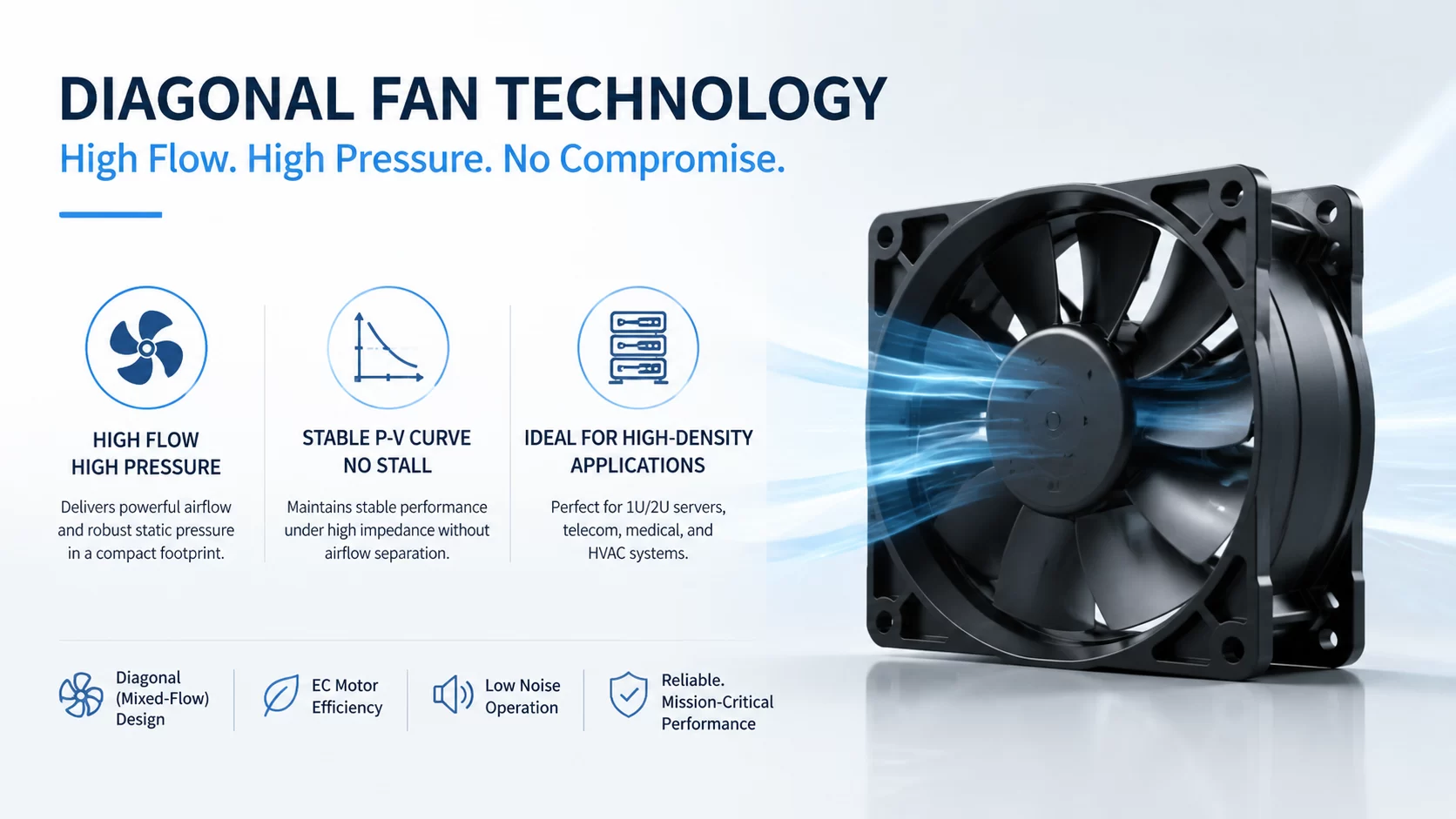
When physical footprint is strictly constrained—such as in 1U/2U telecom servers—yet the system demands both high airflow and robust static pressure, traditional options fall short. The solution lies in a highly specialized aerodynamic architecture: The Diagonal Fan (or Mixed-Flow Fan).
This technical bulletin provides an in-depth mechanical breakdown of diagonal fan technology, exploring its aerodynamic physics, performance curve advantages, and why it remains the ultimate solution for high-density cooling environments.
Part 1: The Aerodynamic Physics of Mixed-Flow
To understand the diagonal fan, one must examine the vector geometry of its airflow. It is essentially a hybrid—bridging the gap between the axial and centrifugal specific speed domains.
In turbomachinery, fan selection is often governed by Specific Speed ($N_s$), a dimensionless parameter that dictates the optimal impeller shape for a given pressure and flow. Axial fans operate at high $N_s$, while centrifugal fans operate at low $N_s$. Diagonal fans occupy the critical mid-range.
The Core Vector Mechanism: Air is drawn into the fan axially (parallel to the motor shaft). However, the impeller hub is distinctly conical. As the air passes through the complex, three-dimensional twist of the rotating blades, centrifugal forces accelerate the air radially, while the blade pitch drives it axially. The result is a diagonal discharge trajectory that inherently compresses the air within the housing.
Part 2: The P-V Curve Advantage: Eliminating Aerodynamic Stall
The most significant engineering advantage of a diagonal fan is revealed on the P-V (Pressure-Volume) performance curve.
Standard axial fans suffer from a phenomenon known as “Aerodynamic Stall” or the “Saddle Point.” When system resistance (impedance from dense heat sinks or filters) becomes too high, the airflow separates from the axial blade surface. This creates intense turbulence, a massive drop in pressure, and a sharp spike in acoustic noise. Engineers operating standard fans near this stall region risk critical thermal failure.
The Diagonal Solution: Because the diagonal impeller utilizes centrifugal force to build pressure, it drastically alters the performance curve. Diagonal fans do not exhibit a severe saddle point. Their P-V curve remains steep and stable, allowing them to push through fluctuating high-impedance environments without airflow separation or sudden acoustic spikes.
Part 3: Performance Matrix: Axial vs. Centrifugal vs. Diagonal
| Aerodynamic Profile | Flow vs. Pressure Trajectory | Saddle Point / Stall Risk | Physical Form Factor |
|---|---|---|---|
| Axial Fan | High Flow / Low Pressure | High (at peak resistance) | Compact / Linear Flow |
| Centrifugal Blower | Moderate Flow / Extreme Pressure | Negligible | Bulky / 90° Flow Deflection |
| Diagonal Fan | High Flow / High Pressure | Minimal to None | Compact / Linear Flow |
Part 4: Advanced Integration: Stators, Materials, and EC Drives
A premium diagonal fan, such as those engineered by ebmpapst, relies on more than just the rotating impeller. True high-density performance is achieved through complete system integration.
1. Stator Guide Vanes (Pressure Recovery)
As air exits the diagonal impeller, it is highly turbulent and swirling. Advanced mixed-flow modules incorporate stationary guide vanes (stators) directly downstream. These stators straighten the airflow, recovering the kinetic energy (dynamic pressure) of the swirl and converting it into highly usable static pressure. This significantly boosts the total aerodynamic efficiency.
2. Composite Material Science
To handle the complex 3D geometry required for mixed-flow blades, manufacturers utilize advanced glass-fiber reinforced plastics (e.g., PA66). These composites reduce the rotational mass of the impeller, lower vibration harmonics, and provide superior acoustic damping compared to stamped aluminum.
3. GreenTech EC Motor Synergy
The extreme power density of a diagonal fan is perfectly paired with Electronically Commutated (EC) motors. These brushless DC motors (running on AC mains) offer up to 90% electrical efficiency. Furthermore, they allow for precise, infinite speed regulation via 0-10V analog, PWM, or Modbus RTU interfaces. The motor’s intelligent PID loop can instantly adjust RPM to compensate for increased system resistance, such as a clogging air filter.
Part 5: Mission-Critical Industrial Applications
Due to their specific aerodynamic properties, diagonal fans are engineered exclusively for environments where failure is not an option and space is a premium:
- 5G & Telecom Infrastructure: Cooling densely packed RF modules and base stations exposed to extreme environmental temperatures.
- Edge Computing & Server Racks: Forcing cold air through the extremely narrow channels of heavily populated 1U/2U server chassis.
- Medical Imaging (MRI/CT): Providing stable, high-pressure cooling for power electronics without generating electromagnetic or acoustic interference.
- Advanced HVAC Inline Ventilation: Moving vast volumes of air through restrictive HEPA filters and long ductwork without installing bulky centrifugal AHUs.
Specify Your Diagonal Cooling Solution
Matching the specific speed, impedance curve, and firmware requirements of a mixed-flow fan to your application requires deep technical expertise. Whether you are prototyping a high-density enclosure or sourcing a direct EOL replacement, precision is non-negotiable.
Consult with the FansCo technical procurement team today to decode your performance curves and secure the exact ebmpapst diagonal fan your system demands.