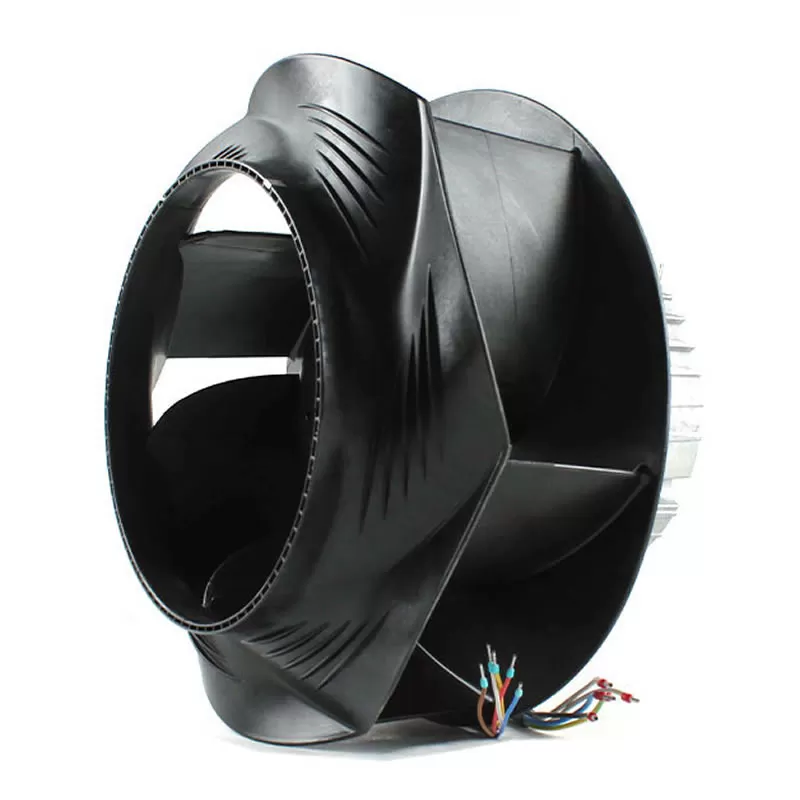
Centrifugal fans are engineered for high-pressure performance and industrial longevity, but they are far from “set-and-forget” components. In a complex ventilation system, the blower is often the first component to exhibit symptoms of broader systemic issues. For engineers and facility managers, the challenge is distinguishing between a localized mechanical failure and an aerodynamic system mismatch.
Below is a deep dive into the common problems encountered with centrifugal fans, analyzing the underlying physics and the long-term implications for your operations.
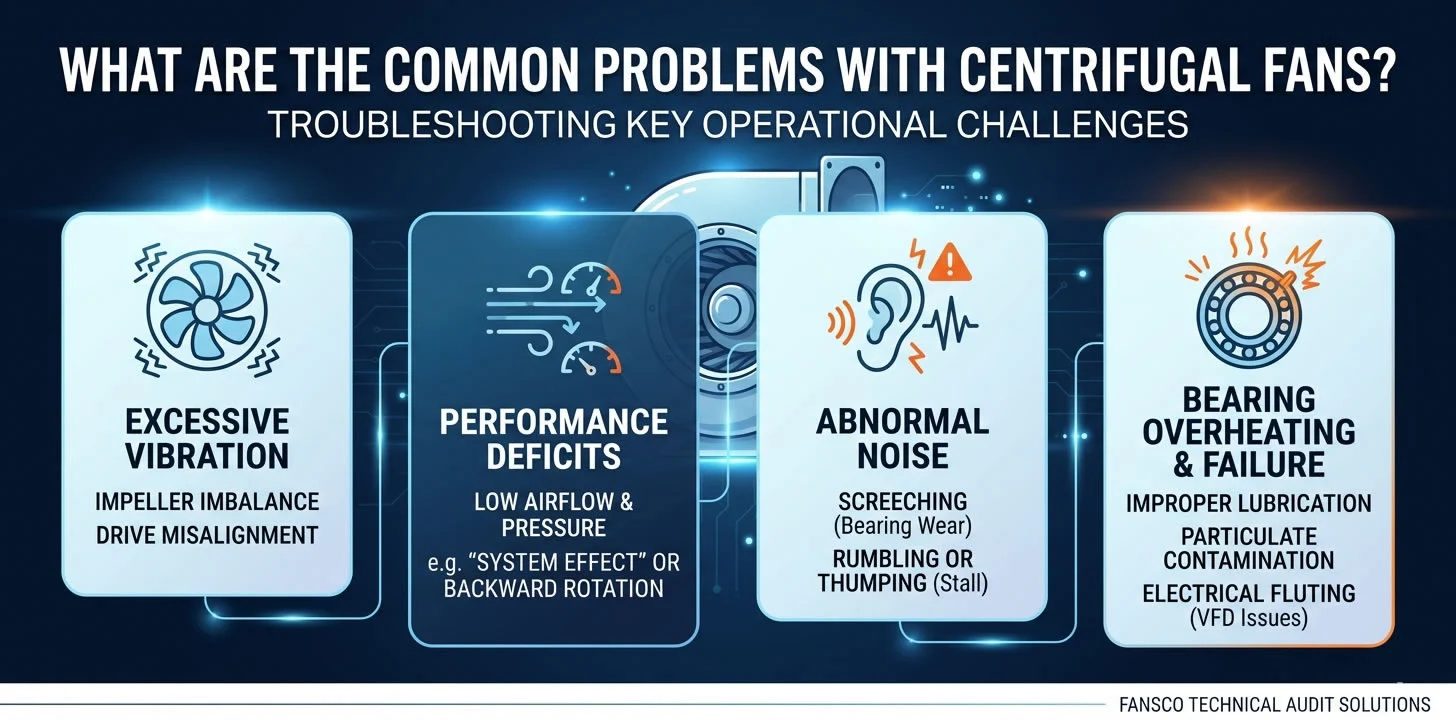
1. Structural Vibration and Impeller Fatigue
While minor vibration is expected in rotating machinery, excessive oscillation in a centrifugal fan is a precursor to catastrophic failure. This isn’t just about noise; it’s about the structural integrity of the metal itself.
- Material Accretion and Erosion: In industrial processing, particulate matter can accumulate unevenly on the blades (accretion) or wear them down (erosion). This shifts the center of mass, creating a rotating unbalance that stresses the shaft and bearings.
- Mechanical Looseness: Over time, the constant torque can lead to “fretting” at the impeller hub or the motor mounts. If the impeller is not perfectly seated on the shaft, the resulting vibration can lead to crack propagation in the fan wheel.
- The Critical Speed Trap: Every fan assembly has a natural frequency. If a Variable Frequency Drive (VFD) is used to ramp speed, the fan may inadvertently operate at its “critical speed,” causing resonance that can literally shake the housing apart.
2. The “System Effect”: Aerodynamic Inefficiency
Perhaps the most misunderstood problem is when a fan performs perfectly on a test block but fails in the field. This is known as the System Effect—a loss in performance caused by poor inlet or outlet conditions.
- Inlet Swirl: If air enters the fan with a pre-existing spin (caused by an elbow too close to the inlet), the impeller cannot load properly. This leads to a massive drop in static pressure and increased power consumption.
- Non-Uniform Flow: Obstructions near the inlet cause air to enter only a portion of the impeller eye. This creates uneven loading on the blades, leading to “shudder” and reduced CFM that no amount of RPM increase can fix.
3. Aerodynamic Surge and Stall (The Pressure Boundary)
Centrifugal fans are designed to operate on a specific curve. When the system resistance (static pressure) exceeds the fan’s capability, the air can no longer “climb” the pressure gradient.
- The Stall Region: When the flow rate is too low, air separates from the blade surfaces. This results in “surging”—a violent, rhythmic backflow of air that causes audible “thumping” and subjects the drive train to oscillating torque loads.
- Thermal Build-up: In a stalled state, the energy that should be moving air is converted into heat within the housing. In high-temperature applications, this can lead to rapid expansion of the impeller, potentially causing it to strike the inlet cone.
4. Bearing Degradation: Lubrication and Electrical Issues
Bearings are the primary wear items, but their failure is rarely due to “old age.” Modern issues include:
- Electrical Fluting (VFD Issues): When using VFDs without proper grounding or insulated bearings, stray currents can jump across the bearing’s oil film. This creates microscopic “pitting” or fluting, leading to premature noise and failure.
- Over-greasing: Excessive lubrication increases internal friction, causing the bearing to run hot. This thins the grease until it leaks out, leaving the bearing dry despite frequent maintenance.
5. Motor Overload and Curve Shifting
A common diagnostic error occurs when a motor trips its breaker. While most assume the system is “blocked,” the opposite is often true for centrifugal blowers.
- “Runout” Conditions: If the system has *less* resistance than designed (e.g., a missing filter or a breached duct), the fan will move an excessive volume of air. Because horsepower increases cubically with flow in many centrifugal designs, the motor will pull more current than its nameplate rating, leading to thermal trips.
Technical Diagnostic Matrix
| Symptom | Deep-Root Cause | Engineering Solution |
|---|---|---|
| Consistent Rhythmic Thumping | System resistance is too high; fan is in “Surge.” | Reduce system backpressure or implement a bypass bleed-off. |
| Localized Bearing Heating | Shaft misalignment or VFD-induced fluting. | Perform laser alignment; install shaft grounding rings. |
| Performance Drop (RPM is OK) | Inlet turbulence (System Effect). | Install inlet vanes or increase the straight-run duct length. |
| Sudden Motor Trip | System resistance too low (Fan “Runout”). | Dampen the flow to bring the fan back onto its design curve. |
The Bottom Line
Most “fan problems” are actually “system problems.” At Fansco, we believe that troubleshooting begins with a holistic view of the airflow path. Whether it’s an aerodynamic stall or a VFD-related bearing issue, addressing the root cause rather than the symptom is the only way to ensure industrial reliability.
Is your system underperforming or experiencing frequent mechanical downtime? Contact the Fansco technical team for a comprehensive system audit and high-efficiency blower solutions tailored to your specific pressure requirements.