Posted on Leave a comment

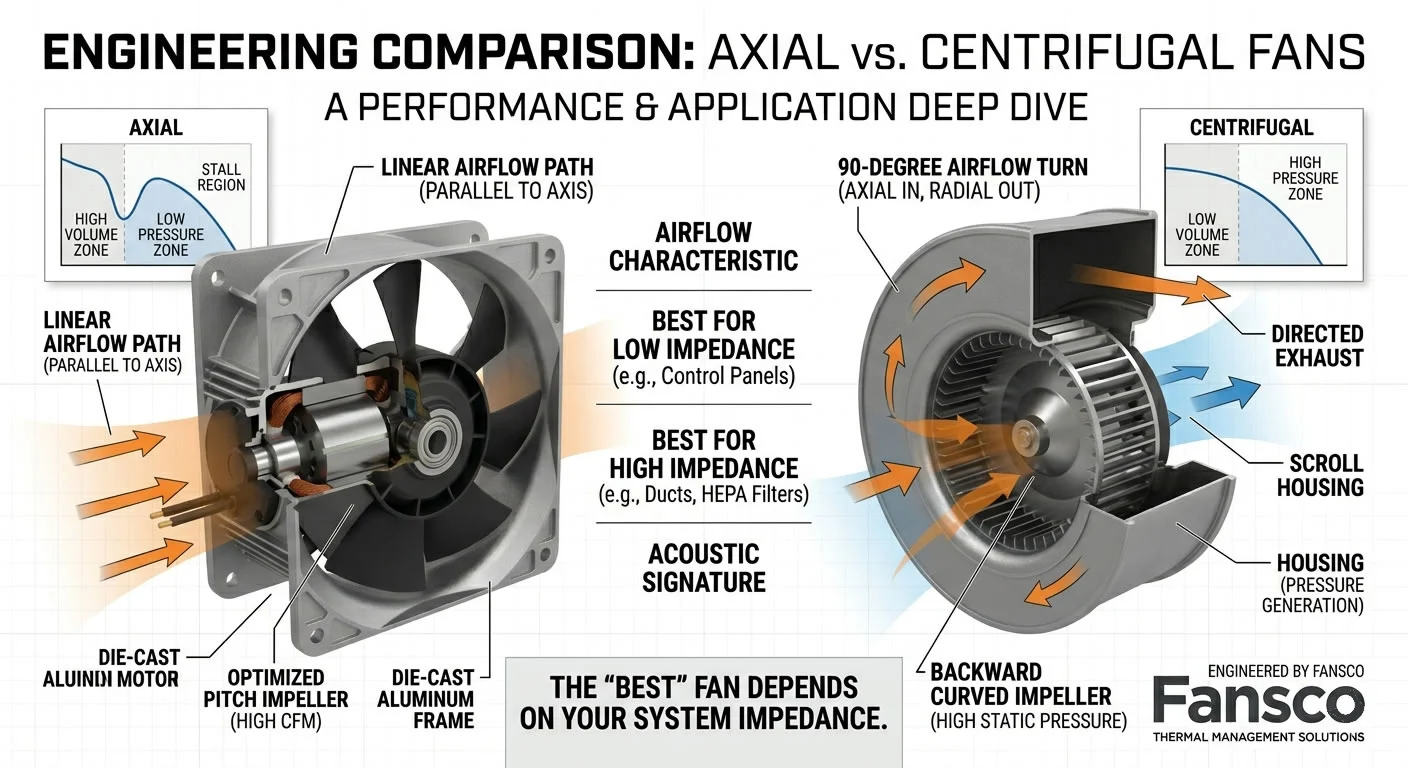
Which is better, an axial or centrifugal fan?

Which is better, an axial or centrifugal fan?

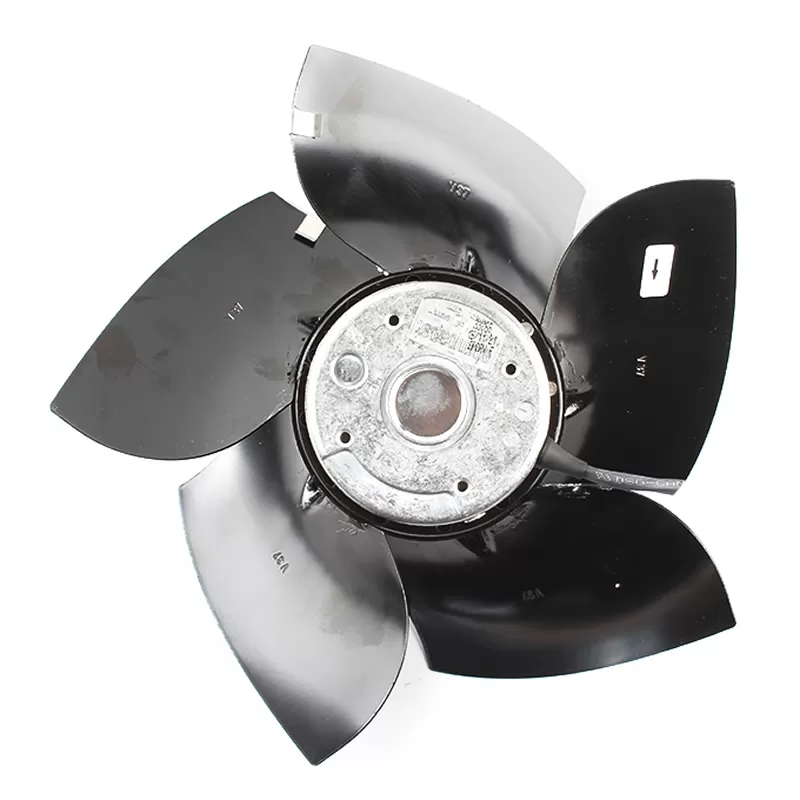
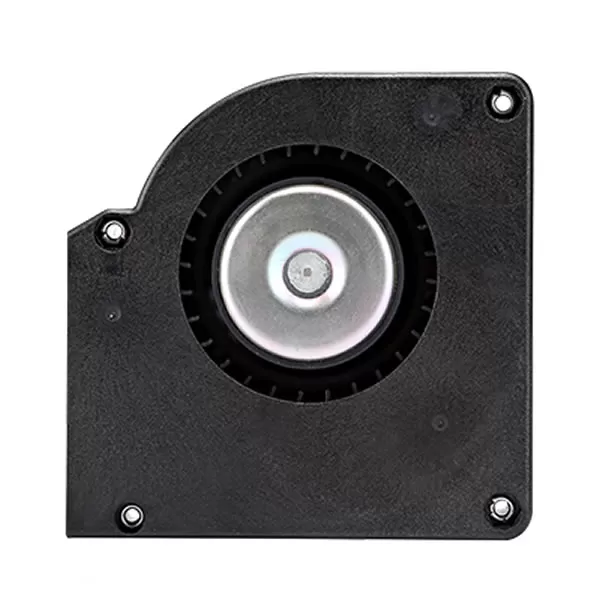
If you ask a thermal engineer, “Which is better, an axial or centrifugal fan?” they will likely answer with a question of their own: “What is your system impedance?”

There is no universally “better” fan. There is only the right fan for your specific thermal environment. Specifying the wrong aerodynamic profile is the number one cause of acoustic nightmares, premature motor failure, and localized thermal throttling in industrial equipment. Continue reading Which is better, an axial or centrifugal fan?

Posted on Leave a comment

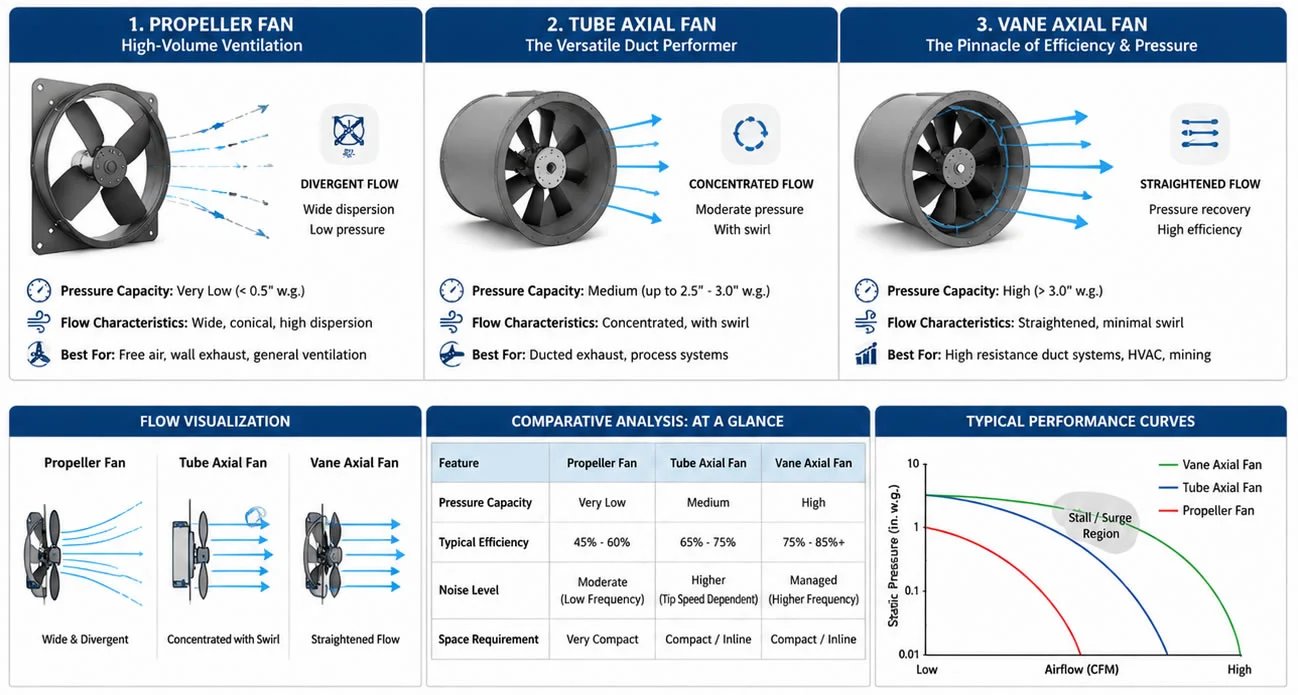
What are the Three Types of Axial Fans?

What are the Three Types of Axial Fans?

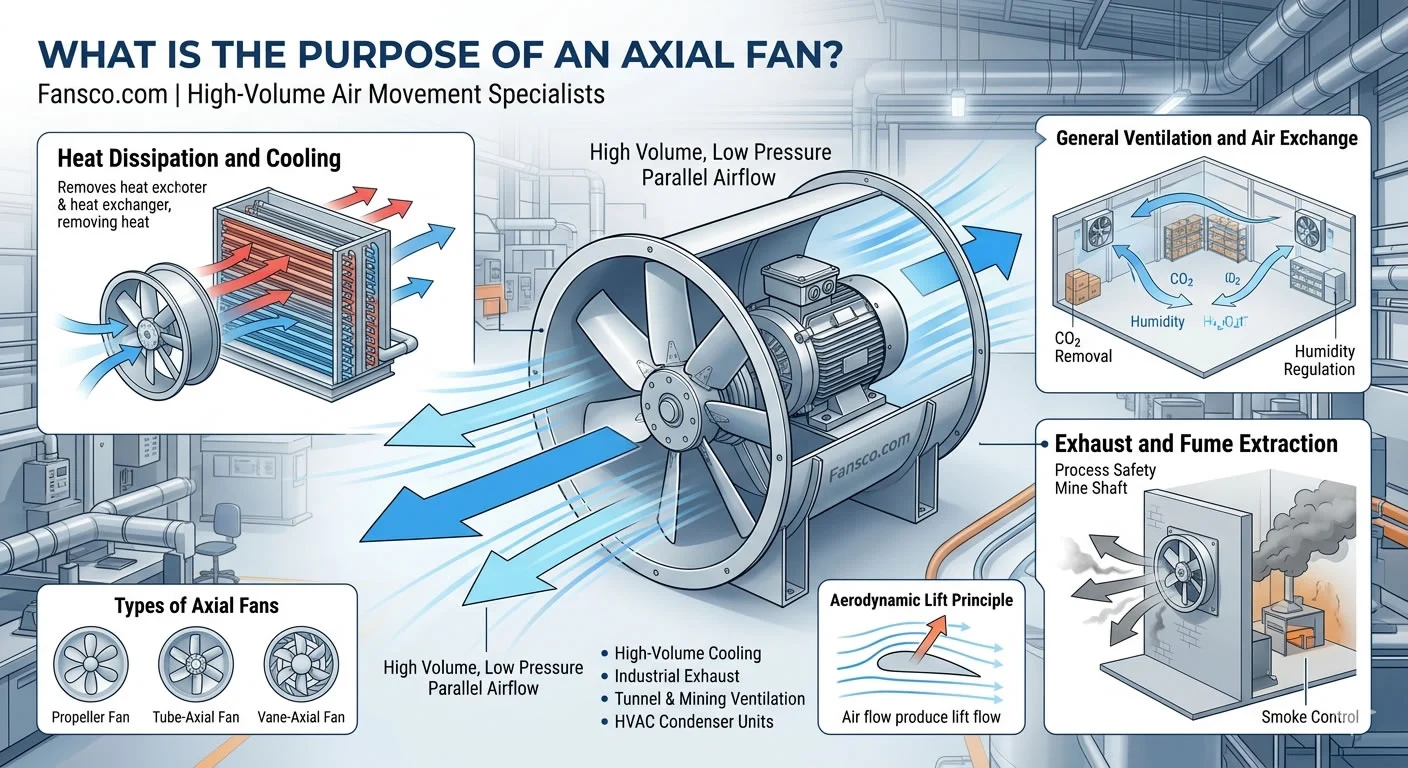
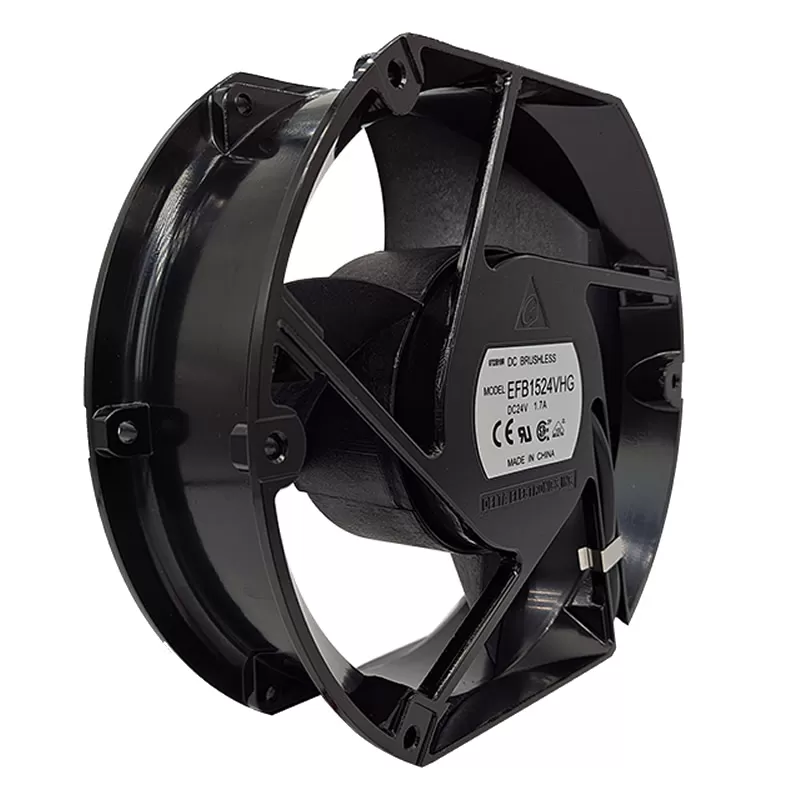
In industrial air moving applications, axial fans are the preferred choice for moving large volumes of air at relatively low pressures. However, “axial fan” is a broad term that encompasses three distinct mechanical designs. Understanding the nuances between Propeller, Tube Axial, and Vane Axial fans is critical for optimizing system efficiency, minimizing noise, and ensuring long-term reliability. Continue reading What are the Three Types of Axial Fans?

Posted on Leave a comment

What is the Lifespan of a Centrifugal Fan?

What is the Lifespan of a Centrifugal Fan?

If you are managing an industrial facility, a chemical plant, or a commercial HVAC system, a centrifugal fan isn’t just a piece of equipment—it’s a significant capital investment. Naturally, the first question is always: “How long will this fan actually last?”

While the industry benchmark is typically 15 to 25 years, the reality is that a fan’s “true” lifespan is dictated by its harshest operating day and its most neglected maintenance cycle. At Fansco, we’ve seen fans retired after 5 years of abuse and others still spinning strong after 30.

Here is a breakdown of what determines that longevity and how you can push your equipment toward the upper end of its life expectancy. Continue reading What is the Lifespan of a Centrifugal Fan?

Posted on Leave a comment

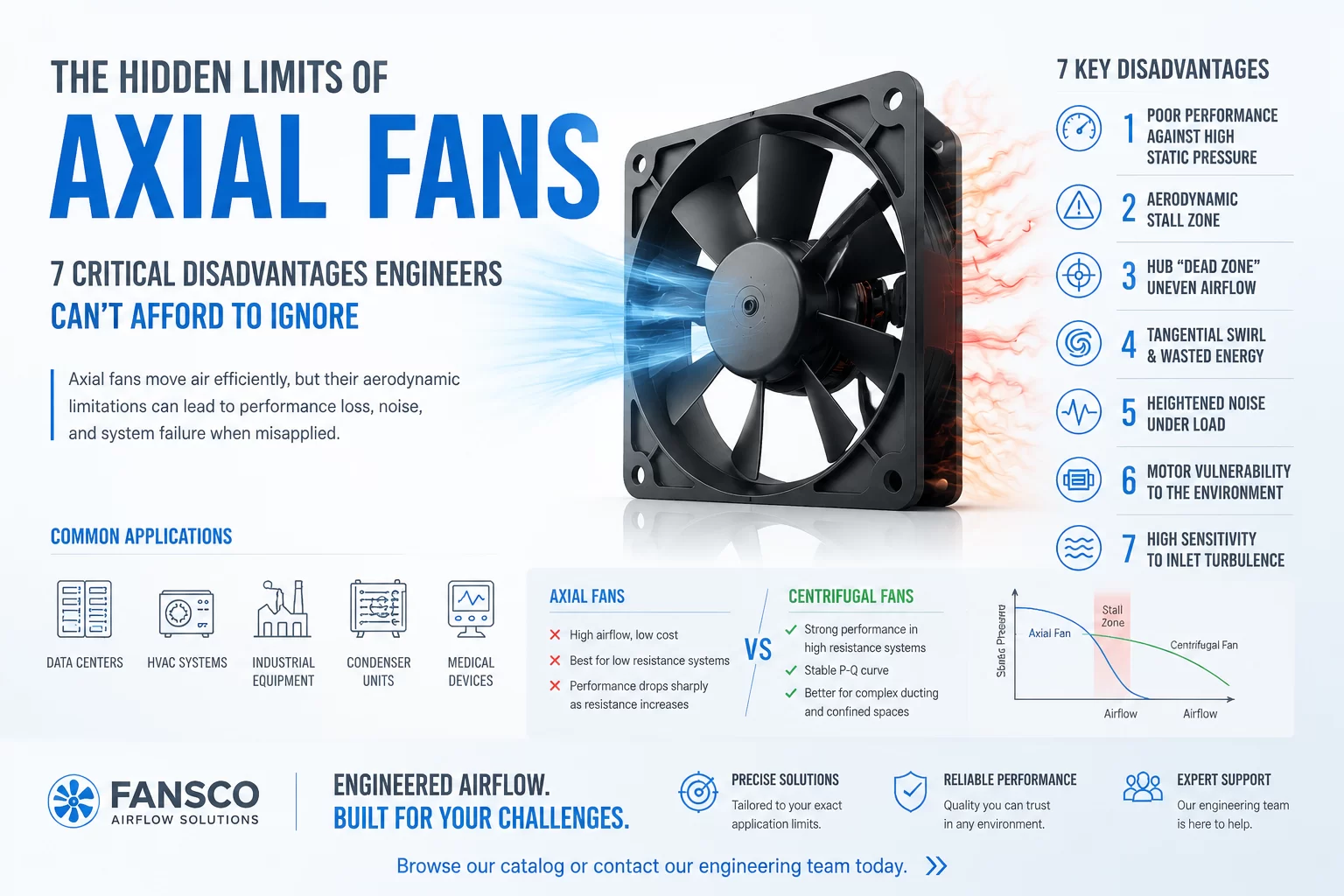
What Are the Disadvantages of Axial Fans?

What Are the Disadvantages of Axial Fans?

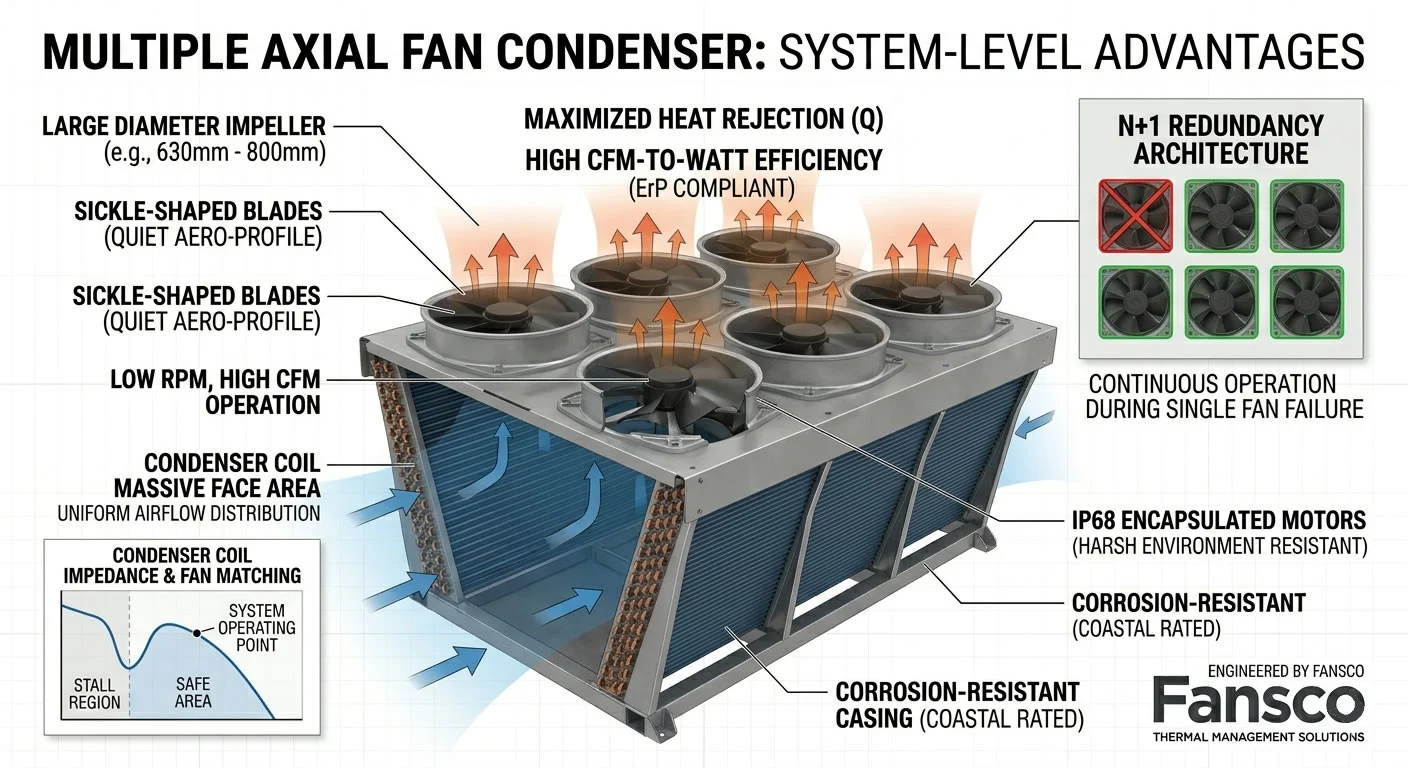
If you need to move a massive volume of air quickly and efficiently, an axial fan is usually the first component you reach for. They are the undisputed workhorses of thermal management, delivering exceptional volumetric airflow (m³/h) at a low energy cost. It’s why you see them everywhere, from server racks to massive condenser units. Continue reading What Are the Disadvantages of Axial Fans?

Posted on Leave a comment

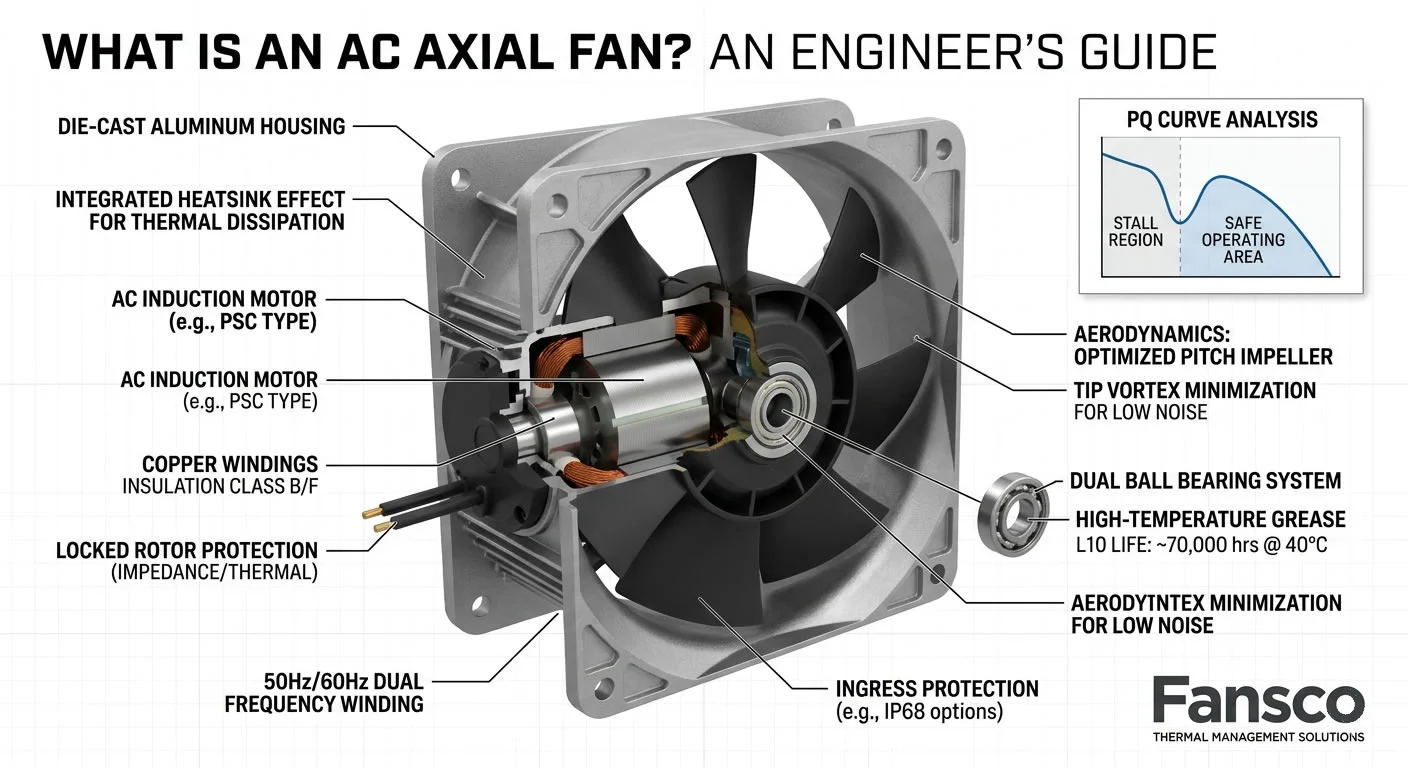
Understanding Axial HVAC Fans: Engineering Principles, Performance, and Industrial Applications

Understanding Axial HVAC Fans: Engineering Principles, Performance, and Industrial Applications

In the complex landscape of thermal management and air distribution, the axial flow fan remains a cornerstone technology. While its operating principle may seem straightforward, the engineering nuances behind blade geometry, pressure characteristics, and motor integration are what define a high-performance HVAC system. For engineers and facility managers, selecting the right axial fan is not just about moving air—it is about optimizing energy efficiency and system longevity. Continue reading Understanding Axial HVAC Fans: Engineering Principles, Performance, and Industrial Applications

Posted on Leave a comment

What size are axial fans?

What size are axial fans?

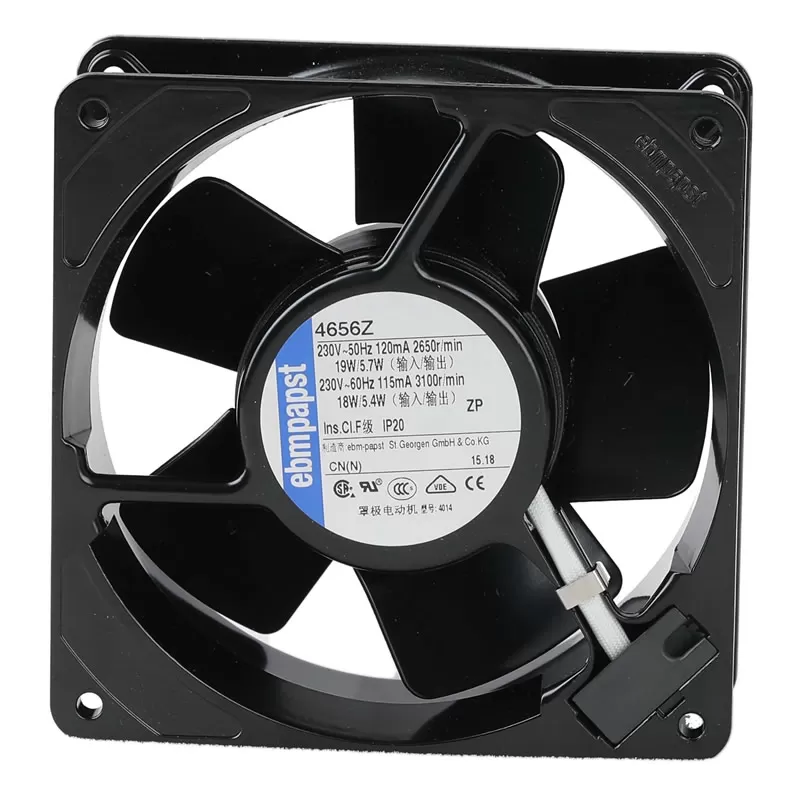
When specifying an axial fan for cooling and ventilation, getting the exact size right is the first step toward optimal thermal management. The physical size of the fan directly dictates its aerodynamic capabilities, determining working air flow, noise levels, and whether it will actually fit into your device or system. However, “size” in the fan industry involves specific terminology that procurement specialists and engineers must get right. Continue reading What size are axial fans?

Posted on Leave a comment

Ultimate Guide to Cooling Fan Sizes, Codes & Industrial Applications

Ultimate Guide to Cooling Fan Sizes, Codes & Industrial Applications

Whether you are designing a micro-electronic wearable, configuring a high-density 1U server rack, or engineering a heavy-duty industrial control cabinet, thermal management is a critical factor for hardware reliability. At Fansco, we know that selecting the optimal cooling fan requires more than just knowing the physical dimensions; it requires a deep understanding of the complex matrix of sizes, abbreviations, and aerodynamic performance characteristics. Continue reading Ultimate Guide to Cooling Fan Sizes, Codes & Industrial Applications