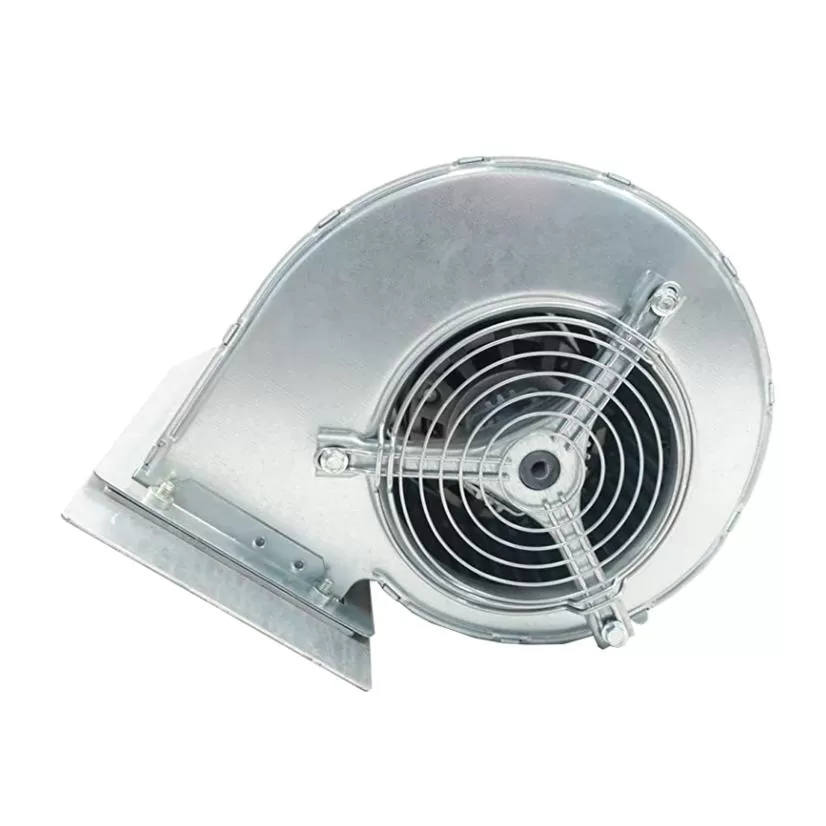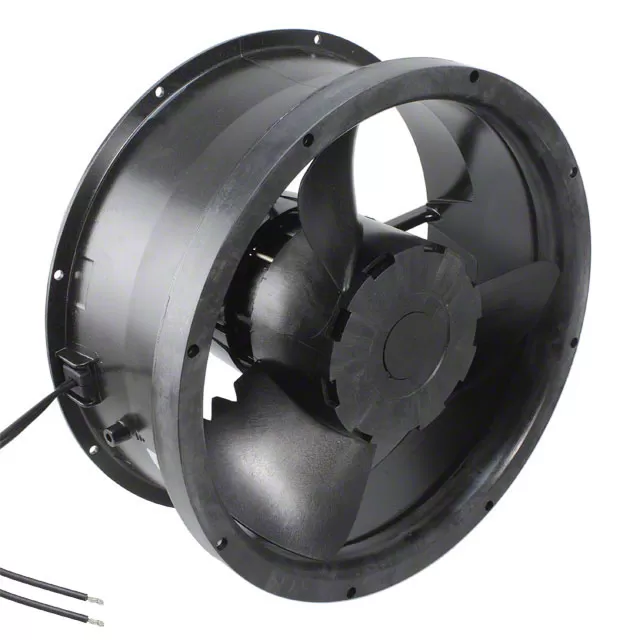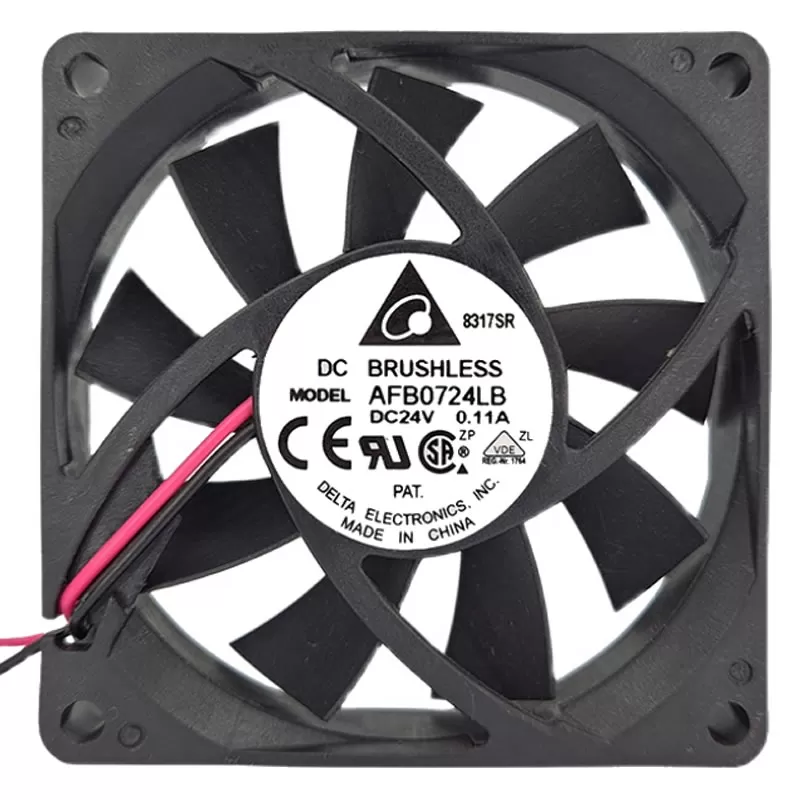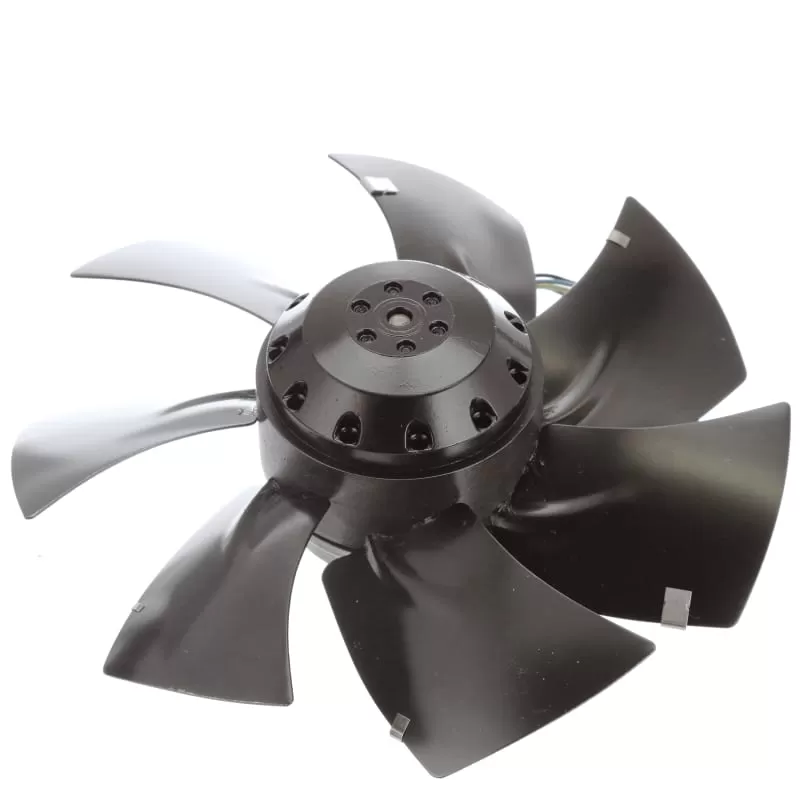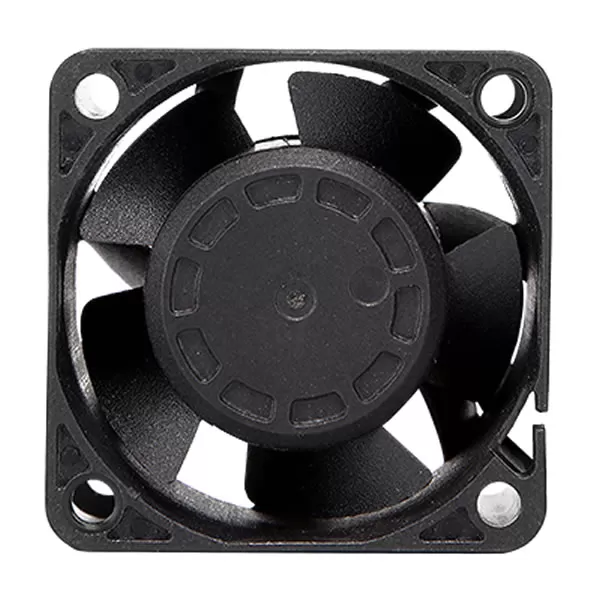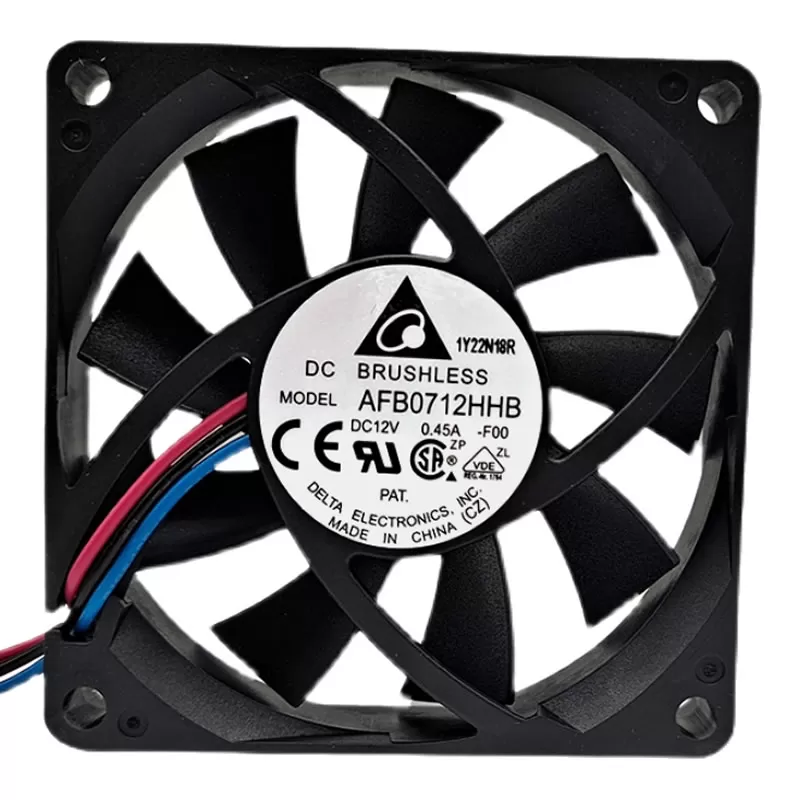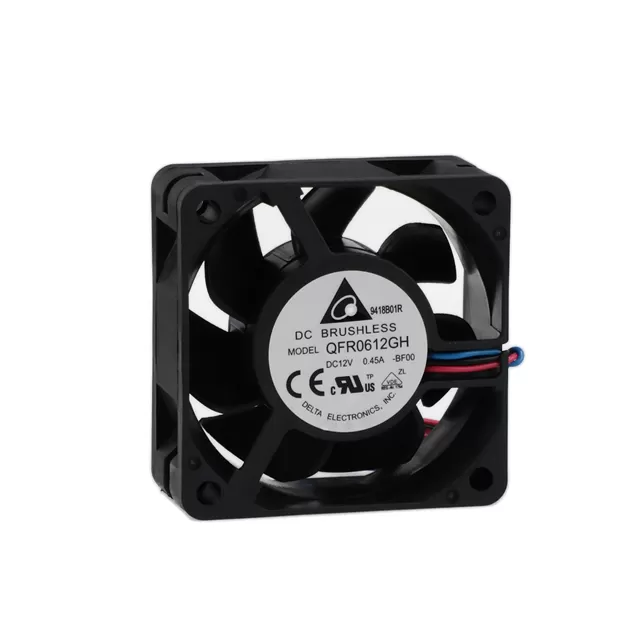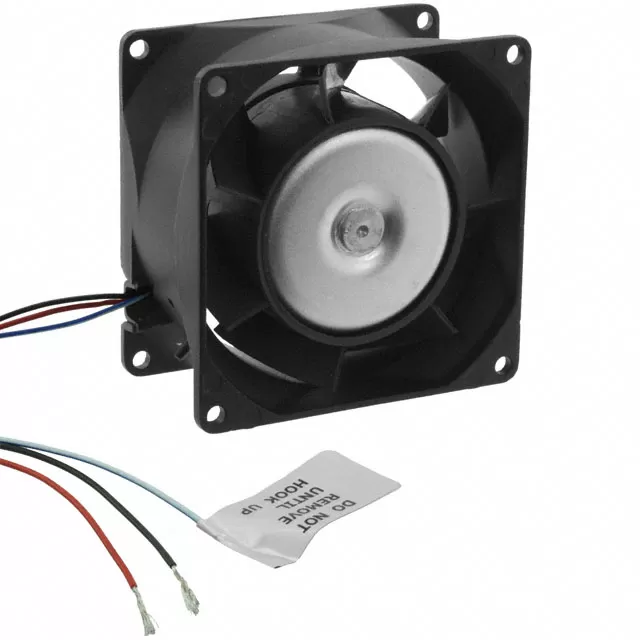
In an industry increasingly obsessed with “smart” EC (Electronically Commutated) fans and variable-speed DC blowers, the AC axial fan might seem like legacy technology. Yet, open up any heavy-duty welding machine, telecom base station, or industrial control cabinet, and you will almost certainly find an AC axial fan spinning away.
Why? Because when a system is deployed in a harsh environment and powered directly by the grid (115V or 230V), engineers don’t want the failure points associated with delicate printed circuit boards (PCBs) or AC-to-DC power supplies. They want brute-force reliability.
But specifying an AC axial fan is not as simple as matching the frame size and plugging it in. At Fansco, we see field failures every week caused by OEMs treating cooling as an afterthought. To truly understand what an AC axial fan is, you must understand the aerodynamics, motor physics, and metallurgy that dictate its survival.
1. Aerodynamics: The PQ Curve and the “Stall Region”
An axial fan is designed to move air parallel to its rotational axis. It is inherently built for high volume (CFM/m³/h) at low to medium static pressure. However, the most critical concept to grasp is not the maximum airflow—it is the aerodynamic stall.
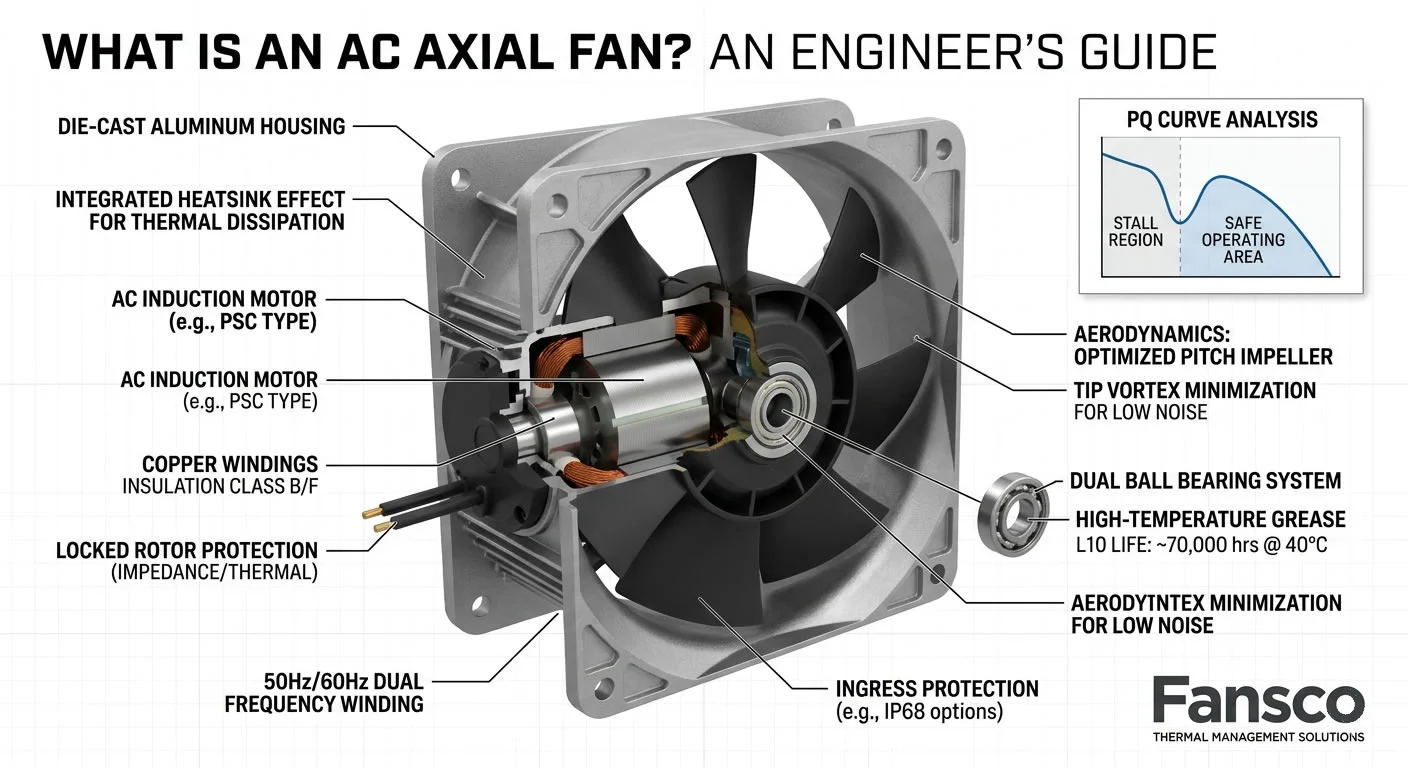
If you look at a professional P-Q (Pressure-Volume) curve on a Fansco datasheet, you will notice a “dip” in the middle of the curve. This is the Stall Region.
- When an enclosure has high impedance (dense heat sinks, thick dust filters, tightly packed cables), the fan has to work against high backpressure.
- If the backpressure forces the fan into the stall region, the airflow detaches from the blade profile. The result? Turbulence, a massive spike in acoustic noise, and a severe drop in cooling efficiency.
Engineering Rule of Thumb: Always calculate your system impedance and ensure your operating point lies safely to the right of the stall region.
2. Motor Topology: Shaded-Pole vs. PSC
Because they run on alternating current, AC fans utilize induction motors. The lack of electronic commutation (no internal PCB) makes them virtually immune to electromagnetic interference (EMI) and power surges. They come in two primary architectures:
The Shaded-Pole Motor (Frames up to 120mm)
This is the AK-47 of the motor world. It uses a solid copper ring (shading coil) to delay the magnetic field and dictate the direction of rotation. It is highly inefficient (often converting a significant portion of electrical energy into parasitic heat), but it is mechanically indestructible. There are no capacitors to dry out and no starting switches to break.
The Permanent Split Capacitor (PSC) Motor (Frames 150mm to 254mm)
Larger impellers require higher starting torque. PSC motors use a run capacitor to create a phase shift in the alternating current. They run cooler and are much more efficient than shaded-pole designs. However, the capacitor is the weak link. At Fansco, we specify high-temperature, self-healing capacitors to ensure the motor doesn’t lose torque after years of thermal cycling.
3. Thermal Dissipation: Why the Housing Matters
A common misconception is that the fan’s housing (frame) is just structural. For an AC fan, the housing is an active thermal component.
Because AC induction motors generate parasitic heat, that heat must be removed from the copper stator windings to prevent the wire insulation from melting. Die-cast aluminum housings act as a massive heatsink. The heat transfers from the stator, through the metal struts, and into the aluminum frame, where the fan’s own airflow dissipates it.
If you purchase a cheap AC fan with a plastic frame for a high-temperature industrial application, the motor will essentially cook itself to death.
4. The 50Hz/60Hz Trap (The Global Sourcing Pitfall)
AC motor speed is strictly tied to the frequency of the power grid. This creates a massive blind spot for companies exporting equipment globally:
The Slip Speed Reality: A fan engineered for the North American grid (60Hz) will spin at roughly 3,000 RPM. Take that exact same fan and plug it into a European or Asian grid (50Hz), and it will drop to 2,500 RPM.
That 20% drop in speed results in a dramatic reduction in CFM and static pressure, potentially causing your equipment to overheat. Furthermore, running a 60Hz coil at 50Hz lowers the inductive reactance, causing the motor to draw more current and run hotter. Always specify dual-frequency (50/60Hz) Fansco models if your hardware is shipping internationally.
5. Locked Rotor Protection: Preventing Catastrophe
What happens if a rogue zip-tie or heavy dust buildup completely jams the fan blades? The motor will draw locked-rotor current, and temperatures will skyrocket. To prevent fires, AC fans must use specific protection mechanisms (required by UL and CE):
- Impedance Protection (Z-Protected): Used on smaller fans. The motor coil is wound with enough inherent electrical resistance that even if the rotor stops, the coil will never get hot enough to ignite.
- Thermal Protection (Auto-Restart): Used on high-power fans. A bimetallic thermal switch is embedded in the windings. If the temp hits a critical threshold (e.g., 110°C), it physically breaks the circuit. Once it cools down, it resets.
6. The True Metric of Lifespan: L10 Bearing Life
In B2B procurement, “lifespan” is not a marketing term; it is a statistical reality defined as L10 Life (the time it takes for 10% of a batch to fail). In AC fans, this is entirely dependent on the bearing system.
While Sleeve Bearings (oil-impregnated porous bronze) are cheap, the oil will evaporate under high ambient temperatures, leading to seizing. They also cannot be mounted vertically.
For industrial applications, Fansco mandates Dual Ball Bearings. Precision steel balls encased in high-temperature grease can easily achieve an L10 life of 50,000 to 70,000 hours at 40°C, and they can be mounted in any orientation without lubricant leakage.
Conclusion: Engineering Your Airflow
An AC axial fan is a critical subsystem that dictates the MTBF (Mean Time Between Failures) of your entire machine. Specifying the wrong fan—or ignoring factors like grid frequency, bearing physics, and stall characteristics—is a guaranteed path to costly field recalls.
At Fansco, we build thermal solutions designed for reality. Whether you need a standard 120x38mm impedance-protected fan for a PLC cabinet, or a heavily potted IP68 AC fan for an outdoor telecom node, we provide the empirical data and hardware to keep your systems running.
Stop guessing about your thermal headroom. Contact Fansco’s engineering team today to review your system’s PQ requirements and find the exact AC axial fan for your application.