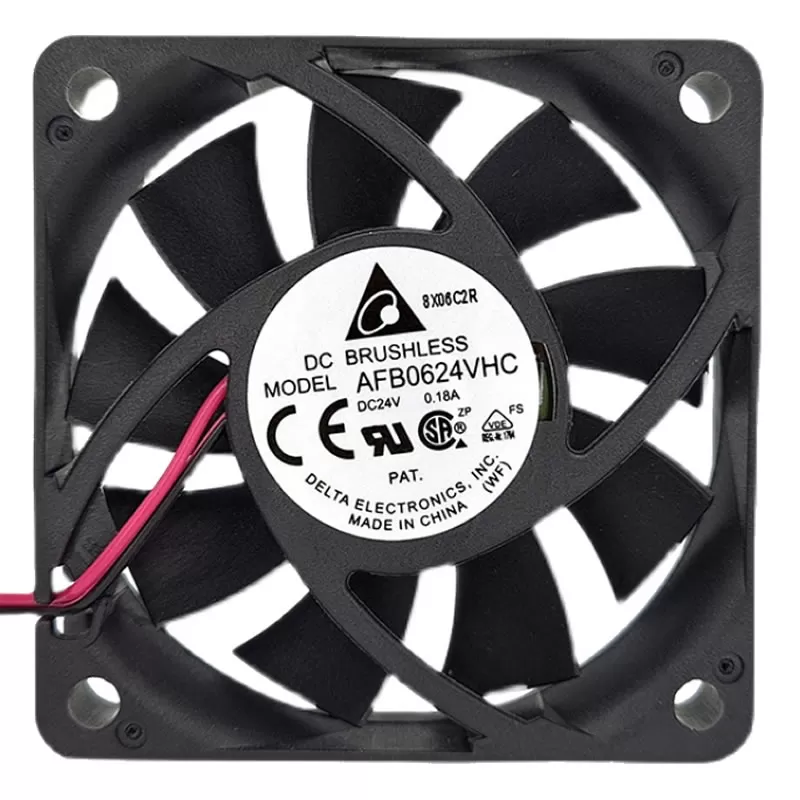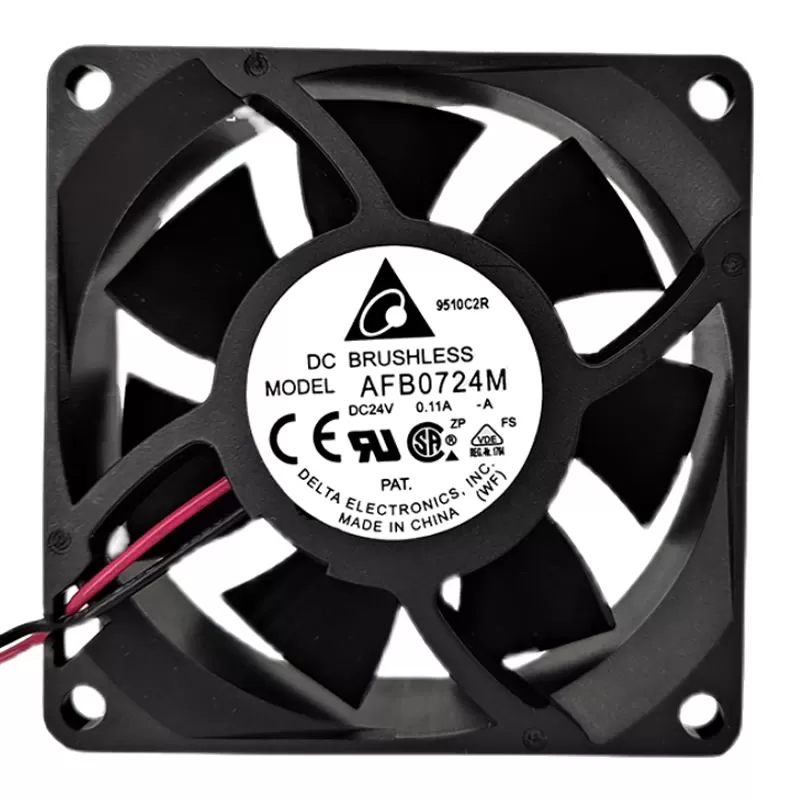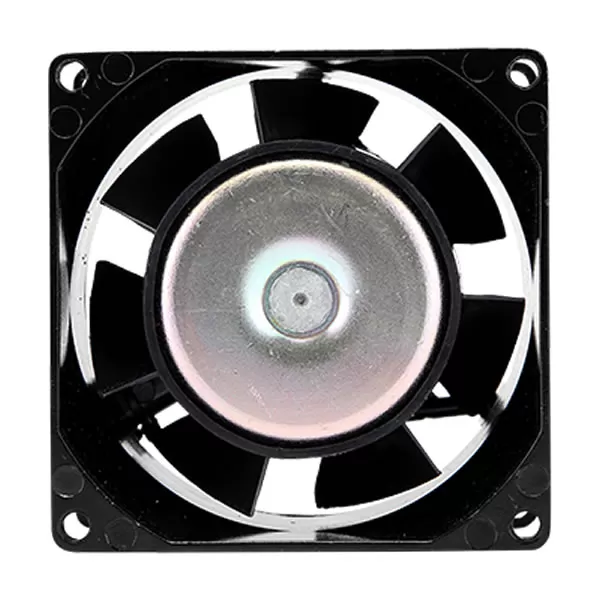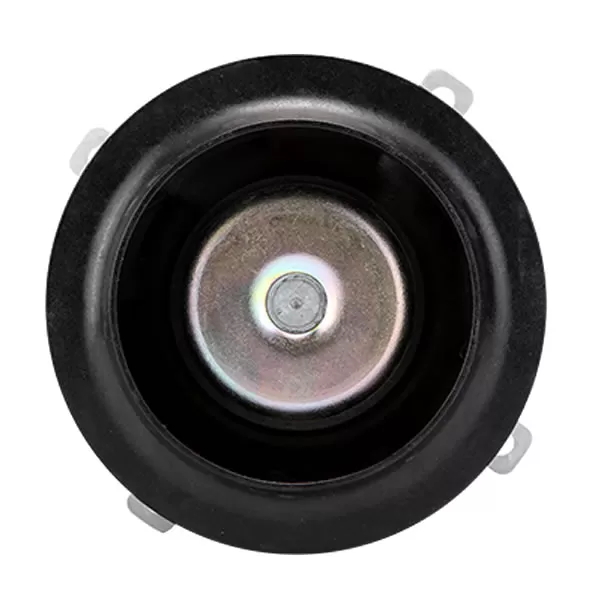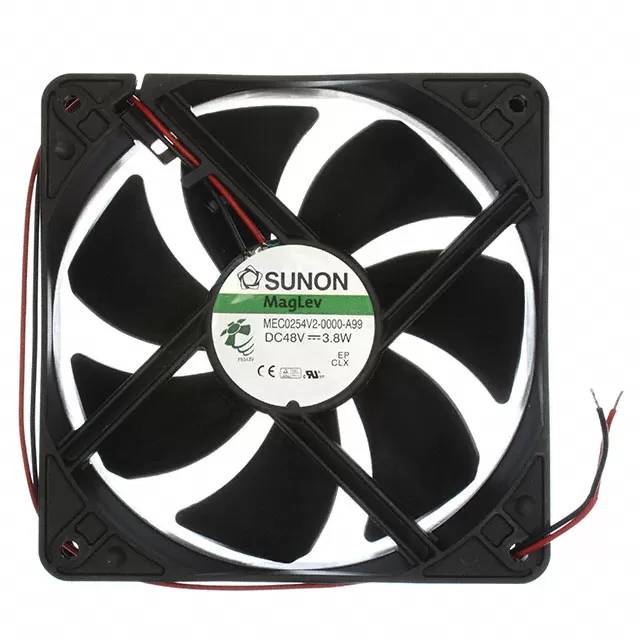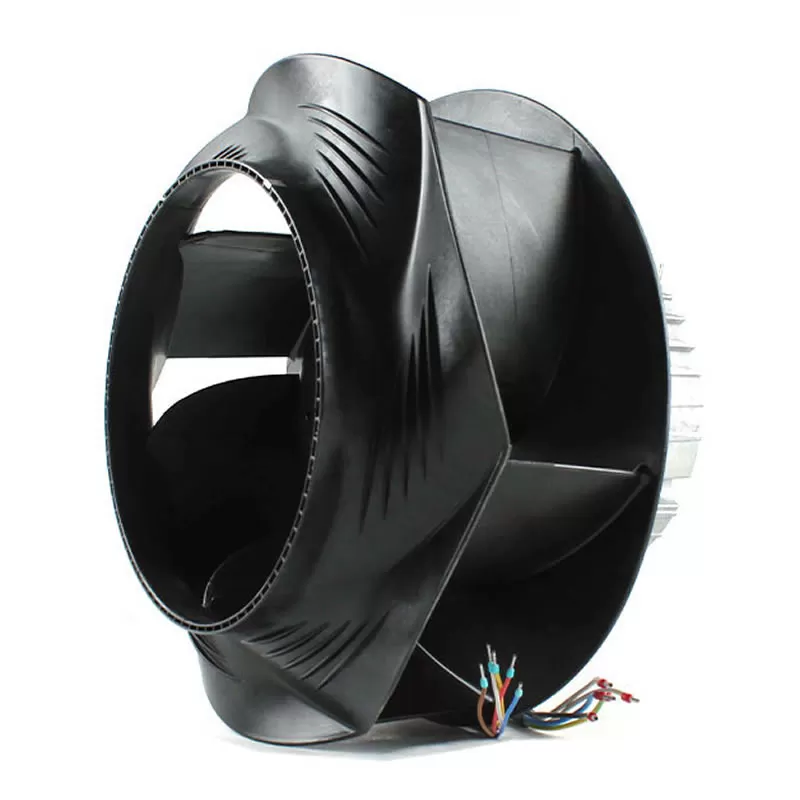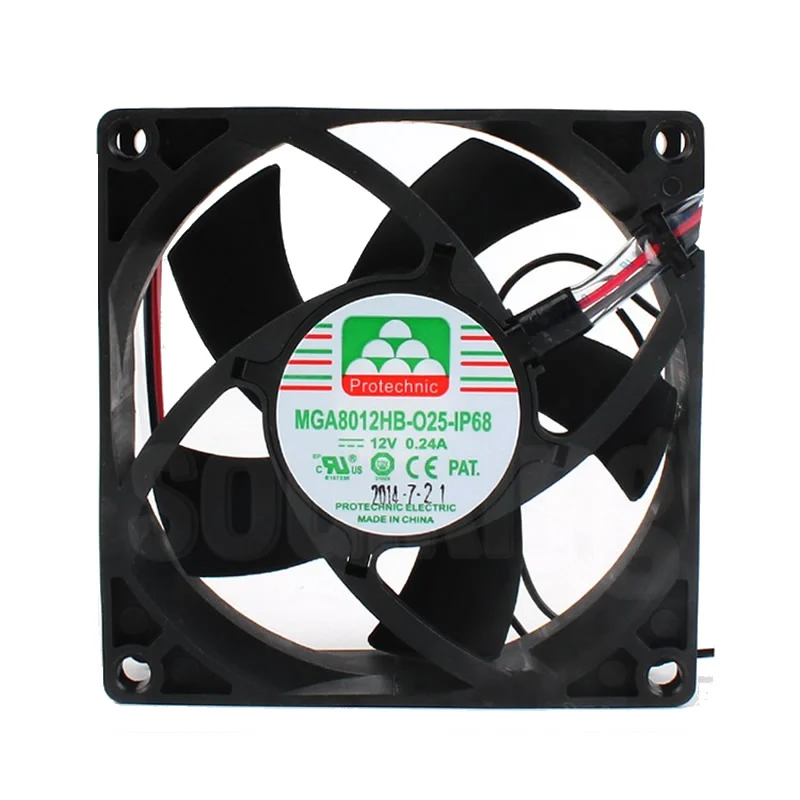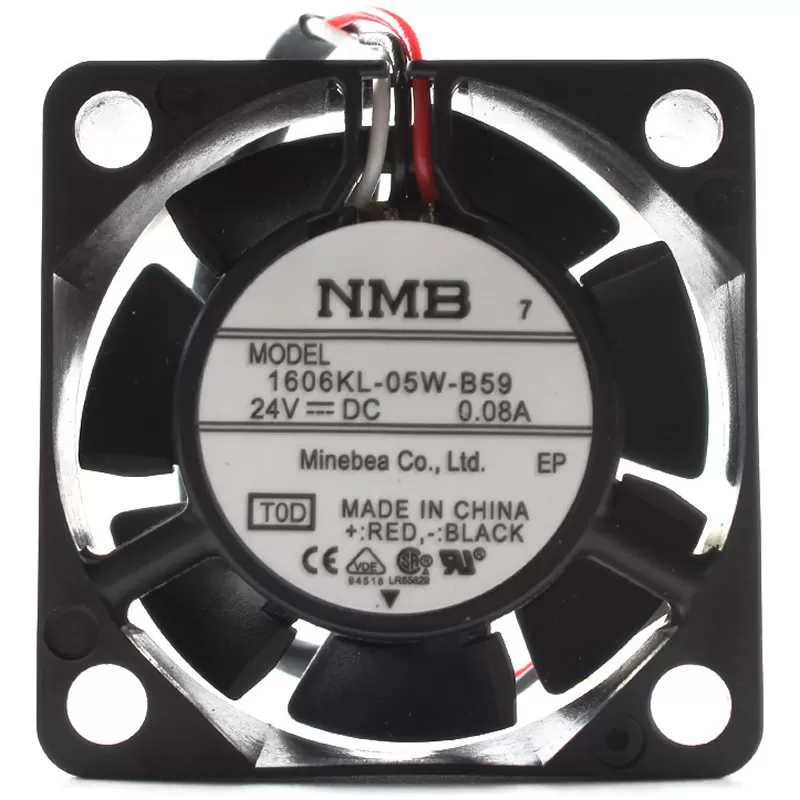
If you need to move a massive volume of air quickly and efficiently, an axial fan is usually the first component you reach for. They are the undisputed workhorses of thermal management, delivering exceptional volumetric airflow (m³/h) at a low energy cost. It’s why you see them everywhere, from server racks to massive condenser units.
But what happens when the default choice is the wrong one?
Despite their ubiquity, axial fans possess a specific aerodynamic DNA that imposes hard technical limits. Dropping an axial fan into a system with high resistance or restricted geometries isn’t just inefficient—it can lead to catastrophic thermal failure, excessive noise, and premature motor burnout.
Whether you are designing a compact HVAC unit or a heavy-duty industrial enclosure, here is a deep dive into the physical and technical disadvantages of axial fans that you need to account for during the specification phase.
1. Poor Performance Against High Static Pressure
This is the fundamental Achilles’ heel of the axial design. Axial fans are built for flow, not force. They operate brilliantly in free-air environments or low-resistance systems. However, if your design pushes air through dense particulate filters, tightly packed heat sinks, or long, winding ductwork, system resistance (static pressure) spikes.
Unlike centrifugal blowers, which use centrifugal force to “throw” and compress air outward, axial blades simply push air linearly. When the backpressure gets too high, an axial fan simply cannot overcome the resistance, resulting in a drastic drop in actual airflow.
2. The Dreaded Aerodynamic “Stall Zone”
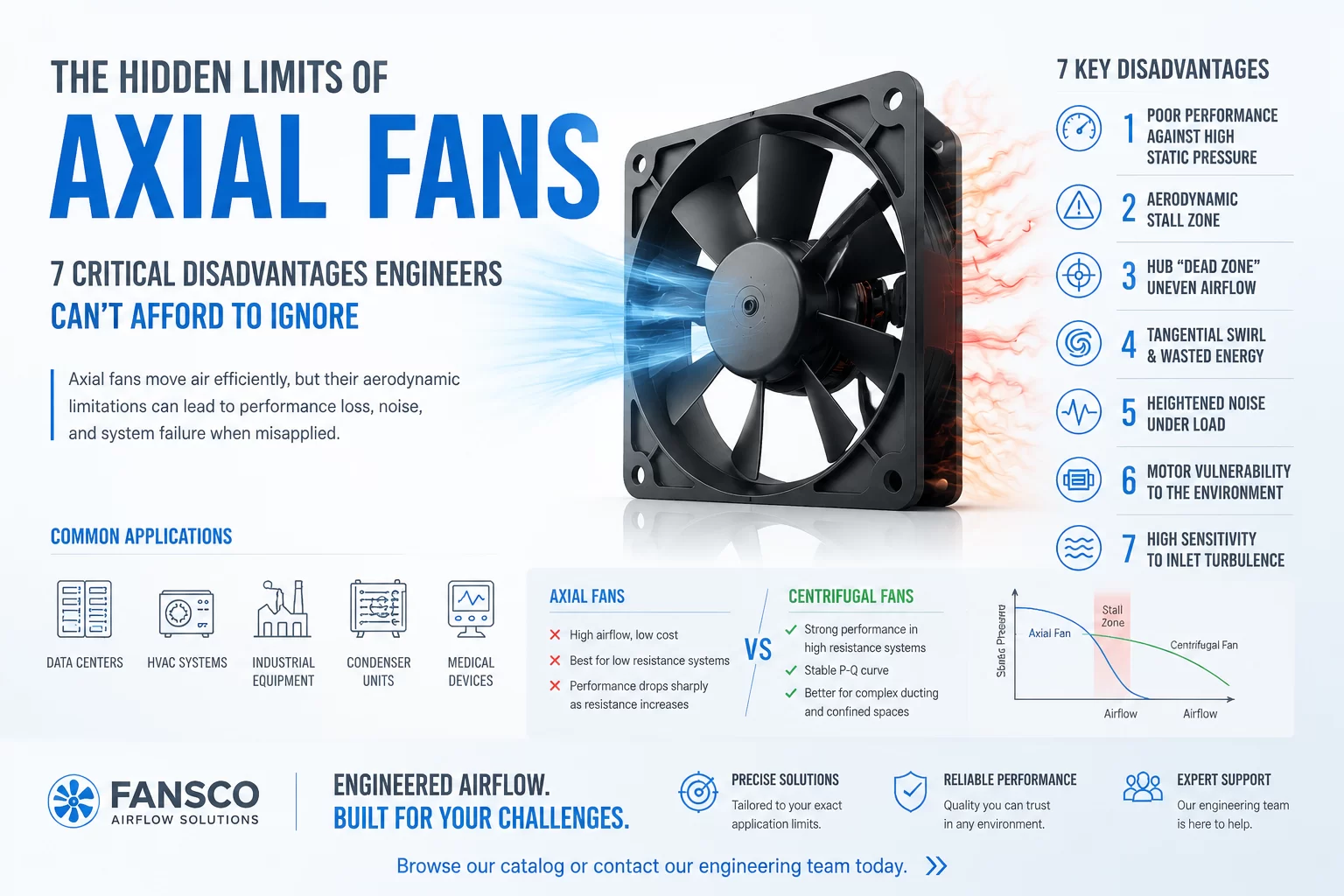
Closely tied to static pressure is the issue of the P-Q (Pressure-Flow) curve instability. Centrifugal fans generally have a smooth, predictable performance curve. Axial fans do not.
If you look at the performance graph of an axial fan, you will notice a distinct “dip” or valley in the curve. When system resistance increases beyond a specific threshold, the airflow begins to detach from the suction side of the fan blades. The fan enters an aerodynamic stall.
- Vibration: The stalling air creates harsh mechanical vibrations that can loosen mountings over time.
- Efficiency Drop: Static efficiency plummets immediately.
Engineering Takeaway: You can never push an axial fan to operate at the absolute peak of its pressure curve. You must size it to stay safely to the right of the stall zone (in the high-flow, lower-pressure region).
3. The Hub “Dead Zone” (Uneven Discharge Profile)
Airflow leaving an axial fan is not a perfectly uniform cylinder of air. Because the drive motor and the central hub occupy the core of the housing, the air is propelled almost entirely by the outer 70% of the blades.
This creates a low-velocity wake—a literal aerodynamic “dead zone”—directly behind the center hub. If you mount an axial fan flush against a dense heat sink, the center of that heat sink receives almost zero active cooling, creating localized hot spots.
To fix this, designers have to build in a “plenum space” (a physical standoff distance) between the fan and the component to allow the air to mix and distribute evenly. In modern, highly compact device designs, sacrificing that physical space is a major disadvantage.
4. Tangential “Swirl” and Wasted Kinetic Energy
Axial fans don’t just push air straight forward; the spinning blades impart a rotational, spiraling motion to the exhaust air known as “swirl.”
This tangential velocity is essentially wasted kinetic energy. It doesn’t help move the air linearly, and it doesn’t contribute to static pressure. Worse, when this swirling air hits downstream ductwork, grilles, or internal walls, it causes heavy friction losses. While high-end vaneaxial fans incorporate stationary guide vanes to straighten this flow, standard tubeaxial and propeller fans do not, making them inherently less efficient in complex duct systems.
5. Heightened Acoustic Penalties Under Load
Axial fans are wonderfully quiet when running in free-air conditions. But their noise profile degrades rapidly as system resistance goes up.
Because the blade tips slice through the air at high velocities, they generate tonal noise at the Blade Pass Frequency (BPF). When the fan is forced to operate near its stall point or push against high backpressure, the resulting air turbulence creates a low-frequency buffeting or “chopping” sound. Standard acoustic foam struggles to dampen these low frequencies, often forcing engineers to use oversized impellers running at lower RPMs, which adds weight and cost.
6. Motor Vulnerability to the Environment
Look at a standard axial fan: the motor sits directly dead-center in the airstream. If you are moving clean, ambient room air, this is actually a benefit, as the air cools the motor.
But in industrial applications, this is a massive liability. If your application exhausts air that is above 60°C (140°F), laden with grease, highly corrosive, or full of dust, the motor is constantly bombarded by it. This drastically shortens bearing and winding lifespans. To survive harsh environments, axial fans require expensive IP-rated motors or heavy “bifurcated” designs (where the motor is isolated in a separate casing), negating their typical cost advantages.
7. High Sensitivity to Inlet Turbulence
Axial blades demand clean, laminar (smooth) air at the intake to perform to their spec sheet ratings. They are incredibly sensitive to “Inlet Flow Distortion.”
If you place an axial fan immediately after a sharp 90-degree bend, a bulky bracket, or a louvered panel, the air enters the blades turbulently. The blades will experience uneven aerodynamic loading during rotation. The immediate results are a loss of static pressure capability and a spike in operating noise. Centrifugal fans, by contrast, are far more forgiving of poor intake conditions.
The Bottom Line for System Designers
Axial fans provide the best “flow-per-dollar” ratio on the market, but they are aerodynamically fragile when faced with resistance. As a general rule of thumb: when your system resistance starts creeping past 250 Pa (approx. 25 mmH₂O), or if your airflow needs to turn a 90-degree corner immediately after the fan, the disadvantages of an axial design begin to heavily outweigh the initial cost savings. At that point, a backward-curved centrifugal impeller is usually the safer engineering choice.
Are you struggling to balance static pressure, noise, and spatial constraints in your current build? Don’t leave your thermal management to guesswork. Fansco provides precision-engineered airflow solutions tailored to your exact application limits. Browse our catalog or contact our engineering team today to find the perfect fan for your project.