If you are managing an industrial facility, a chemical plant, or a commercial HVAC system, a centrifugal fan isn’t just a piece of equipment—it’s a significant capital investment. Naturally, the first question is always: “How long will this fan actually last?”
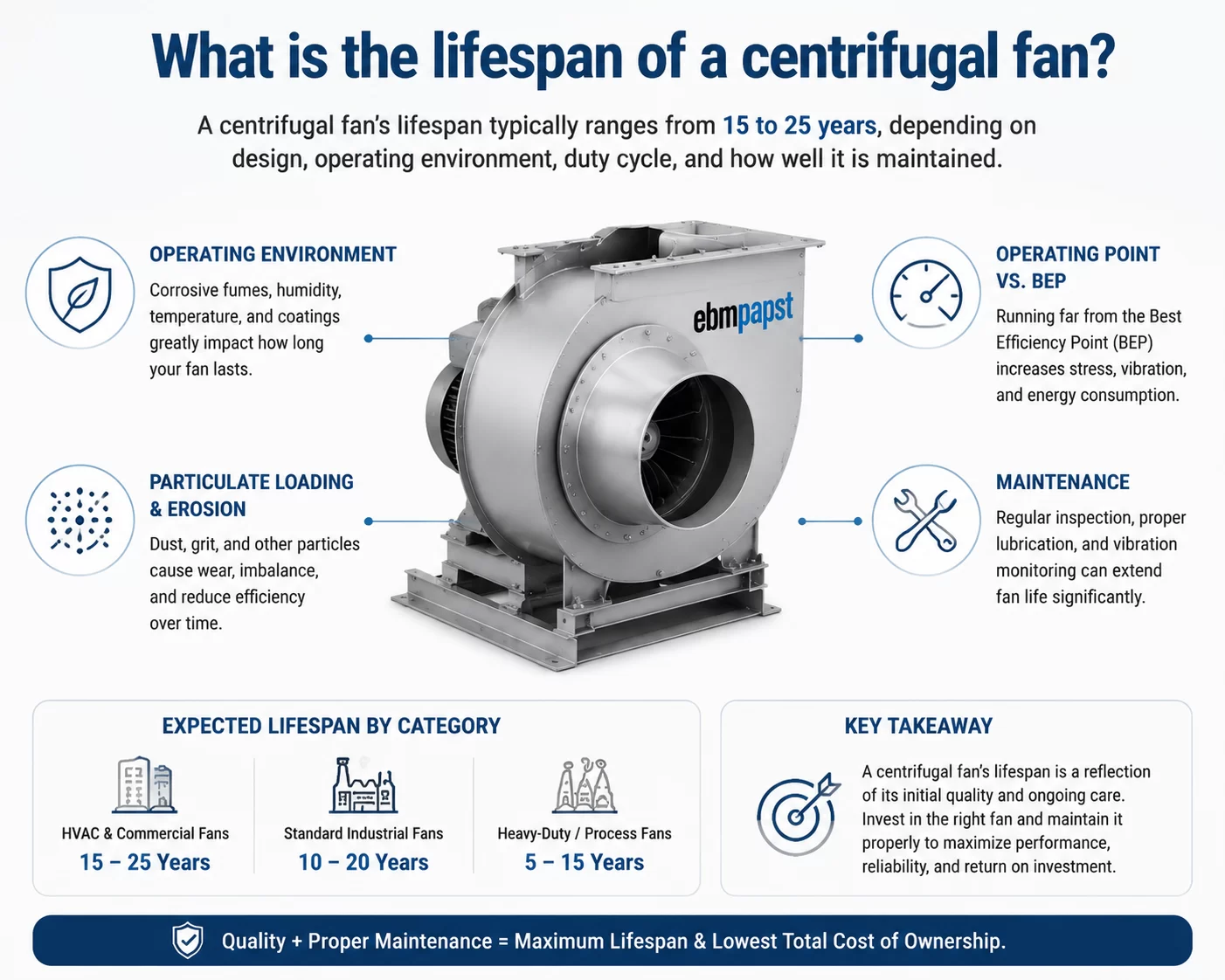
While the industry benchmark is typically 15 to 25 years, the reality is that a fan’s “true” lifespan is dictated by its harshest operating day and its most neglected maintenance cycle. At Fansco, we’ve seen fans retired after 5 years of abuse and others still spinning strong after 30.
Here is a breakdown of what determines that longevity and how you can push your equipment toward the upper end of its life expectancy.
The Baseline: Lifespan Expectations by Category
Not all fans are created equal. A “light-duty” commercial vent fan and a “heavy-duty” industrial blower have very different DNA. Here is what you should realistically expect based on the application:
| Fan Category | Expected Lifespan | Primary Failure Mode |
|---|---|---|
| HVAC & Commercial Fans | 15–25 Years | Motor failure or bearing wear. |
| Standard Industrial Fans | 10–20 Years | Fatigue from duty cycles & vibration. |
| Heavy-Duty/Process Fans | 5–15 Years | Corrosion, high heat, or erosion. |
4 Critical Factors That Kill (or Save) Your Fan
1. The Operating Environment (The Silent Killer)
The air you move is the biggest variable. Corrosive fumes, high humidity, or salty coastal air will eat through standard carbon steel in a matter of years. If your environment is harsh, opting for 304 or 316 Stainless Steel or specialized epoxy coatings isn’t an “upgrade”—it’s a necessity for survival.
2. Particulate Loading and Erosion
Moving “dirty” air (dust, wood chips, or grit) acts like sandpaper on the impeller. Even minor material buildup can throw the wheel out of balance. A fan that is unbalanced by just a few grams at 1,800 RPM will experience exponential bearing wear, eventually leading to catastrophic shaft failure.
3. Operating Point vs. Best Efficiency Point (BEP)
Sizing matters more than people realize. A fan forced to operate far to the left of its performance curve (in a “stall” condition) creates massive internal turbulence. This doesn’t just waste energy; it creates mechanical stresses that punish the welds and the motor bearings every second it runs.
4. Maintenance: The Difference Between 10 and 25 Years
You cannot “install and forget” a centrifugal fan. A “human-led” maintenance approach includes:
- Vibration Analysis: Think of this as an EKG for your fan. Early detection saves the shaft.
- Lubrication: Both over-greasing and under-greasing kill bearings. Stick to the manufacturer’s intervals.
Red Flags: Is Your Fan Nearing the End?
Don’t wait for the fan to stop spinning. Look for these “end-of-life” symptoms:
- Excessive Vibration: If the floor is shaking, your bearings or the impeller structural integrity is compromised.
- Reduced Airflow: Often signals “blade thinning” or erosion—the geometry of the fan is literally wearing away.
- Visible Corrosion: If you see “pitting” or rust flakes on the casing, the structural pressure-holding capability is failing.
The Fansco Bottom Line
Ultimately, a centrifugal fan’s lifespan is a reflection of its initial quality and ongoing care. Investing in a heavy-gauge, well-engineered fan today prevents the massive cost of unplanned downtime tomorrow.
At Fansco, we specialize in high-durability air-moving solutions designed for the most demanding environments. Whether you are replacing an aged unit or designing a new process, our engineers ensure your fan is built to outlast the competition.
Need an expert opinion on your system’s health? Contact the Fansco technical team today for a performance evaluation.