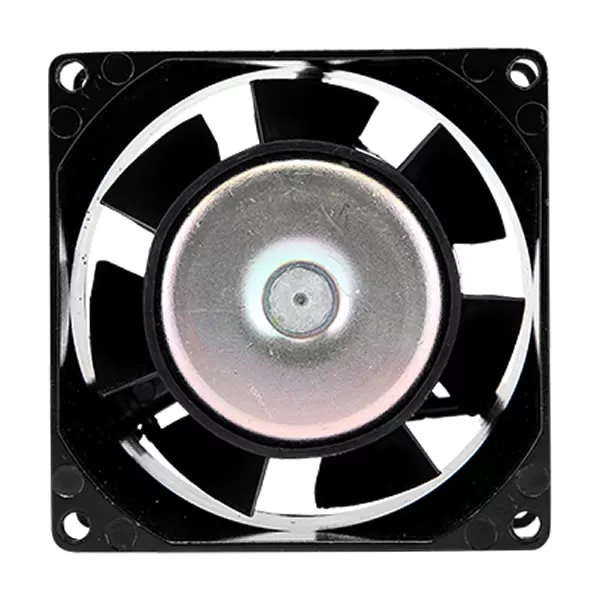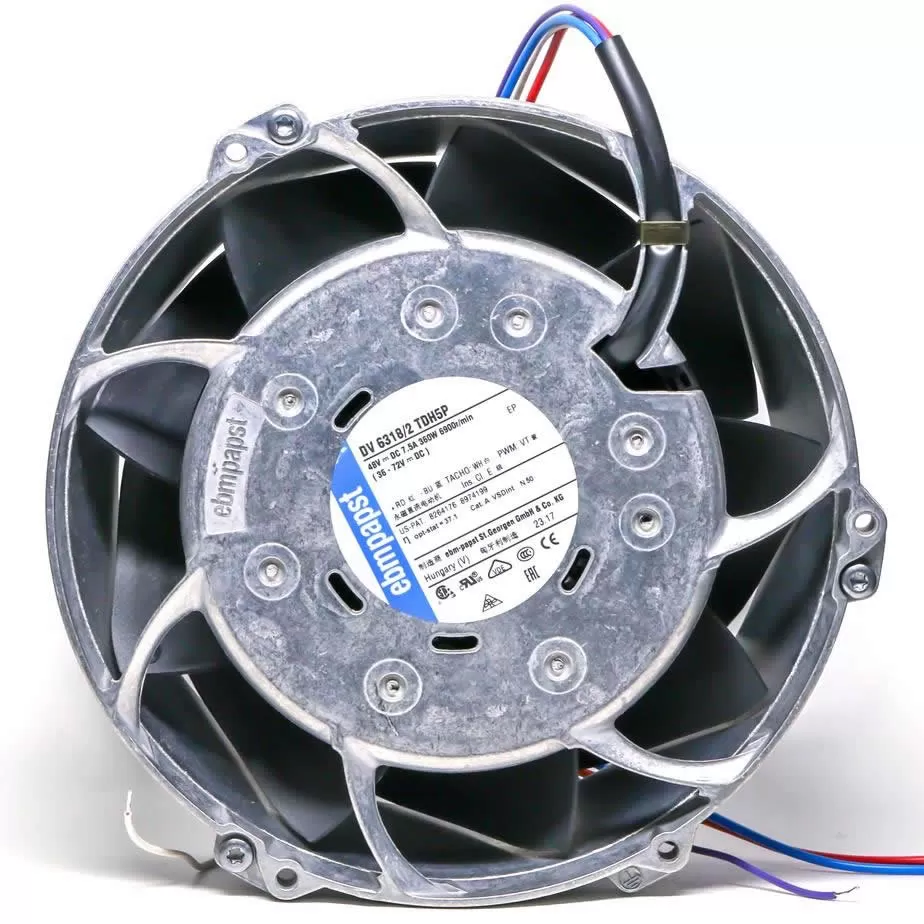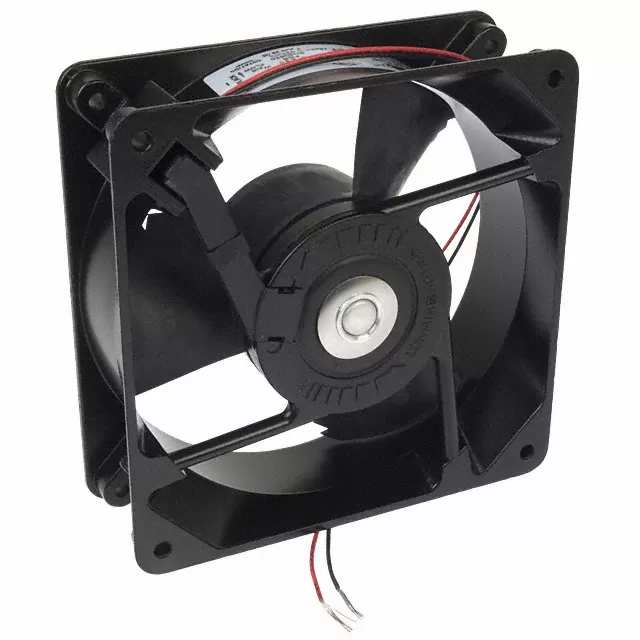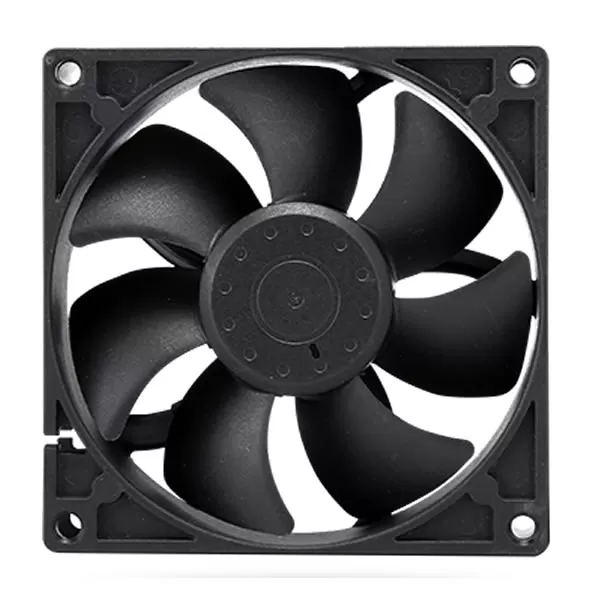
In commercial refrigeration, chiller plants, and heavy-duty HVAC systems, the compressor gets all the glory. But ask any seasoned thermal engineer, and they will tell you the truth: the condenser dictates the system’s thermal limit. If you cannot reject heat to the ambient environment efficiently, your compressor will overwork, head pressures will spike, and the system will eventually trip on high-pressure safeties.
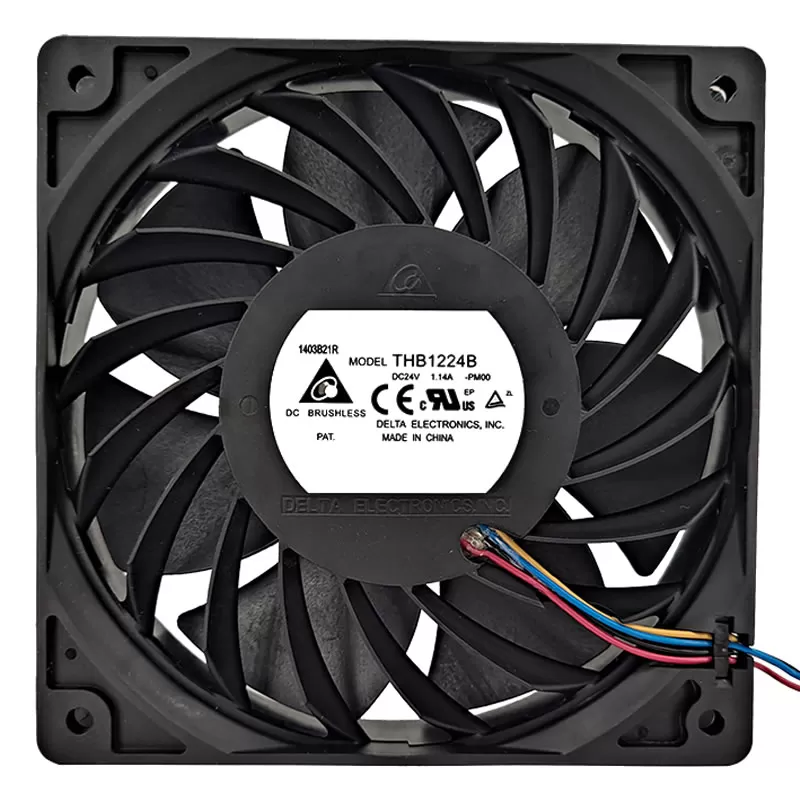
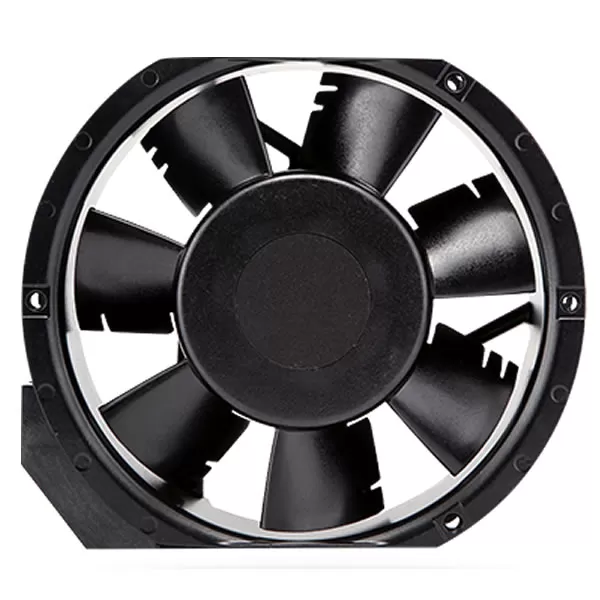
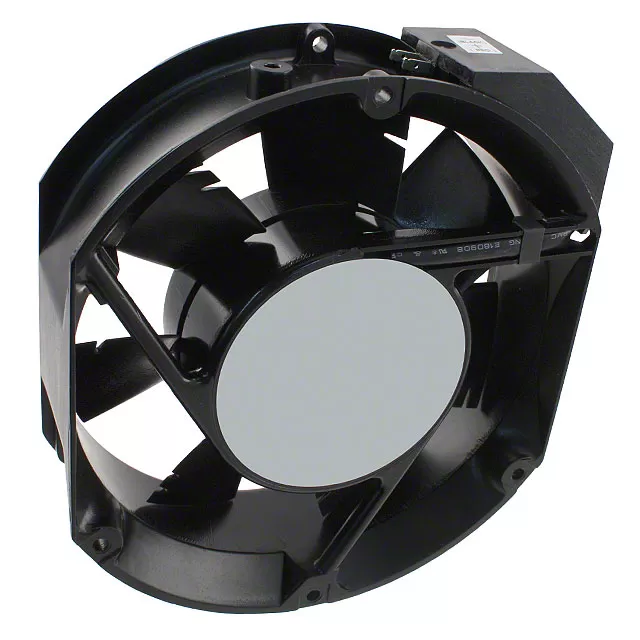
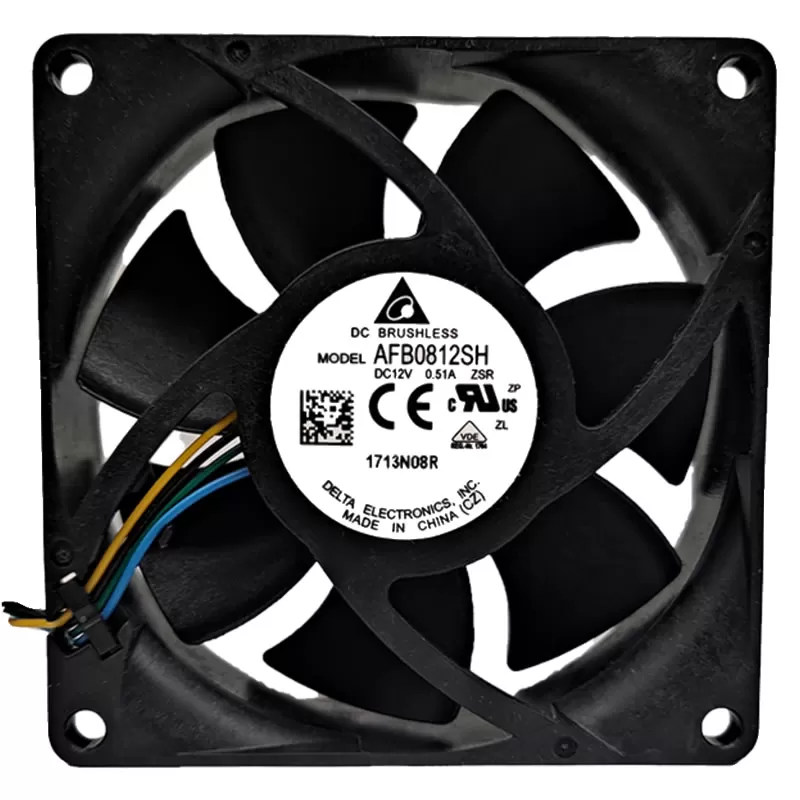
For air-cooled heat exchangers, the axial fan condenser is the undisputed industry standard. While centrifugal blowers are sometimes used for specialized indoor ducted condensing, axial fans dominate the rooftops and industrial yards.
At Fansco, we supply the thermal backbone for some of the most demanding condensing units in the world. Here is the engineering reality behind why axial fans are the superior choice for condenser applications.
1. The Thermodynamics of Coil Geometry
To understand the fan, you must understand the heat exchanger. Condenser coils—whether traditional copper fin-and-tube or modern aluminum microchannel (MCHE)—are designed with a massive face area but relatively shallow depth.
- They have low to medium aerodynamic impedance.
- They require a massive volume of air to sweep across the entire face evenly to maximize the Delta-T (temperature differential) between the hot refrigerant and the ambient air.
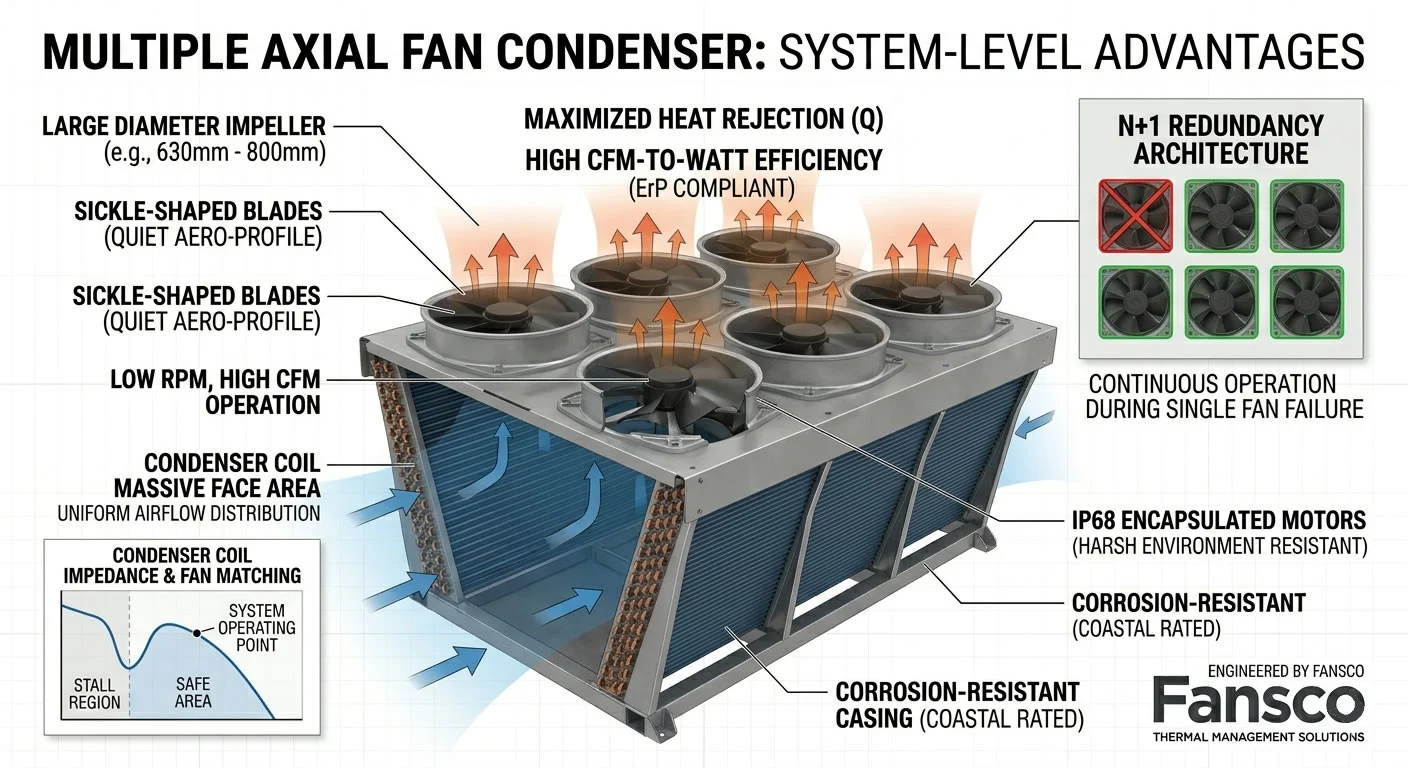
This is exactly what axial fans are built to do. They project a wide, linear column of air. A centrifugal fan, by contrast, discharges highly compressed, narrow air streams that would create localized “cold spots” on the coil while leaving the corners starving for airflow (dead zones).
2. Unmatched Energy Efficiency (The CFM-to-Watt Ratio)
With stringent global energy regulations like the European ErP Directive and ASHRAE 90.1, minimizing the parasitic load of the condenser fans is critical.
The Power Reality: Because an axial fan does not waste energy compressing air inside a scroll housing, it offers an exceptionally high CFM-to-Watt ratio. In a low-static-pressure environment (like pulling air through a 2-row condenser coil), an axial fan moves significantly more air per kilowatt of electricity consumed than any centrifugal alternative.
3. Acoustic Profiling: High Volume, Low RPM
Condensers are usually located outdoors—on hospital rooftops, outside supermarkets, or adjacent to office windows. Acoustic compliance with local zoning laws is a massive headache for OEMs.
Axial fans solve this through geometry. By using large-diameter impellers (e.g., 500mm to 900mm), an axial fan can move an enormous volume of air while spinning at a very low RPM (often under 900 RPM).
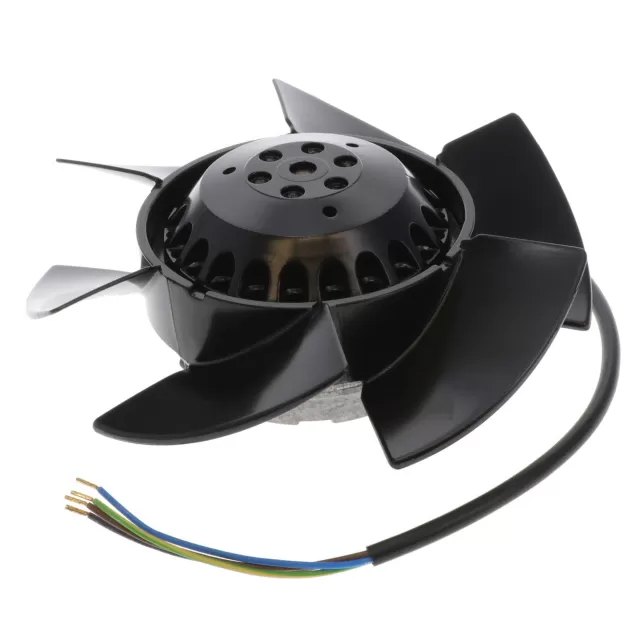
Furthermore, modern Fansco axial condenser fans utilize sickle-shaped (swept-back) blades. This biomimetic profile reduces the trailing edge vortex, effectively eliminating the irritating high-frequency “whine” and reducing the overall dBA footprint without sacrificing heat rejection capacity.
4. System Redundancy (N+1 Architecture)
In a mission-critical data center chiller or a massive supermarket refrigeration rack, total failure is not an option.
Axial fan condensers are inherently modular. A large V-bank condenser might utilize an array of 6, 8, or even 12 axial fans operating in parallel.
| Architecture | Failure Consequence |
|---|---|
| Single Centrifugal Blower | If the motor fails or the belt snaps, the entire condensing unit goes offline instantly. 100% loss of cooling. |
| Multiple Axial Fans (Array) | If one fan motor fails, the remaining fans ramp up (if EC) or simply continue running. The system loses a fraction of capacity but remains operational until scheduled maintenance. |
5. Environmental Survivability and Form Factor
Axial fans have a significantly lower profile than centrifugal blowers. They mount flat against the fan shroud, keeping the center of gravity low and reducing the overall footprint of the rooftop unit (RTU) or dry cooler.
Because condensers face the wrath of nature, the fans must be hardened. At Fansco, our axial condenser fans are designed for the outside world:
- IP55 to IP68 Motor Protection: Fully encapsulated stators to prevent short circuits from driving rain, snowmelt, and pressure washing.
- Corrosion Resistance: Utilizing die-cast aluminum frames and specialized surface treatments to survive in high-salinity coastal environments where standard steel would rot in months.
- Wide Temperature Range: Rated to operate in ambient extremes, from -40°C in winter to 60°C+ baking under direct summer sun.
Conclusion: The Only Logical Choice for Heat Rejection
The advantages of axial fan condensers—massive airflow distribution, low parasitic power draw, acoustic management, and built-in redundancy—make them the only logical choice for large-scale heat rejection.
However, simply slapping any axial fan onto a coil is a recipe for high head pressure and motor burnout. You must match the fan’s P-Q curve to the specific impedance of your coil geometry.
Are you designing a new air-cooled condenser, heat pump, or dry cooler? Reach out to the Fansco engineering team today. We will provide the aerodynamic data, 3D models, and ruggedized hardware to ensure your system never loses its cool.