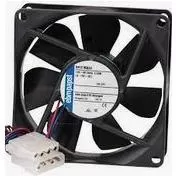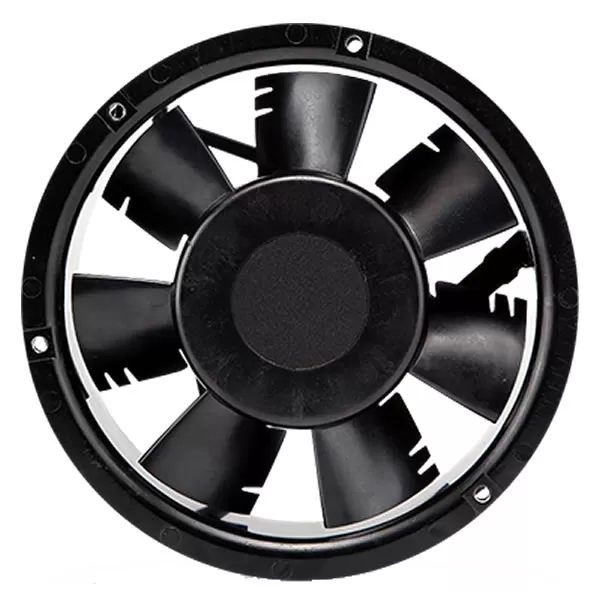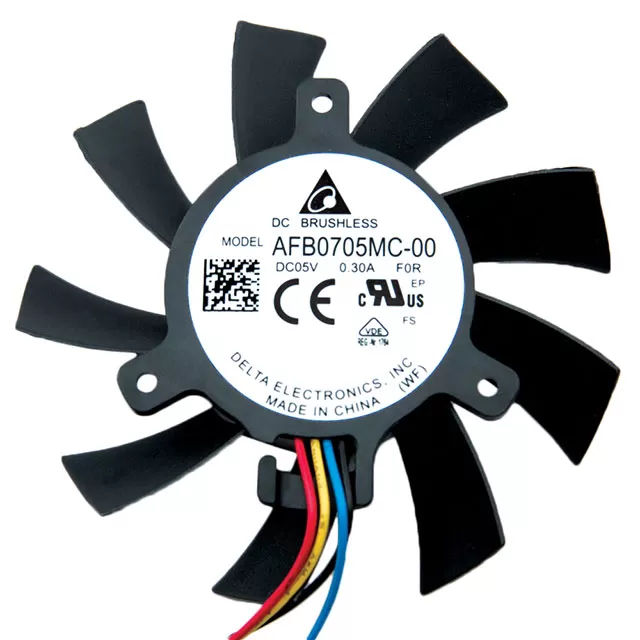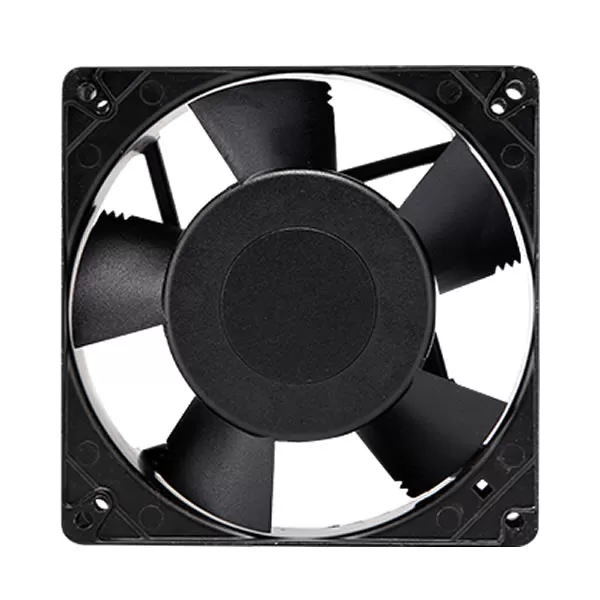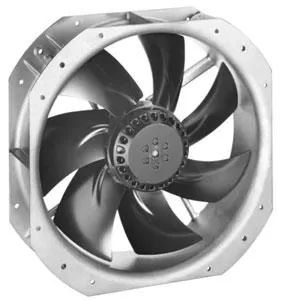
Whether you are designing a complex HVAC system, manufacturing precision electronic enclosures, or upgrading an industrial ventilation network, fan motor selection is a make-or-break decision. Historically, the industry defaulted to standard AC motors. Today, stringent energy regulations and the demand for smarter control systems have aggressively pushed DC and EC technologies into the spotlight.
For engineers and facility managers, choosing the right fan means balancing upfront costs with long-term reliability and energy consumption. To help you navigate this, we will deeply compare AC, DC, and EC fans, breaking down their operating mechanics, control capabilities, and Total Cost of Ownership (TCO).
1. AC Fans (Alternating Current): The Legacy Workhorse
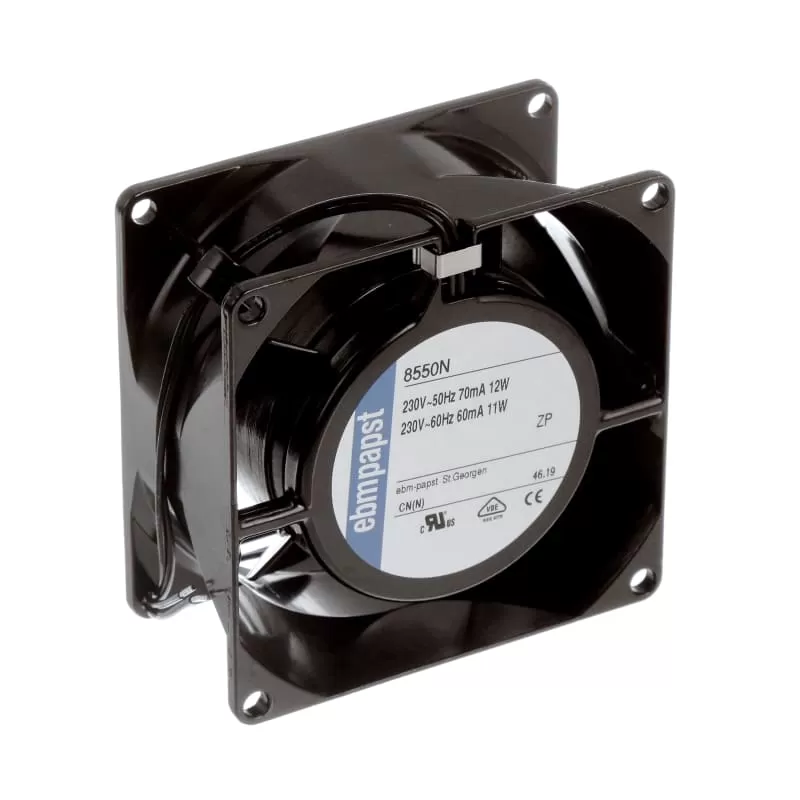
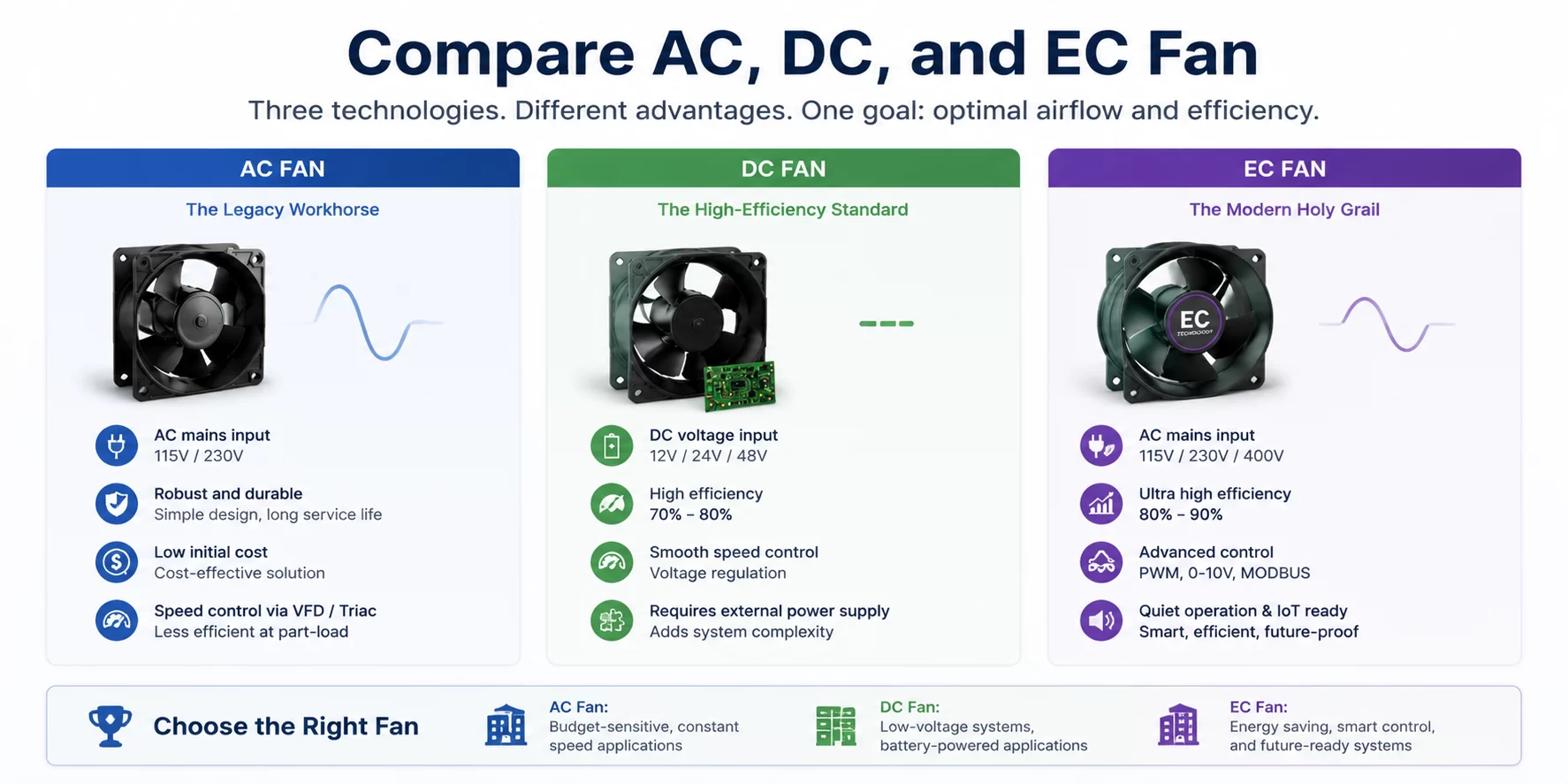
AC fans have been the backbone of air movement for over a century. They operate by pulling alternating current directly from the electrical grid (typically 115V or 230V). Most industrial and commercial AC fans use asynchronous motors, specifically Shaded-Pole or Permanent Split Capacitor (PSC) designs.
How They Work
In an AC asynchronous motor, the alternating current in the stator windings generates a rotating magnetic field. This field induces a current in the rotor, creating a secondary magnetic field that chases the stator’s field. The rotor always spins slightly slower than the magnetic field—a phenomenon known as “slip.”
The Pros of AC Fans
- Extreme Durability: With no internal electronic components or brushes to wear out, AC motors are robust. They can survive harsh, high-temperature environments.
- Direct Grid Connection: They are plug-and-play. You wire them directly to mains power without needing an external power supply or rectifier.
- Low Initial CapEx: Because the manufacturing process is highly standardized, AC fans are significantly cheaper to purchase upfront.
The Cons of AC Fans
- Poor Energy Efficiency: AC motors, especially Shaded-Pole types, max out at around 30% to 50% efficiency. The remaining energy is lost as heat, which forces the system to work harder to cool the motor itself.
- Inefficient Speed Control: Adjusting the speed of an AC fan requires a Variable Frequency Drive (VFD) or a voltage controller (like a TRIAC). Voltage clipping drastically reduces efficiency at lower speeds and often causes an annoying “motor hum” or magnetic noise.
2. DC Fans (Direct Current): The High-Efficiency Standard
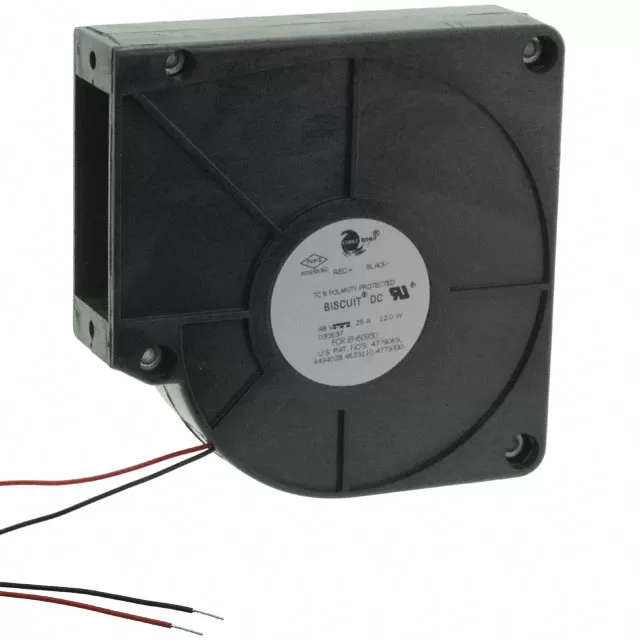
DC fans are powered by direct current—usually low-voltage lines such as 12V, 24V, or 48V. Modern industrial DC fans rely on Brushless DC (BLDC) technology, discarding the mechanical brushes of the past in favor of electronic commutation.
How They Work
Instead of inducing a magnetic field on the rotor, a BLDC motor uses permanent magnets on the rotor. A separate, external electronic circuit board (PCB) uses Hall-effect sensors to determine the rotor’s exact position. The PCB then rapidly switches the current in the stator coils to keep the rotor spinning. Because there is no “slip,” the motor runs synchronously.
The Pros of DC Fans
- High Efficiency: DC fans routinely achieve 70% to 80% efficiency. By eliminating slip and rotor induction losses, they consume a fraction of the power of an equivalent AC fan.
- Linear Speed Control: Motor speed is directly proportional to the applied voltage. This allows for smooth, precise, and quiet speed regulation without the humming associated with AC voltage controllers.
- Compact Form Factor: Because they generate very little waste heat, DC motors can be built much smaller than AC motors of the same output.
The Cons of DC Fans
- External Power Supply Required: You cannot plug a DC fan into a wall outlet. It requires an external AC-to-DC Switched-Mode Power Supply (SMPS). This adds to the installation footprint and introduces conversion losses at the system level.
- Added Complexity: The external rectifier and controller introduce more points of potential failure in the system design.
3. EC Fans (Electronically Commutated): The Modern Holy Grail
EC fans bridge the gap between AC convenience and DC efficiency. An EC motor is fundamentally a Brushless DC motor, but with a massive upgrade: the AC-to-DC conversion and the commutation electronics are completely integrated into the motor housing itself.
How They Work
When you plug an EC fan into standard AC mains, the onboard electronics smoothly rectify the AC voltage into DC. The integrated microprocessor then feeds this DC power to the stator coils precisely when needed. It effectively acts as a motor, a VFD, and a power supply rolled into one compact unit.
The Pros of EC Fans
- Unmatched Efficiency at All Speeds: EC fans can reach up to 90% efficiency. More importantly, unlike AC fans, EC fans maintain their high efficiency even when throttled down to partial speeds. This is crucial for systems requiring variable airflow.
- Smart Integrations (IoT Ready): The built-in microprocessor allows for direct input of 0-10V, PWM (Pulse Width Modulation), or MODBUS signals. An EC fan can connect directly to a Building Management System (BMS) and adjust its speed autonomously based on pressure, temperature, or CO2 sensors.
- Acoustic Superiority: EC motors are whisper-quiet. The electronic commutation eliminates magnetic motor hum, and the optimized aerodynamics of modern EC impellers reduce air noise.
- Global Compliance: EC fans effortlessly meet and exceed the strictest global energy regulations, including the European ErP (Energy-related Products) Directive.
The Cons of EC Fans
- Higher Upfront Cost: The sophisticated onboard electronics make EC fans the most expensive option initially.
- Electronic Sensitivity: While heavily potted and protected, the integrated PCB can be vulnerable to severe grid power surges if proper line filtration is not in place.
Technical Comparison Matrix
To summarize the engineering specifications, here is a direct comparison of the three technologies:
| Specification | AC Fans | DC Fans | EC Fans |
|---|---|---|---|
| Input Power | 115V / 230V AC (Direct) | 12V / 24V / 48V DC | 115V / 230V / 400V AC (Direct) |
| Peak Efficiency | 30% – 50% | 70% – 80% | 80% – 90% |
| Speed Control Method | VFD or Voltage Triac (Inefficient) | Voltage Regulation | PWM, 0-10V, MODBUS (Highly Efficient) |
| Part-Load Efficiency | Drops drastically | Remains high | Remains extremely high |
| Operating Temperature | High (Generates significant waste heat) | Low | Very Low (Extends bearing life) |
| Initial Cost | Low | Medium | High |
Final Verdict: Which Technology Wins?
Deciding between an AC, DC, or EC fan comes down to your project’s operational profile and Total Cost of Ownership (TCO) goals.
Choose AC Fans when: You are building a budget-sensitive, basic ventilation system that runs at 100% speed 24/7. If the environment is incredibly hostile (e.g., high vibration, explosive atmospheres without electronics protection) and energy costs are not the primary driver, AC remains a reliable choice.
Choose DC Fans when: Your overarching system already utilizes a DC power bus. They are the absolute standard for telecommunications, server racks, IT equipment, and mobile/automotive HVAC, where running off battery or low-voltage power is a necessity.
Choose EC Fans when: You are designing for the future. For commercial HVAC, data center cooling, cleanrooms, and industrial AHUs (Air Handling Units), EC is the definitive answer. While the initial capital expenditure is higher, the energy savings are so substantial that the ROI is typically realized in under 18 months. Add in the lower maintenance costs, quieter operation, and out-of-the-box BMS compatibility, and EC technology easily delivers the lowest Total Cost of Ownership.
Looking to optimize your airflow systems? At fansco.com, we provide comprehensive technical support to help you select the exact fan technology tailored to your engineering constraints.