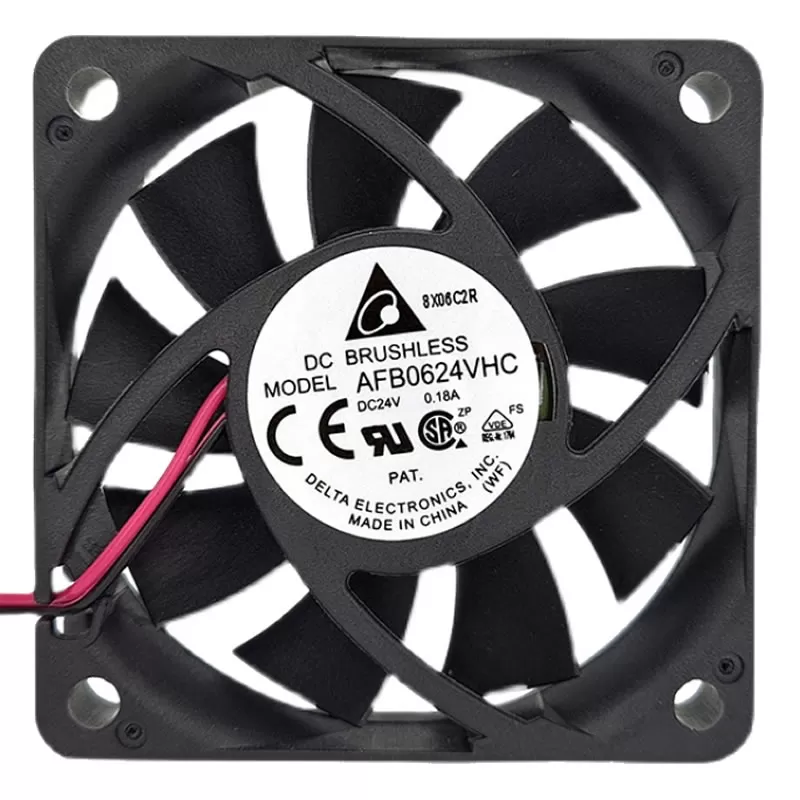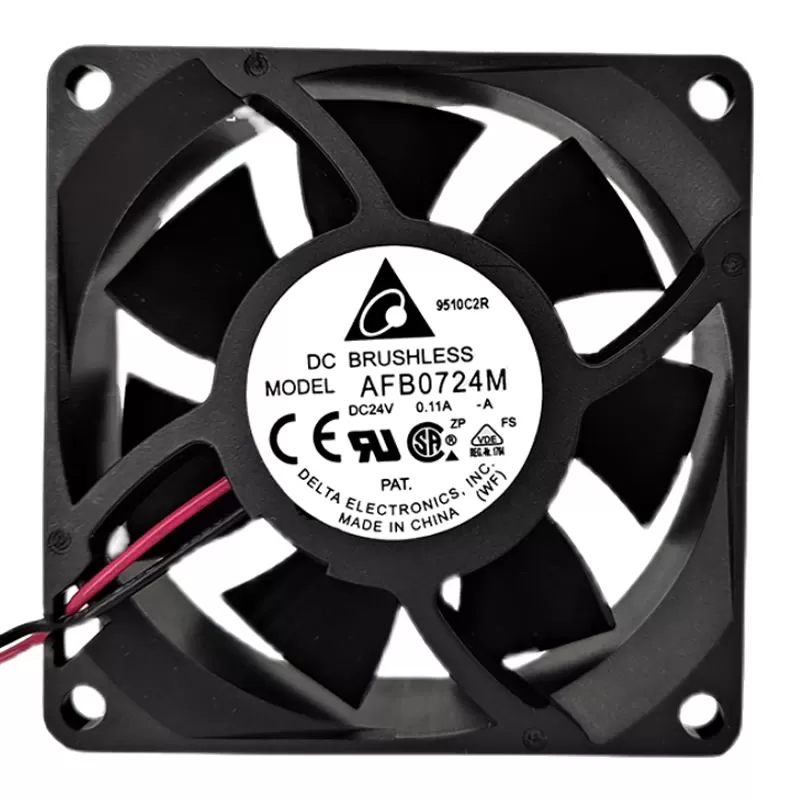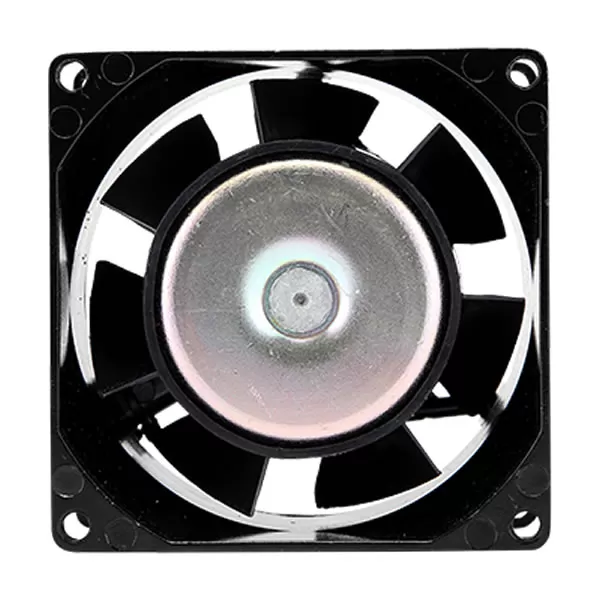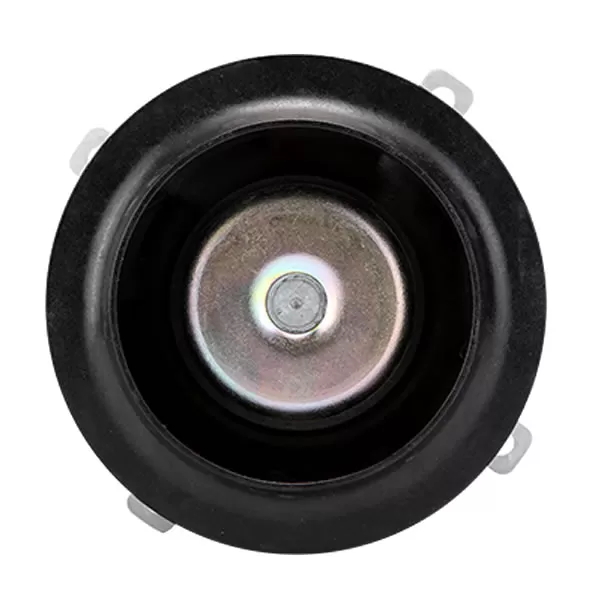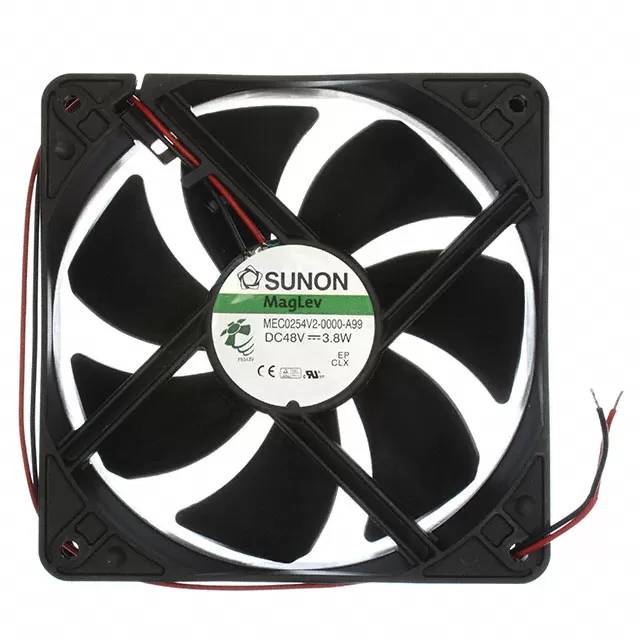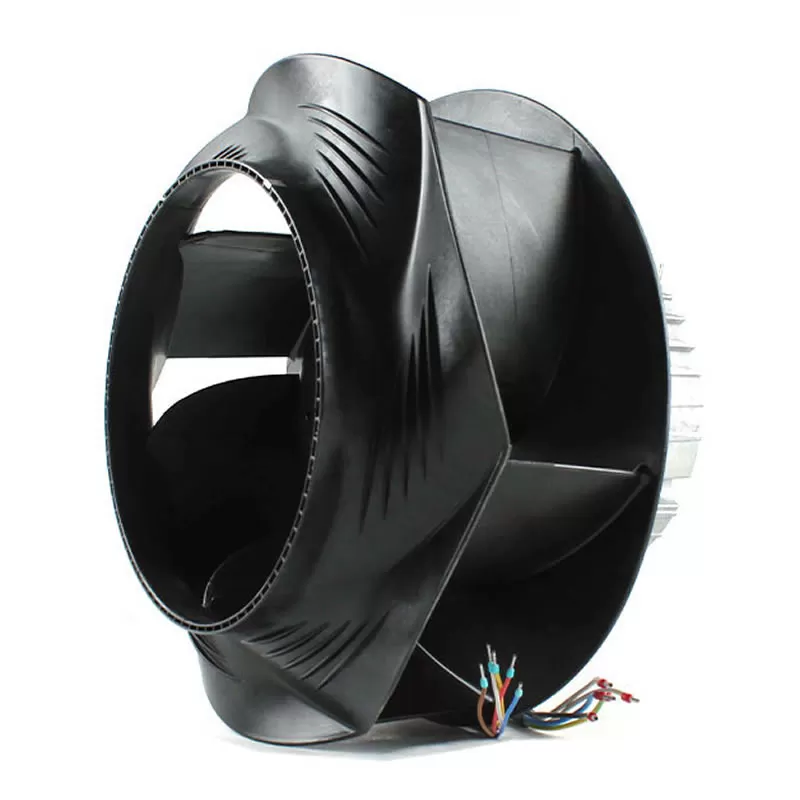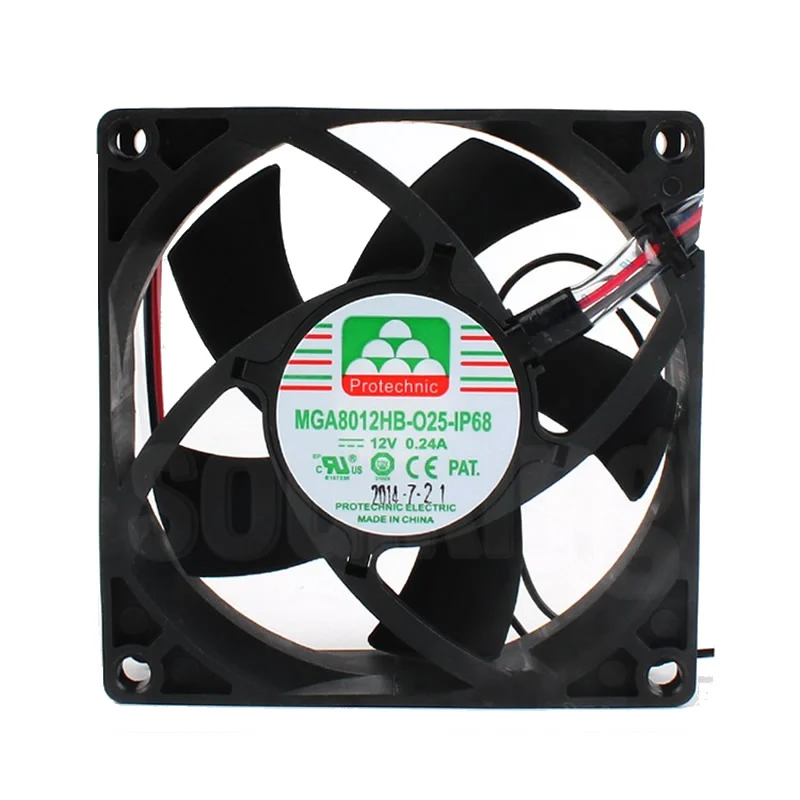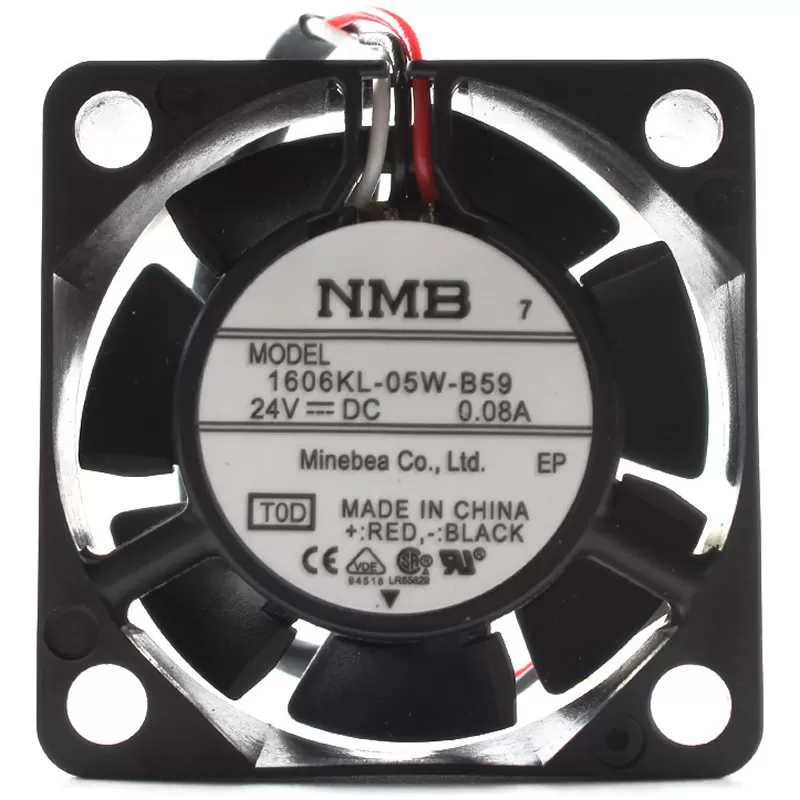
To understand the rapid shift in the ventilation and HVAC industry toward Electronically Commutated (EC) fans, one must first look at the heart of the machine: the Brushless DC (BLDC) motor. While traditional AC motors have dominated for decades due to their simplicity, the integration of BLDC technology into EC fans has redefined the benchmarks for efficiency, control, and reliability.
EC fans are essentially a hybrid, utilizing the best of both worlds—the ease of AC power input with the high-performance characteristics of a DC motor. Below, we explore the specific technical advantages that Brushless DC motors bring to EC fan systems.
1. Elimination of Mechanical Friction
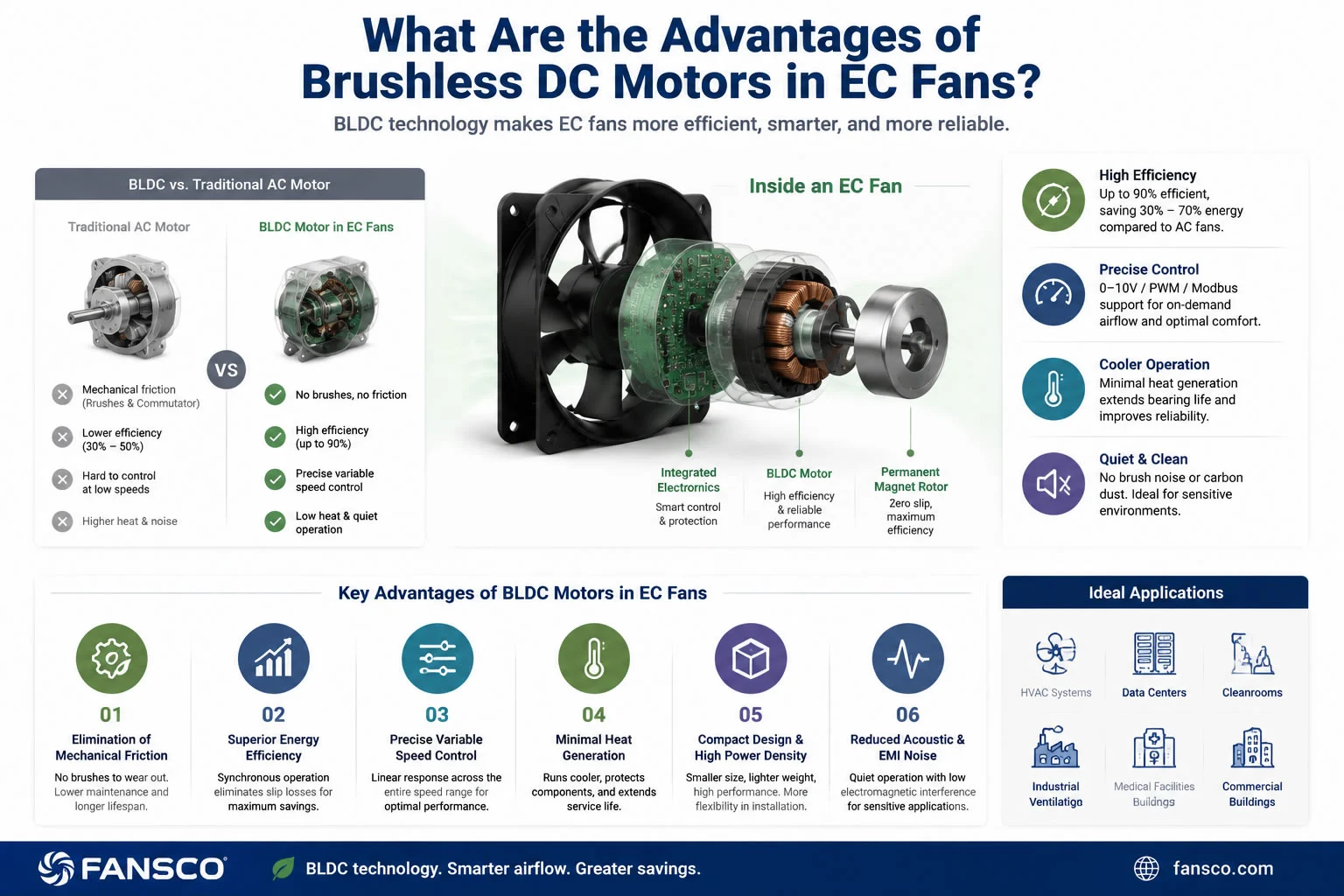
In a standard brushed DC motor, carbon brushes maintain physical contact with a commutator to switch the magnetic field. This creates friction, heat, and carbon dust. In a Brushless DC motor, the commutation is handled electronically via an integrated circuit board.
- Reduced Maintenance: Without brushes to wear down, the primary wear-and-tear components are the ball bearings. This significantly extends the Mean Time Between Failures (MTBF).
- Cleaner Operation: The absence of carbon dust makes EC fans ideal for sensitive environments such as cleanrooms, medical facilities, and food processing plants.
2. Superior Energy Efficiency (The Synchronous Advantage)
The core advantage of BLDC technology is its synchronous nature. Traditional AC induction motors are “asynchronous,” meaning there is always a “slip” between the stator’s magnetic field and the rotor’s speed. This slip generates internal heat and wasted energy.
Brushless DC motors in EC fans use permanent magnets on the rotor. The rotor locks onto the magnetic field of the stator with zero slip. This allows EC fans to reach efficiencies of up to 90%, compared to the 30-50% typical of small AC motors. For facility managers, this translates directly into a massive reduction in operational electricity costs.
3. Precise Variable Speed Control
One of the most powerful features of BLDC motors is their ability to be controlled with surgical precision. Because the commutation is managed by an onboard microprocessor, the fan can respond to external signals (such as 0-10V, PWM, or Modbus) to adjust its speed instantly.
- Linear Response: Unlike AC motors, which struggle with efficiency and stability at low speeds, a BLDC-driven EC fan maintains high torque and smooth operation across its entire RPM range.
- On-Demand Airflow: The motor can slow down precisely when demand is low, which—according to the Fan Affinity Laws—results in exponential energy savings.
4. Minimal Heat Generation
Because BLDC motors are so efficient, very little electrical energy is converted into waste heat. In an AC motor, the heat generated by the rotor and windings often contributes to the thermal load of the system it is trying to cool.
By staying cool, the BLDC motor protects its own internal components. High heat is the primary enemy of bearing grease; by maintaining lower operating temperatures, EC fans ensure that the lubrication lasts longer, further extending the fan’s service life in demanding industrial applications.
5. Compact Design and High Power Density
Brushless DC motors have a much higher power-to-weight ratio than AC motors. Using high-energy permanent magnets allows for a smaller motor footprint without sacrificing airflow or static pressure.
For engineers, this compact design means more flexibility. EC fans can be integrated into smaller cabinets, more streamlined ductwork, or low-profile air handling units (AHUs) where space is at a premium, all while delivering performance that would require a much larger, heavier AC motor.
6. Reduced Acoustic and Electromagnetic Noise
Mechanical brushes in DC motors and magnetic “hum” in AC motors (caused by the 50/60Hz grid frequency) both contribute to environmental noise. BLDC motors eliminate brush friction noise, and the electronic commutation is designed to be whisper-quiet.
Additionally, the sophisticated electronics in EC fans include filters that minimize Electromagnetic Interference (EMI), ensuring that the fan does not interfere with sensitive electronic equipment or telecommunications nearby.
Summary of Benefits
| Feature | Benefit to the User |
|---|---|
| No Brushes | Lower maintenance and longer lifespan (up to 50,000+ hours). |
| Permanent Magnets | Maximum efficiency and zero rotor “slip” losses. |
| Onboard Electronics | Direct integration with smart sensors and BMS. |
| Cooler Operation | Reduced thermal stress on bearings and surroundings. |
| Quiet Performance | Ideal for residential, office, and hospital environments. |
Conclusion
The advantages of Brushless DC motors are what make EC fans the gold standard for modern ventilation. By removing the physical and electrical inefficiencies of older motor designs, BLDC technology provides a solution that is not only more sustainable but also more intelligent and reliable.
For any organization looking to future-proof their infrastructure, investing in EC fans powered by BLDC motors is a strategic move that delivers a lower Total Cost of Ownership (TCO) and superior environmental control.
Explore the latest in BLDC technology at fansco.com, where we offer high-performance EC fan solutions for every industrial and commercial application.