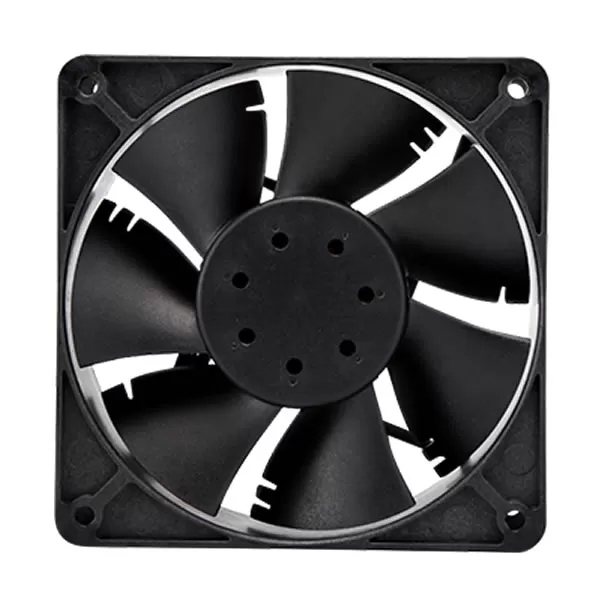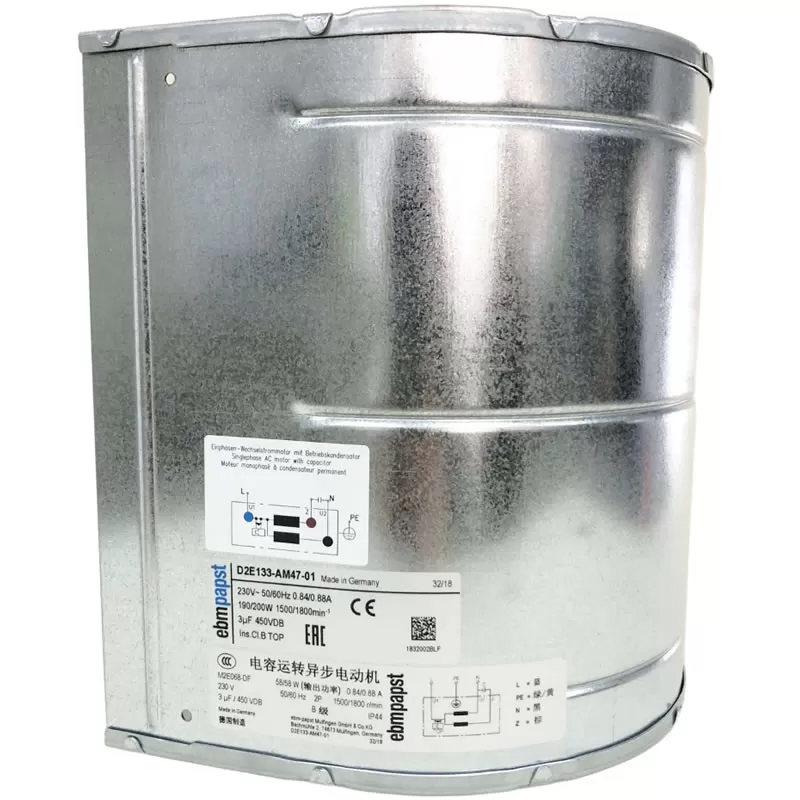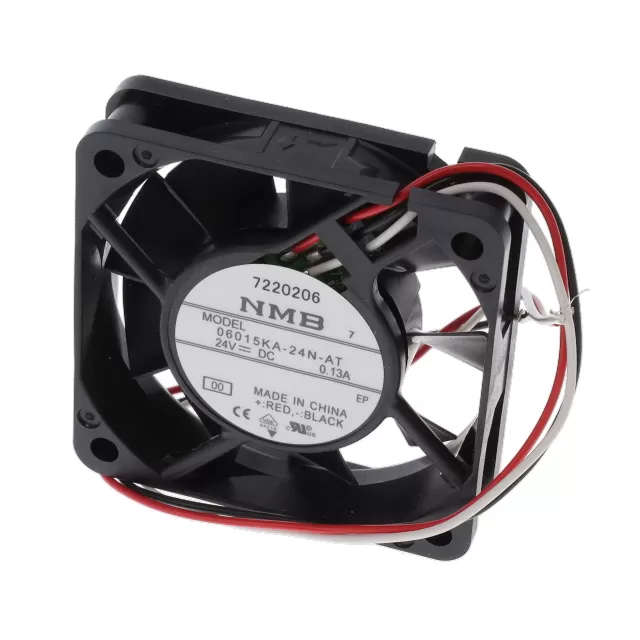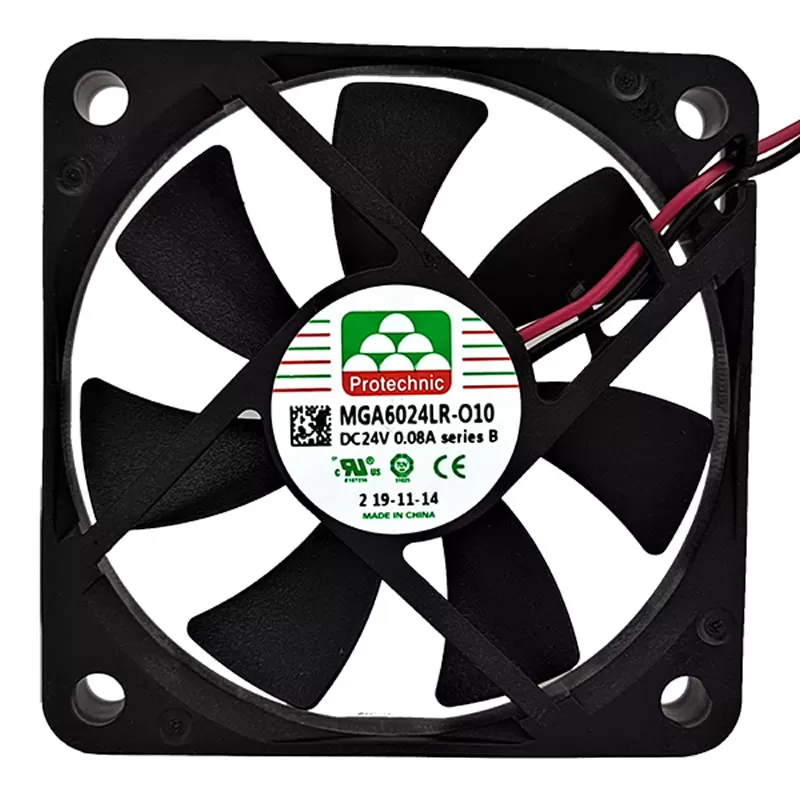
Whether you are designing a micro-electronic wearable, configuring a high-density 1U server rack, or engineering a heavy-duty industrial control cabinet, thermal management is a critical factor for hardware reliability. At Fansco, we know that selecting the optimal cooling fan requires more than just knowing the physical dimensions; it requires a deep understanding of the complex matrix of sizes, abbreviations, and aerodynamic performance characteristics.
In this comprehensive guide, we decode the industry-standard naming conventions for DC axial fans, AC/EC fans, and centrifugal blowers. Bookmark this complete, exhaustive breakdown of fan form factors and their specialized applications to streamline your next OEM thermal design process.
1. The Underlying Logic of Fan Naming Conventions
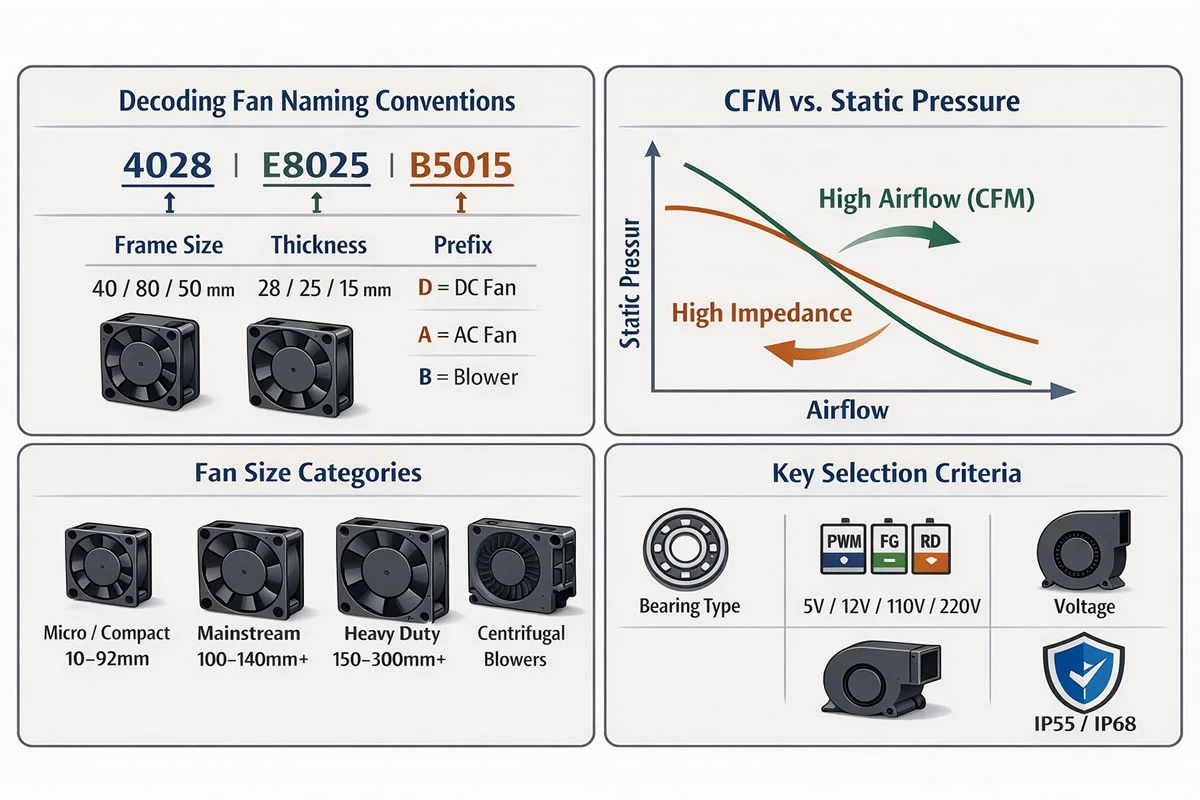
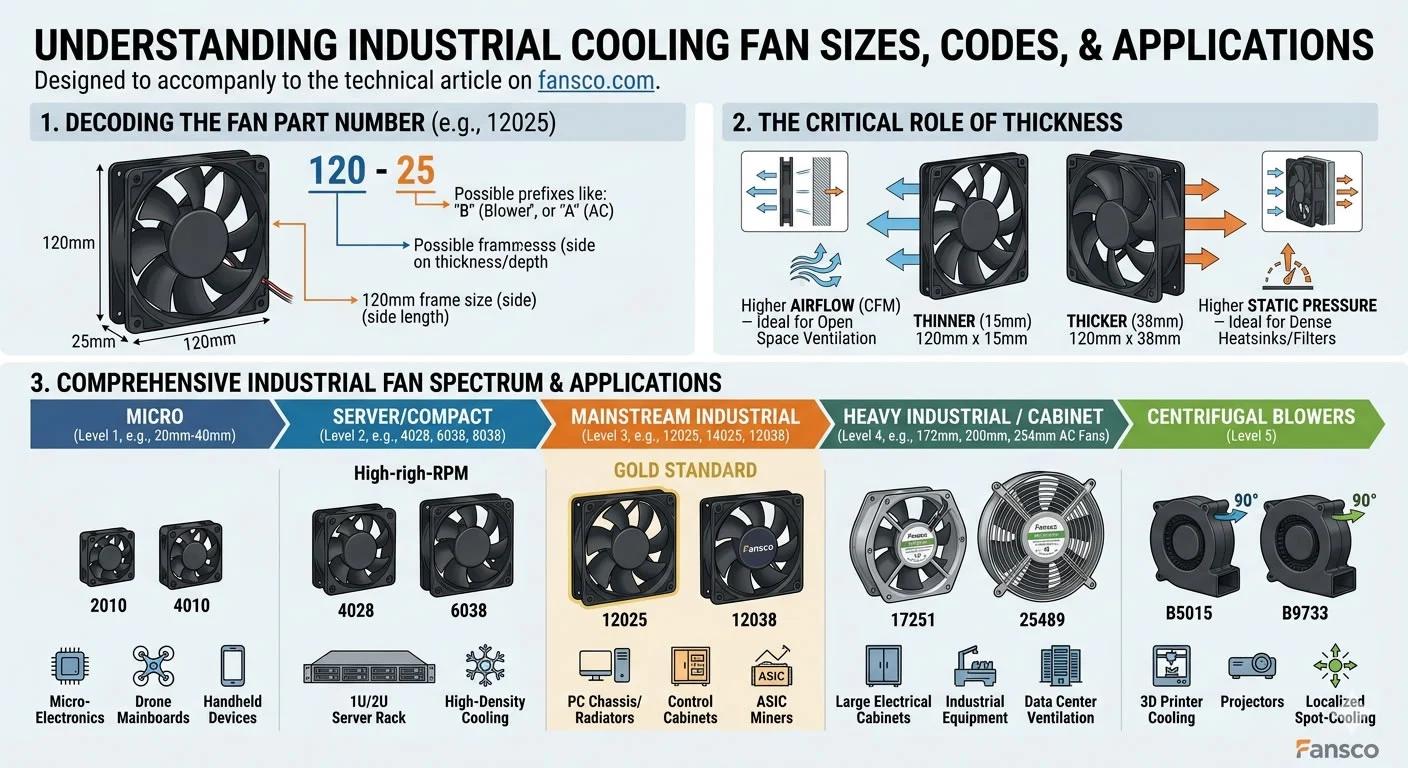
Most industrial cooling fans follow a standard 4-digit or 5-digit abbreviation system, typically formatted as AABB or AAABB. This code serves as a universal shorthand for the fan’s physical form factor:
- The First 2 or 3 Digits: Represent the outer frame size in millimeters. For square fans, this is the side length. For round fans, this is the outer diameter.
- The Last 2 Digits: Represent the fan’s thickness (depth) in millimeters.
- Prefixes (Optional but Critical): Letters like “B” denote a Blower (centrifugal fan), “D” indicates DC power, “A” indicates AC power, and “E” often denotes highly efficient EC (Electronically Commutated) motors.
Engineering Tip: The CFM vs. Static Pressure Trade-off & System Impedance
While the frame size dictates the mounting hole spacing, the thickness is the primary driver of Static Pressure (measured in mmH2O or inH2O). A thicker fan (e.g., 38mm vs. 25mm) accommodates a steeper blade pitch and a more robust motor hub. Thicker fans are essential for forcing air through high-resistance environments—also known as high System Impedance—such as dense heatsinks, radiator fins, or tightly packed server chassis. Conversely, thinner fans prioritize raw airflow (CFM – Cubic Feet per Minute) in open-air, low-impedance environments.
2. The Comprehensive Fan Size & Application Matrix
To assist with your procurement and thermal design process, we have categorized the absolute complete spectrum of standard and niche fan sizes into five core industrial levels. Every single dimension is listed separately for exact matching. (Note: All dimensions are in millimeters, formatted as Length x Width x Thickness or Diameter x Thickness).
Level 1: Micro & Ultra-Compact Series (10mm – 35mm)
Core Objective: Chip-level active cooling in extremely confined spaces. These fans operate at incredibly high RPMs and are tailored for micro-electronics, IoT devices, and portable medical tech.
| Model Code | Dimensions (mm) | Deep Industry Applications |
|---|---|---|
| 1004 | 10 x 10 x 4 | Ultra-micro sensors, cutting-edge wearable computing, smart rings. |
| 1503 | 15 x 15 x 3 | Extreme low-profile mobile devices, micro-optical sensors. |
| 1504 | 15 x 15 x 4 | AR/VR headset internal boards, portable medical monitors. |
| 1704 | 17 x 17 x 4 | Custom embedded PCB cooling, micro-drone payloads. |
| 2006 | 20 x 20 x 6 | Handheld smart devices, portable gas detectors, compact action cameras. |
| 2010 | 20 x 20 x 10 | HD camera PCB cooling, micro-projector light source cooling. |
| 2506 | 25 x 25 x 6 | Ultra-slim digital signage controllers, miniaturized IoT gateways. |
| 2507 | 25 x 25 x 7 | Ultra-thin automotive multimedia head units, embedded IoT boards. |
| 2510 | 25 x 25 x 10 | Network routers, small wireless video transmission modules. |
| 3004 | 30 x 30 x 4 | Extremely thin handheld scanners, mobile POS systems. |
| 3007 | 30 x 30 x 7 | Ultra-thin IPC (Industrial PC) motherboards, portable NVMe SSD enclosures. |
| 3010 | 30 x 30 x 10 | Micro-inverters, early 3D printer extruders, compact set-top boxes. |
| 3507 | 35 x 35 x 7 | Slim optical communication transceivers. |
| 3510 | 35 x 35 x 10 | Custom small-form-factor telecom modules. |
| 3515 | 35 x 35 x 15 | High-heat small-form-factor motor drives. |
Level 2: Compact & Server Rack Series (38mm – 92mm)
Core Objective: High heat dissipation where space and height are strictly limited. Thickness is crucial here to meet standard EIA rack height restrictions (like 1U and 2U servers).
| Model Code | Dimensions (mm) | Deep Industry Applications |
|---|---|---|
| 3820 | 38 x 38 x 20 | Specialized 1U server auxiliary cooling, thick network switches. |
| 3828 | 38 x 38 x 28 | The True 1U Server Secret. Specifically designed to maximize blade size within strict 1U height limits, pushing extreme static pressure. |
| 4007 | 40 x 40 x 7 | Low-profile VGA coolers, ultra-slim industrial power supplies. |
| 4010 | 40 x 40 x 10 | Small network switches, standard 3D printer mainboards. |
| 4015 | 40 x 40 x 15 | Enhanced cooling for dense network routers and modems. |
| 4020 | 40 x 40 x 20 | Compact server power supplies, industrial LED drivers. |
| 4028 | 40 x 40 x 28 | The 1U Server Standard. Often built with dual-ball bearings (15,000+ RPM) for immense air-pushing capabilities. |
| 4510 | 45 x 45 x 10 | Portable testing instruments, handheld industrial analyzers. |
| 4515 | 45 x 45 x 15 | Thick-profile handheld testing equipment. |
| 5010 | 50 x 50 x 10 | Video surveillance DVR/NVRs, compact audio amplifiers. |
| 5015 | 50 x 50 x 15 | Legacy GPU cooling, thicker set-top boxes. |
| 5020 | 50 x 50 x 20 | Medical diagnostic equipment requiring higher pressure than 5010. |
| 5025 | 50 x 50 x 25 | Industrial enclosures requiring high static pressure in a 50mm footprint. |
| 6010 | 60 x 60 x 10 | HTPC (Home Theater PC) ultra-thin chassis cooling. |
| 6015 | 60 x 60 x 15 | LED stage lighting equipment, slim industrial PCs. |
| 6020 | 60 x 60 x 20 | Automated vending machines, casino gaming cabinets. |
| 6025 | 60 x 60 x 25 | Standard ATX/SFX power supplies, entry-level IPCs. |
| 6038 | 60 x 60 x 38 | The 2U / Blade Server Standard. High-density CPU cooling modules. |
| 7015 | 70 x 70 x 15 | Legacy AMD stock CPU coolers, specific medical imaging hardware. |
| 7020 | 70 x 70 x 20 | Thicker OEM CPU coolers, mid-sized electronic enclosures. |
| 7025 | 70 x 70 x 25 | Specialized industrial panel PC cooling. |
| 8010 | 80 x 80 x 10 | Ultra-slim PC chassis side panel ventilation. |
| 8015 | 80 x 80 x 15 | Slimline telecom racks, compact PC chassis fans. |
| 8020 | 80 x 80 x 20 | Medium-profile industrial chassis cooling. |
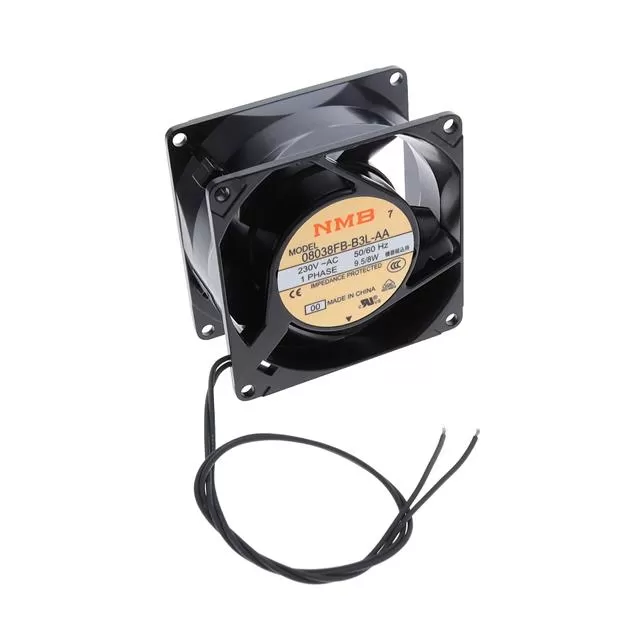
| 8025 | 80 x 80 x 25 | UPS (Uninterruptible Power Supplies), large power inverters, standard desktop exhaust. |
| 8032 | 80 x 80 x 32 | High-pressure telecom cooling, thick industrial power supplies. |
| 8038 | 80 x 80 x 38 | 3U servers, large telecom base station cabinets, crypto mining auxiliary cooling. |
| 9215 | 92 x 92 x 15 | Low-profile CPU coolers, slim form-factor workstations. |
| 9220 | 92 x 92 x 20 | Custom OEM workstation chassis cooling. |
| 9225 | 92 x 92 x 25 | OEM workstations (Dell/HP), 9cm tower CPU coolers, standard telecom cabinets. |
| 9232 | 92 x 92 x 32 | Enhanced cooling for dense telecom gear. |
| 9238 | 92 x 92 x 38 | High-heat telecom cabinets, heavy industrial testing and calibration equipment. |
Level 3: Mainstream & Heat Exchanger Series (100mm – 140mm)
Core Objective: The perfect balance of airflow volume and acoustic performance. This is the highest-volume category for both consumer DIY and standard industrial cooling.
| Model Code | Dimensions (mm) | Deep Industry Applications |
|---|---|---|
| 10025 | 100 x 100 x 25 | Niche OEM electronics, specialized air purifiers. |
| 12015 | 120 x 120 x 15 | Dedicated slim fans for SFF (Small Form Factor) chassis and thin liquid cooling radiators. |
| 12025 | 120 x 120 x 25 | The Industry Gold Standard. PC chassis, HVAC air purifiers, general control cabinets. |
| 12032 | 120 x 120 x 32 | Enhanced static pressure for specialized radiators and thick server chassis. |
| 12038 | 120 x 120 x 38 | High-Density Computing. Bitcoin ASIC miners, large VFDs, ESS (Energy Storage System) thermal modules. |
| 12738 | 127 x 127 x 38 | Standard AC fan size. General industrial ventilation, older heavy machinery panels. |
| 13525 | 135 x 135 x 25 | Premium ATX power supplies (provides excellent airflow with a lower acoustic profile). |
| 13538 | 135 x 135 x 38 | High-power industrial power supplies requiring extreme airflow. |
| 14015 | 140 x 140 x 15 | Ultra-slim dual-tower CPU coolers, compact rackmount equipment. |
| 14025 | 140 x 140 x 25 | Premium silent PC chassis, commercial freezer condenser cooling. |
| 14038 | 140 x 140 x 38 | 5G outdoor telecom base stations, heavy-duty explosion-proof control cabinets. |
Level 4: Heavy Industrial & Electrical Cabinet Series (150mm – 300mm+)
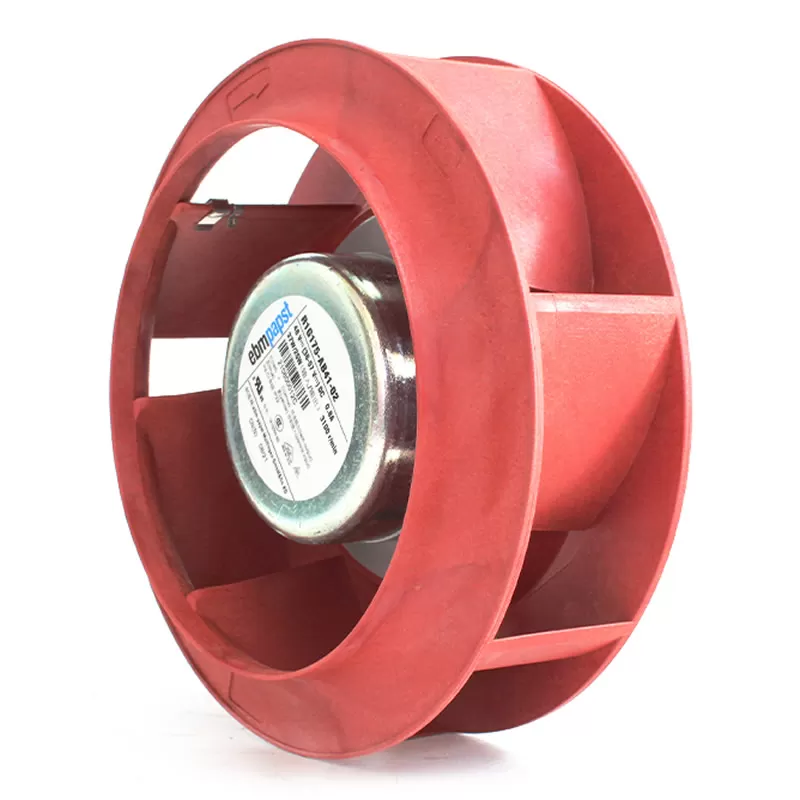
Core Objective: Massive air volume displacement. These fans often transition from DC to AC or high-efficiency EC motors, featuring die-cast aluminum frames for extreme environments.
| Model Code | Dimensions (mm) | Deep Industry Applications |
|---|---|---|
| 15038 | 150 x 150 x 38 | Medium-duty industrial enclosures, specialized telecom cabinets. |
| 15050 | 150 x 150 x 50 | Industrial dehumidifiers, heavy welding machines, solar inverter cooling. |
| 17225 | 172 x 150 x 25 | Slim telecom cabinet exhaust, space-constrained automation panels. |
| 17238 | 172 x 150 x 38 | Standard telecom rack exhaust, mid-level industrial cooling. |
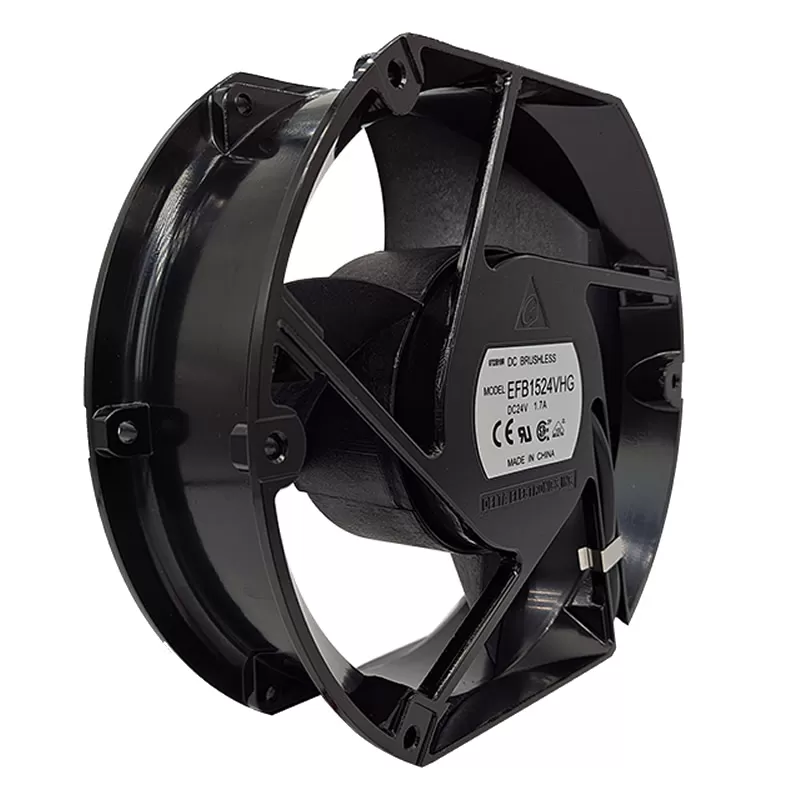
| 17251 | 172 x 150 x 51 | Classic Industrial Oval Fan. CNC machine electrical boxes, UPS battery arrays. (Also widely available as 172×172 round). |
| 18060 | 180 x 180 x 60 | Automated assembly line control cabinets, wind turbine converter internals. |
| 20020 | 200 x 200 x 20 | Large consumer air purifiers, specialized low-profile ventilation panels. |
| 20060 | 200 x 200 x 60 | Enthusiast full-tower PC front panels, large industrial air compressors. |
| 22060 | 220 x 220 x 60 | Large cold storage evaporators, high-power transformer forced air cooling. |
| 22580 | 225 x 225 x 80 | Heavy industrial HVAC systems, large-scale greenhouse ventilation. |
| 25489 | 254 x 89 (Round) | Heavy-duty industrial exhaust, data center In-Row cooling systems. |
| 28080 | 280 x 80 (Round) | Commercial rooftop ventilation, major factory floor exhaust networks. |
Level 5: Centrifugal Blowers (Special Form Factor)
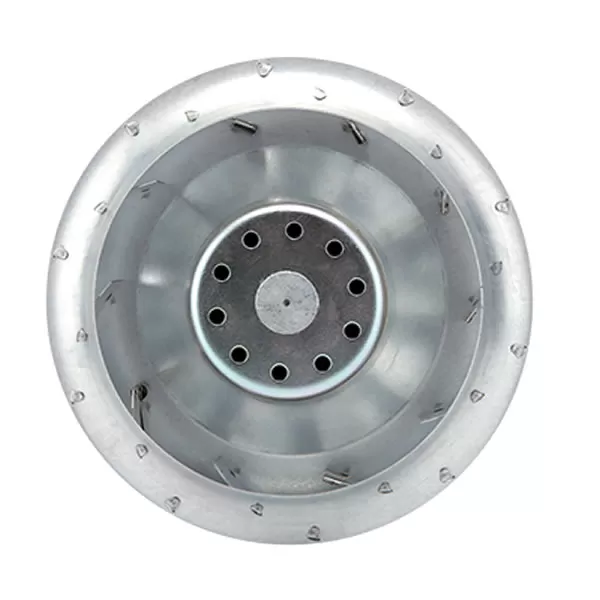
Core Objective: Altering airflow direction. Blowers intake air from the side and exhaust it at a 90-degree angle, designed specifically to push concentrated air through extremely high-resistance channels and localized heat zones.
| Model Code | Dimensions (mm) | Deep Industry Applications |
|---|---|---|
| B3010 | 30 x 30 x 10 | Pocket-sized air quality monitors, wearable cooling devices. |
| B3510 | 35 x 35 x 10 | Micro-sensor targeted cooling, VR headset internals. |
| B4010 | 40 x 40 x 10 | Ultra-compact scientific instruments, portable gas sniffers. |
| B4020 | 40 x 40 x 20 | Compact networking gear, targeted server chassis exhaust. |
| B4520 | 45 x 45 x 20 | Handheld gaming consoles, specific medical device cooling modules. |
| B5015 | 50 x 50 x 15 | The 3D Printing Standard for focused part cooling; laptop internal exhaust. |
| B5020 | 50 x 50 x 20 | High-pressure laptop cooling, thick 3D printer hotend cooling. |
| B6015 | 60 x 60 x 15 | Thin IPC (Industrial PC) chassis targeted exhaust. |
| B6028 | 60 x 60 x 28 | Standard blower for slim 1U servers and enterprise networking gear. |
| B7025 | 70 x 70 x 25 | Mid-sized projector cooling, automated teller machines (ATMs). |
| B7530 | 75 x 75 x 30 | Projector light source cooling, automotive cabin air purifiers, robotic vacuum motors. |
| B8030 | 80 x 80 x 30 | Specialized industrial localized cooling, medical CPAP machines. |
| B9733 | 97 x 97 x 33 | Heavy equipment spot-cooling, industrial ventilation, outdoor BBQ blowers. |
| B12032 | 120 x 120 x 32 | Cleanroom Fan Filter Units (FFU), commercial induction cooktops, fresh air systems. |
| B12038 | 120 x 120 x 38 | High-power industrial drying equipment, heavy-duty automotive seat cooling. |
3. Beyond Dimensions: Advanced Procurement & Engineering Criteria
While the physical size ensures the fan fits mechanically into your chassis, the internal specifications dictate the lifespan, acoustic profile, and performance reliability. When analyzing the P-Q (Pressure-Flow) curve and selecting a custom thermal solution from Fansco, ensure you also define the following parameters:
- Bearing Type: Sleeve bearings are cost-effective but have a shorter lifespan and should only be mounted vertically. Dual-Ball bearings are the industrial standard for extreme longevity, high-temperature tolerance, and mounting in any orientation. FDB (Fluid Dynamic Bearing) is reserved for premium, ultra-silent equipment.
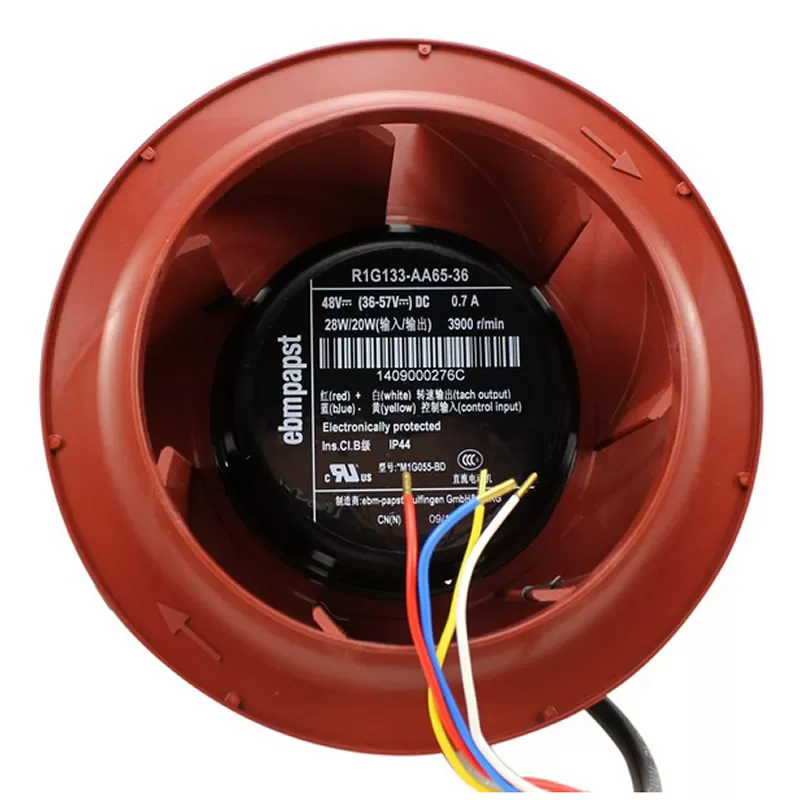
- Voltage Requirements: Typical DC fans run at 5V, 12V, 24V, or 48V (standard in telecom and servers to reduce current draw). Heavy machinery typically utilizes AC or EC fans running at 110V, 220V, or 380V.
- Intelligent Control Signals:
- PWM (Pulse Width Modulation): Allows the motherboard to adjust fan speed in real-time based on thermal loads (standard 4-pin design), saving energy and reducing noise.
- FG (Frequency Generator): A tachometer wire that outputs the current RPM, allowing the system to monitor fan health.
- RD (Rotation Detector): An alarm wire that instantly alerts your system if the fan stops spinning, preventing catastrophic hardware failure.
- IP Rating (Ingress Protection): For harsh industrial, marine, or outdoor telecom applications, it is critical to specify fans with conformal coating or fully encapsulated motors (e.g., IP55, IP68) to resist severe dust, moisture, and water ingress.
Need expert engineering support for your next project? Don’t leave your thermal management to chance. Explore Fansco’s extensive catalog of industrial fans, or contact our engineering team today to match your exact wattage dissipation, system impedance, and space constraints with the perfect cooling solution.